
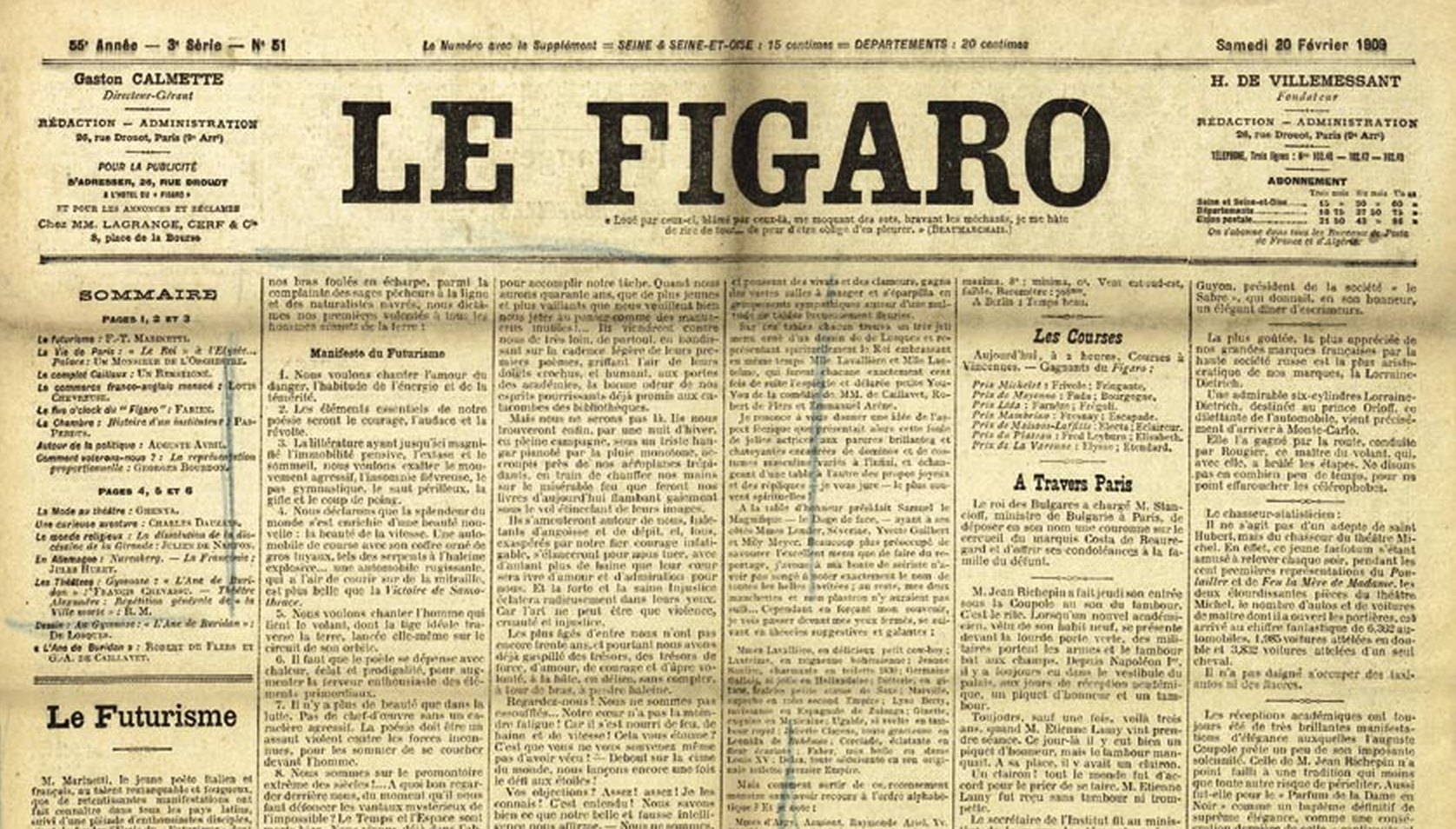
Manifesto of the Month
We here at Mutable have believed in the art of the manifesto from before there was a Mutable to speak of. We taught a course at the Berwick Research Institute on manifesto-writing back in the summer of 2002, and have been soliciting people to write manifestos ever since. Our first book was Manifesto I, a collection of the manifestos were written as a result of our expertise in nagging.
All of this has evolved into the Manifesto of the Month.

Jeremy Murdoch Bailey
In an age where the only form of meaningful resistance is to act responsibly, Millennials have no choice but to accept the task of reconciliation. Reconciliation with our true selves, our environment, and our human community. Shifting from the individual to the universal unrestricted by physical distance and access to knowledge.[4]
Without beginning or end, time is not linear, what we do now will alter the shape of the past and the future. The lessons of yesterday and the great problems of tomorrow will not wait for us, our work is today.[3, 6]
We were wrong to praise the man behind the steering wheel, speeding off in a tangential orbit. Disoriented and stumbling we harnessed the great power of iron and cement, urbanizing at great speed, shifting the human condition to the urban condition.[6] But why for so many people has urbanisation not solved the problems of transport, density and sustainability?

Manifesto of the Month
You think you know where you’re going but you’re not going anywhere.
The world as presented is not the world.
You’re in a small village in the mountains of Nepal and barely a week ago Kathmandu erupted in violence. You see no violence. You hear no violence. One morning, you walk through the town, and you notice the large white house now has burnt and blown-out windows. A week later, you go into Kathmandu and are confronted by the long arched windows of Singha Durbar (or Lion Palace) framing bonfires that swell out from their neoclassical cage to turn the night red but in the morning all that’s left will be the scorched insomniac aftermath. You are removed from the act and the seeing of the act is filtered—through news that is 6:1 paid PR people to independent journalists—through social media that feeds you a personalized stream of information, misinformation, skewed information—through the chatrooms of your friends and the twitter feeds of your favorite celebrities. What you see is not the thing as it is.
As your day evolves into a haiku of habits. As you wait for the moment when everything turns clear as crystal and a way out of your own decaying self. Who do you think you are? Who are you in truth?
Manifesto of the Month
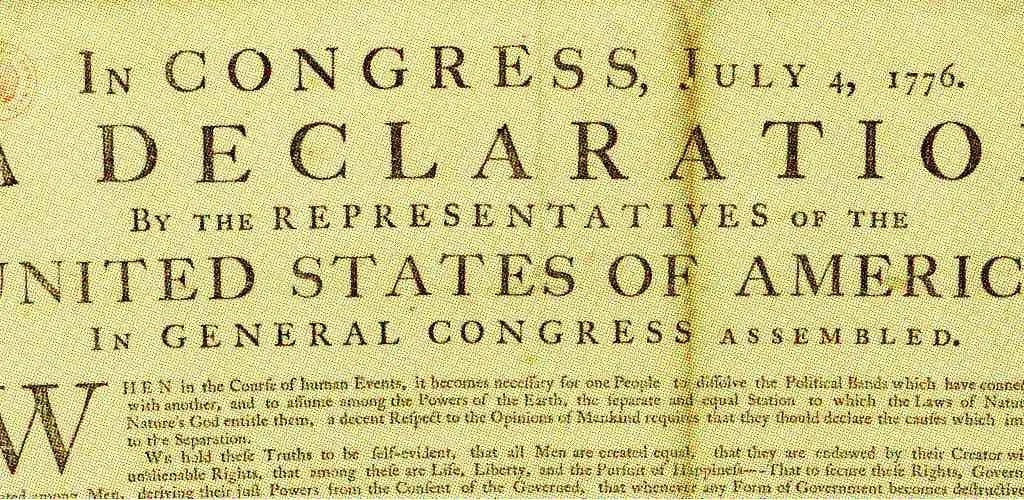
[As we enter the home stretch of the 2024 electoral season, we here at Mutable wanted to pay tribute to a pivotal manifesto that is often overlooked in the history of political and artistic movements, the Declaration of Independence. Presented both as a set of grievances and a rationale for extreme action, it is also presenting a radical worldview wherein we are all equal and that governments exist to serve us rather than for us to exist to serve the whims of monarchs. You could argue that it’s the most successful manifesto. It’s movement is still going strong.]
*
The unanimous Declaration of the thirteen united States of America, When in the Course of human events, it becomes necessary for one people to dissolve the political bands which have connected them with another, and to assume among the powers of the earth, the separate and equal station to which the Laws of Nature and of Nature's God entitle them, a decent respect to the opinions of mankind requires that they should declare the causes which impel them to the separation.
We hold these truths to be self-evident, that all men are created equal, that they are endowed by their Creator with certain unalienable Rights, that among these are Life, Liberty and the pursuit of Happiness.--That to secure these rights, Governments are instituted among Men, deriving their just powers from the consent of the governed, --That whenever any Form of Government becomes destructive of these ends, it is the Right of the People to alter or to abolish it, and to institute new Government, laying its foundation on such principles and organizing its powers in such form, as to them shall seem most likely to effect their Safety and Happiness. Prudence, indeed, will dictate that Governments long established should not be changed for light and transient causes; and accordingly all experience hath shewn, that mankind are more disposed to suffer, while evils are sufferable, than to right themselves by abolishing the forms to which they are accustomed. But when a long train of abuses and usurpations, pursuing invariably the same Object evinces a design to reduce them under absolute Despotism, it is their right, it is their duty, to throw off such Government, and to provide new Guards for their future security.--Such has been the patient sufferance of these Colonies; and such is now the necessity which constrains them to alter their former Systems of Government. The history of the present King of Great Britain is a history of repeated injuries and usurpations, all having in direct object the establishment of an absolute Tyranny over these States. To prove this, let Facts be submitted to a candid world.

Manifesto of the Month
[We here at Mutable stumbled upon the most outlandish of web pages and felt the need to post an excerpt of this endless and multi-pronged manifesto here. If you enjoy the twisted logic, you can find more at Evolutionary Economics.]
Abstract. The structural constitution of a super organism, are its physiological networks, which distribute:
The proper energy: blood, financial, economic system of re=production of goods.
Information: legal, cultural system of informative just laws and customs that synchronize the motions of its body cells.
Entropy=motion to the system:digestive territorial system from where to extract the raw materials for entropic motion
And so a legal constitution of the Human super organism will be a set of laws that maximize the WHEALTHY (healthy wealth), efficient distribution of energy, information and goods to the entire human kind, as all cells-citizens in any true working, efficient super organism receive enough of them to survive.

Manifesto of the Month
As we go cartwheeling over the edge and into a place of exhilarating uncertainty, as our paths forward corrode in the heat of the moment, and the bottom falls out and we are gone, would it not be wise then to come up with a plan? Somewhere to stash the jewels? A rendezvous point after we’ve escaped into the woods?
In this our end times, will we indeed each go diving off on our own into the hellscape? Is that the best avenue of egress as we slide over the horizon to impale ourselves upon the rocks below? Might there be some other way to enter the apocalypse?
The analog internet is a decentralized network of information holders and distributors who work as diplomats and ambassadors to surrounding communities and function as the librarians of the future, function as librarians in the rubble of the end times, dishing out the latest wasteland gossip, zines, and cooking tips for rat and rabbit, as well as a farmer’s almanac of DIY tips—a people whose sole responsibility is to hold onto the past as the present gets eaten up in our terror, to shine a light into the rising dark, and create a path once the path forward has been eaten in the madness of it all.
The analog internet is like a webwork of human connections, made up of people sharing information and ideas to local counterparts who then pass these ideas on to their own contacts.
But why?

Manifesto of the Month
“The end is near. Or has it come and gone before?”
– An ancestor
Why can we imagine the ending of the world, yet not the ending of colonialism?
We live the future of a past that is not our own.
It is a history of utopian fantasies and apocalyptic idealization.
It is a pathogenic global social order of imagined futures, built upon genocide, enslavement, ecocide, and total ruination.
What conclusions are to be realized in a world constructed of bones and empty metaphors? A world of fetishized endings calculated amidst the collective fiction of virulent specters. From religious tomes to fictionalized scientific entertainment, each imagined timeline constructed so predictably; beginning, middle, and ultimately, The End.


Billy Childish & Charles Thomson
[Billy Childish epitomizes an ideal of ours over at Mutable, multi-faceted, multi-talented, the forever amateur who refuses to cave to the trends of the day, an anachronism that is also somehow the future. Apparently, the Stuckist movement evolved from an incident between Childish and his ex Tracey Emin (who made her name by installing her bed in the Tate, which went on to be shortlisted for the Turner Prize in ‘99) apparently shouted at Childish that his art was, “Stuck! Stuck! Stuck!”]
Stuckism is the quest for authenticity. By removing the mask of cleverness and admitting where we are, the Stuckist allows him/herself uncensored expression.
Painting is the medium of self-discovery. It engages the person fully with a process of action, emotion, thought and vision, revealing all of these with intimate and unforgiving breadth and detail.

Henry Corbin
[The below essay was originally brought to our attention sometime in early 2009, and would be part of a pivotal reshuffling of thought here at Mutable. It is presented in its full glory. The “imaginal” is not “imaginary”!]
In offering the two Latin words mundus imaginalis as the title of this discussion, I intend to treat a precise order of reality corresponding to a precise mode of perception, because Latin terminology gives the advantage of providing us with a technical and fixed point of reference, to which we can compare the various more-or-less irresolute equivalents that our modern Western languages suggest to us.
I will make an immediate admission. The choice of these two words was imposed upon me some time ago, because it was impossible for me, in what I had to translate or say, to be satisfied with the word imaginary. This is by no means a criticism addressed to those of us for whom the use of the language constrains recourse to this word, since we are trying together to reevaluate it in a positive sense. Regardless of our efforts, though, we cannot prevent the term imaginary, in current usage that is not deliberate, from being equivalent to signifying unreal, something that is and remains outside of being and existence-in brief, something utopian. I was absolutely obliged to find another term because, for many years, I have been by vocation and profession an interpreter of Arabic and Persian texts, the purposes of which I would certainly have betrayed if I had been entirely and simply content-even with every possible precaution-with the term imaginary. I was absolutely obliged to find another term if I did not want to mislead the Western reader that it is a matter of uprooting long-established habits of thought, in order to awaken him to an order of things, the sense of which it is the mission of our colloquia at the "Society of Symbolism" to rouse.
In other words, if we usually speak of the imaginary as the unreal, the utopian, this must contain the symptom of something. In contrast to this something, we may examine briefly together the order of reality that I designate as mundus imaginalis, and what our theosophers in Islam designate as the "eighth climate"; we will then examine the organ that perceives this reality, namely, the imaginative consciousness, the cognitive Imagination; and finally, we will present several examples, among many others, of course, that suggest to us the topography of these interworlds, as they have been seen by those who actually have been there.

Manifesto of the Month
As the number of total recorded deaths from the novel coronavirus also known as COVID-19 slides past the 3 million marker worldwide, we here at Mutable thought we would give you a showcase of some of the manifestoes that have resulted. Due to space restrictions, we have chosen to on occasion present abridged versions or excerpts with links to the original. If you’re wondering how we organized them, they are listed from most manifesto to least manifesto. Although we tried to be as inclusive as possible, there were one or two “manifestoes” that were just TOO academic to truly be understood as manifestoes, or posing ideas (such as that COVID-19 is a hoax) which we felt we could not in good conscience reproduce.
*
A Manifesto of Sorts for Covid-19
[This manifesto from the author Zillah Eisenstein appeared on the NYU Press web site a year ago, in March 2020. You can see the original here.]
“We can rise together against COVID19 and make a better world”
A few thoughts to share:
COVID19 like most disease is democratic—it can affect anyone, although with differing options to respond to it. The world, including the US is not democratic. This does not bode well. But we can move forward because simple individualism contradicts the interdependency of this COVID crisis. “We” all suffer when one person circulates with symptoms—and we will flourish if we accept responsibility to isolate/distance and protect one another.

Manifesto of the Month
I'm not a surrealist. I just paint what I see. — Frida Kahlo
THE PAST AND THE PRELUDE
In his introduction to the classic novel Invisible Man (1952), ambiguous black and literary icon Ralph Ellison says the process of creation was "far more disjointed than [it] sounds ... such was the inner-outer subjective-objective process, pied rind and surreal heart."
Ellison's allusion is to his book's most perplexing character, Rinehart the Runner, a dandy, pimp, numbers runner, drug dealer, prophet, and preacher. The protagonist of Invisible Man takes on the persona of Rinehart so that "I may not see myself as others see me not." Wearing a mask of dark shades and large-brimmed hat, he is warned by a man known as the fellow with the gun, "Listen Jack, don't let nobody make you act like Rinehart. You got to have a smooth tongue, a heartless heart, and be ready to do anything."

Manifesto of the Month
1:There is an art form
1.1 There is an art to manifestos as there is an art to anything. Avoid this art form. Make other forms of art. There is no reason to make unfounded statements into strong declarative sentences. Do not believe yourself. Believe others first. Rather than holding yourself up as somehow a larger life form, remember that your unique perspective is a wondrous fallacy. Instead believe everything and anything. Be credulous.
1.2 When writing your manifesto, find yourself hidden behind a potted plant. At other times be other places. Make sure that you are always somewhere. If you are ever somewhere that is also nowhere, then be warned that this is dangerous. This is the sort of place that happens when a person is walking around without formed thoughts. It can be pleasurable. Some people drink themselves silly to achieve this placeless place on a nightly basis. This has little to do with the art of the manifesto.

as translated by C. Liszt
As with all arts, literature evolves: a cyclical evolution with strictly determined returns and which become more complicated of various modifications brought by the step of time and the confusion of circles. It would be superfluous to point out that every new progressive stage of art corresponds exactly to senile degeneration, at the ineluctable end of the immediately previous school. Two examples will be enough: Ronsard triumphs over the impotence of the last impressionists of Marot, Romanticism unfurls its royal flag on the classical debris badly kept by Casimir Delavigne and Steven de Jouy. It is because any demonstration of art succeeds inevitably in becoming impoverished, in exhausting itself; then, of copy in copy, simulation in simulation, what was full of sap and freshness becomes dried out and shriveled; what was the new and the unprompted becomes banal and commonplace.

Anton Krueger
preamble
…as everyone has by now, surely, become aware, the word “amateur” arises from the holy name of amaterasu – the japanese goddess of the sun who was born from the left eye of izanagi…it is to her alone that all true amateurists turn for benedictions of light and love…
aligning the field: amateurism & professionalism
ONE
…every action (drama / karma) is a creative gesture, because every action continuously creates consequences…
…if there is to be a division, then let it not fall between “bad” and “good” or “good” and “better”, but between action and non-action…
…amateurism is about action – praxis, rather than spectatorship…so the first thing to do is to GET OUT OF THE GRANDSTAND…

Gabriel Boyer
1. You Get up in the Morning
You get up in the morning, and you go to our job, and you do whatever it is you’ve been trained to do, through school and circumstance, and you come home to this place that you call yours, except for maybe it’s just a rented bit of flooring in some basement and beside a work desk or under someone else’s pillow, but you got a stove to heat your food, and maybe someone to talk to, maybe not, and the years pile on the years, and your body turns to a more brittle version of your body and maybe every once in a while something shatters or starts to wobble in its seat of cartilage. Eventually, one of these things will end you. Is this the dream?

The Mentor
The following was written shortly after my arrest…
=-=-=-=-=-=-=-=-=-=-=-=-=-=-=-=-=-=-=-=-=-=-=-=-=-=-=-=-=-
Another one got caught today, it’s all over the papers. “Teenager Arrested in Computer Crime Scandal”, “Hacker Arrested after Bank Tampering”…
Damn kids. They’re all alike.

Gabriel Boyer
Life is always a meeting point for other life. Death is a ruse. Money is a trick. Fear is what you must face and no matter how often you face it, it will not go away as long as you’re still alive, but not facing it is not an option. And the symbols we use to paint the world are only stand-ins for the emotions we use to paint our lives. While all the while, generally speaking, belief is the driving force behind our emotions, and how we see is who we are, and “if we are unable to see then no more you” sort of thing, and when there’s no you then you are easily manipulated by the money-lovers of the universe, and specifically through the use of the binary ruse system involving sex and death with obligation as the cohesion tying this entire faulty belief system together. Wow. I just said that.
Andre Breton
So strong is the belief in life, in what is most fragile in life—real life, I mean—that in the end this belief is lost. Man, that inveterate dreamer, daily more discontent with his destiny, has trouble assessing the objects he has been led to use, objects that his nonchalance has brought his way, or that he has earned through his own efforts, almost always through his own efforts, for he has agreed to work, at least he has not refused to try his luck (or what he calls his luck!). At this point he feels extremely modest: he knows what women he has had, what silly affairs he has been involved in; he is unimpressed by his wealth or his poverty, in this respect he is still a newborn babe and, as for the approval of his conscience, I confess that he does very nicely without it. If he still retains a certain lucidity, all he can do is turn back toward his childhood which, however his guides and mentors may have botched it, still strikes him as somehow charming. There, the absence of any known restrictions allows him the perspective of several lives lived at once; this illusion becomes firmly rooted within him; now he is only interested in the fleeting, the extreme facility of everything. Children set off each day without a worry in the world. Everything is near at hand, the worst material conditions are fine. The woods are white or black, one will never sleep.

CrimethInc. Workers’ Collective
What is Crimethink?
Crimethink can be reached from the subway station only by means of a daring double somersault. It is only a multiple orgasm away from the checkout counter of the grocery store, and a mere lobbed brick distant from the witness bench of the courtroom, but it is much harder to access from the closed playpens of your homes, schools, workplaces, and punk rock clubs—only a mystical revelation or masterless revolution will suffice. Crimethink riots rather than diets, so as to love itself body and soul.

David Pearce
A B S T R A C T
This manifesto outlines a strategy to eradicate suffering in all sentient life. The abolitionist project is ambitious, implausible, but technically feasible. It is defended here on ethical utilitarian grounds. Genetic engineering and nanotechnology allow Homo sapiens to discard the legacy-wetware of our evolutionary past. Our post-human successors will rewrite the vertebrate genome, redesign the global ecosystem, and abolish suffering throughout the living world.

Jonathan Adler
We believe that your home should make you happy.
We believe that when it comes to decorating, the wife is always right. Unless the husband is gay.
We believe in carbohydrates and to hell with the puffy consequences.
We believe minimalism is a bummer.
We believe handcrafted tchotchkes are life-enhancing.

Manifesto of the Month
The United States Civil Disturbance Plan 55-2
The following information was obtained under the Freedom of Information Act. The original printing was of June 1, 1984. The information herein is UNCLASSIFIED and does not come within the scope of directions governing the protection of information affecting the national security.
In this document signed by the Secretary of the Army, is hereby assigned as DOD Executive Agent for civil disturbance control operations. Under Plan 55-2 he is to use airlift and logistical support, in assisting appropriate military commanders in the 50 states, District of Columbia, and the Commonwealth of Puerto Rico and US possessions and territories, or any political subdivision thereof.
The official name of this project is called “Operation Garden Plot.”

Jesse Richards
1. Art manifestos, despite the good intentions of the writer should always “be taken with a grain of salt” as the cliché goes, because they are subject to the ego, pretensions, and plain old ignorance and stupidity of their authors. This goes all the way back to the Die Brücke manifesto of 1906, and continues through time to this one that you’re reading now. A healthy wariness of manifestos is understood and encouraged. However, the ideas put forth here are meant sincerely and with the hope of bringing inspiration and change to others, as well as to myself.
2. Remodernism seeks a new spirituality in art. Therefore, remodernist film seeks a new spirituality in cinema. Spiritual film does not mean films about Jesus or the Buddha. Spiritual film is not about religion. It is cinema concerned with humanity and an understanding of the simple truths and moments of humanity. Spiritual film is really ALL about these moments.

Chris Locke, Doc Searls, David Weinberger, Rick Levine
1. Markets are conversations.
2. Markets consist of human beings, not demographic sectors.
3. Conversations among human beings sound human. They are conducted in a human voice.
4. Whether delivering information, opinions, perspectives, dissenting arguments or humorous asides, the human voice is typically open, natural, uncontrived.
5. People recognize each other as such from the sound of this voice.
6. The Internet is enabling conversations among human beings that were simply not possible in the era of mass media.
7. Hyperlinks subvert hierarchy.
8. In both internetworked markets and among intranetworked employees, people are speaking to each other in a powerful new way.
9. These networked conversations are enabling powerful new forms of social organization and knowledge exchange to emerge.

J.R. “Bob” Dobbs
“Time Control? You’ve come to the right place…”
ARE YOU ABNORMAL?
Then you are probably BETTER than most people!
IF you suspect that things are much worse than you ever suspected—
IF the only thing you’ve been able to laugh at for the last 5 years is the fact that NOTHING is funny anymore—
IF you sometimes want to collar people on the street and scream that you’re more different than they could possible *imagine*—
IF you can possibly help us with a donation—
IF you see the whole universe as one vast morbid sense of sick humor—
IF the current “Age of Progress” seems more like the Dark Ages to you—
IF you are looking for an inherently contradictory religion that will condone megadegeneracy and yet tell you that you are “above” everyone else—
Then…
THE CHURCH OF THE SUBGENIUS
could *save your sanity!*

Wassily Kandinsky
To begin with, let us test the working on ourselves of individual colours, and so make a simple chart, which will facilitate the consideration of the whole question.
Two great divisions of colour occur to the mind at the outset: into warm and cold, and into light and dark. To each colour there are therefore four shades of appeal — warm and light or warm and dark, or cold and light or cold and dark.
Generally speaking, warmth or cold in a colour means an approach respectively to yellow or to blue. This distinction is, so to speak, on one basis, the colour having a constant fundamental appeal, but assuming either a more material or more non-material quality. The movement is an horizontal one, the warm colours approaching the spectator, the cold ones retreating from him.

Twelve Southerners
The authors contributing to this book are Southerners, well acquainted with one another and of similar tastes, though not necessarily living in the same physical community, and perhaps only at this moment aware of themselves as a single group of men. By conversation and exchange of letters over a number of years it had developed that they entertained many convictions in common, and it was decided to make a volume in which each one should furnish his views upon a chosen topic. This was the general background. But background and consultation as to the various topics were enough; there was to be no further collaboration. And so no single author is responsible for any view outside his own article. It was through the good fortune of some deeper agreement that the book was expected to achieve its unity. All the articles bear in the same sense upon the book’s title-subject: all tend to support a Southern way of life against what may be called the American or prevailing way; and all as much as agree that the best terms in which to represent the distinction are contained in the phrase, Agrarian versus Industrial.

Kaylea Hascall
Imagine: One fine morning, the boss walks into your office and says “I need your group to be more innovative.” Hmm. What does she mean by that statement? How are you supposed to go “be innovative”? What questions do you ask her about this new mandate? Can you do it? Can your staff?

Raoul Vaneigem
The duty to produce alienates the passion for creation. Productive labour is part and parcel of the technology of law and order. The working day grows shorter as the empire of conditioning extends.
In an industrial society which confuses work and productivity, the necessity of producing has always been an enemy of the desire to create. What spark of humanity, of a possible creativity, can remain alive in a being dragged out of sleep at six every morning, jolted about in suburban trains, deafened by the racket of machinery, bleached and steamed by meaningless sounds and gestures, spun dry by statistical controls, and tossed out at the end of the day into the entrance halls of railway stations, those cathedrals of departure for the hell of weekdays and the nugatory paradise of weekends, where the crowd communes in weariness and boredom? From adolescence to retirement each 24-hour cycle repeats the same shattering bombardment, like bullets hitting a window: mechanical repetition, time-which-is-money, submission to bosses, boredom, exhaustion. From the butchering of youth’s energy to the gaping wound of old age, life cracks in every direction under the blows of forced labour. Never before has a civilization reached such a degree of contempt for life; never before has a generation, drowned in mortification, felt such a rage to live. The same people who are murdered slowly in the mechanized slaughterhouses of work are also arguing, singing, drinking, dancing, making love, holding the streets, picking up weapons and inventing a new poetry. Already the front against forced labour is being formed; its gestures of refusal are moulding the consciousness of the future. Every call for productivity in the conditions chosen by capitalist and Soviet economy is a call to slavery.

Mark Amerika
1.
There have been tons of discussions over the last 25 years about The Future of The Book, The Death of The Novel, and the End of Writing As We Know It, but what really concerns me most is the freedom of speech in a multinational, corporate-driven world marketplace. Is our ability to freely express ourselves to the people out there who might want to read us always already predetermined by the economic cronyism of Big Money, Mass Media and Military Might? A reigning market terrorism and globally exclusive mass media culture have disembodied our voices to the point that we no longer find it necessary to communicate on an intelligent basis.

Ray Langenbach
As proclaimed by General Maxwell Taylor: „The lesson of Vietnam was that we were too late in recognizing the extent of the subversive threat. Every young, emerging country must be constantly on alert, watching for those symptoms which, if allowed to develop unrestrained, may grow into a disastrous situation.
„We have learned the need for a strong police force and a strong police intelligence organization to assist in identifying…the symptoms of an incipient subversive situation.“
Corporations and government joined to fund a flock of propaganda and surveillance agencies involved in trade and espionage. **A divided Berlin was the hot focus for these agencies.

Ray Langenbach
Two years ago a group of Asian non-government organizations held a conference in Malaysia concerning the right to self-determination in East Timor. The conference lasted for 10 minutes before it was broken up by a group closely associated with the Malaysian government, who had bowed to pressure from Suharto to not allow the conference.
The East Timorese have been fighting for their independence since they were invaded by Indonesia in 1975. An estimated 200,000 East Timor citizens have been killed or disappeared, roughly 1/3 of the population.
East Timor is one of the significant sites of 20th century genocide and Suharto has been a prime recipient of investment funds from the Deutche Bank.

Luigi Russolo
Dear Balilla Pratella, great Futurist composer,
In Rome, in the Costanzi Theatre, packed to capacity, while I was listening to the orchestral performance of your overwhelming Futurist music, with my Futurist friends, Marinetti, Boccioni, Carrà, Balla, Soffici, Papini and Cavacchioli, a new art came into my mind which only you can create, the Art of Noises, the logical consequence of your marvelous innovations.
Ancient life was all silence. In the nineteenth century, with the invention of the machine, Noise was born. Today, Noise triumphs and reigns supreme over the sensibility of men. For many centuries life went by in silence, or at most in muted tones. The strongest noises which interrupted this silence were not intense or prolonged or varied. If we overlook such exceptional movements as earthquakes, hurricanes, storms, avalanches and waterfalls, nature is silent.
Amidst this dearth of noises, the first sounds that man drew from a pieced reed or streched string were regarded with amazement as new and marvelous things. Primitive races attributed sound to the gods; it was considered sacred and reserved for priests, who used it to enrich the mystery of their rites.
Harry Polkinhorn
1
America hates sex in general, but it especially hates orgasms, the pinnacle of the experience. It hates that which it doesn’t understand.
2
America if nothing else is an ideological construct. But so is sex, and so especially is orgasm.
3
The value is on change, and the rapidity of it. Burn your bridges. Don’t look back. This doesn’t change the way it worked for millennia but a kind of hyper-change, or high-speed motion that moves us out of a Newtonian sociality into chaos. Orgasm then becomes a strange attractor.
4
As such attractors, orgasms undo all this. They are a mode of resistance, if viewed in these admittedly fake political terms. This is the old boring tale of subversion of desire. Romanticism, really.
5
Orgasms happen in bed (usually) just as naming happens in print or through an electronic medium (usually). Or in the streets through spontaneous linguistic intervention. What I am calling naming as a language function always is embedded. We go to bed for very few purposes: to sleep, to dream, to make love, to give birth, to be ill, and to die.

Harry Polkinhorn
1. Prescript: I have nothing to say.
2. Nothing counts any more; nothing ever did.
3. Culture is dead. It committed suicide because it had become successful.
4. The liberation of language, a poetics of freedom of the word, the Futurists’ parole in liberta, the jouissance of schizophrenic discourse, the transrational zaum of the Russians, all fit perfectly into their preordained boxes, gagging them forever.