
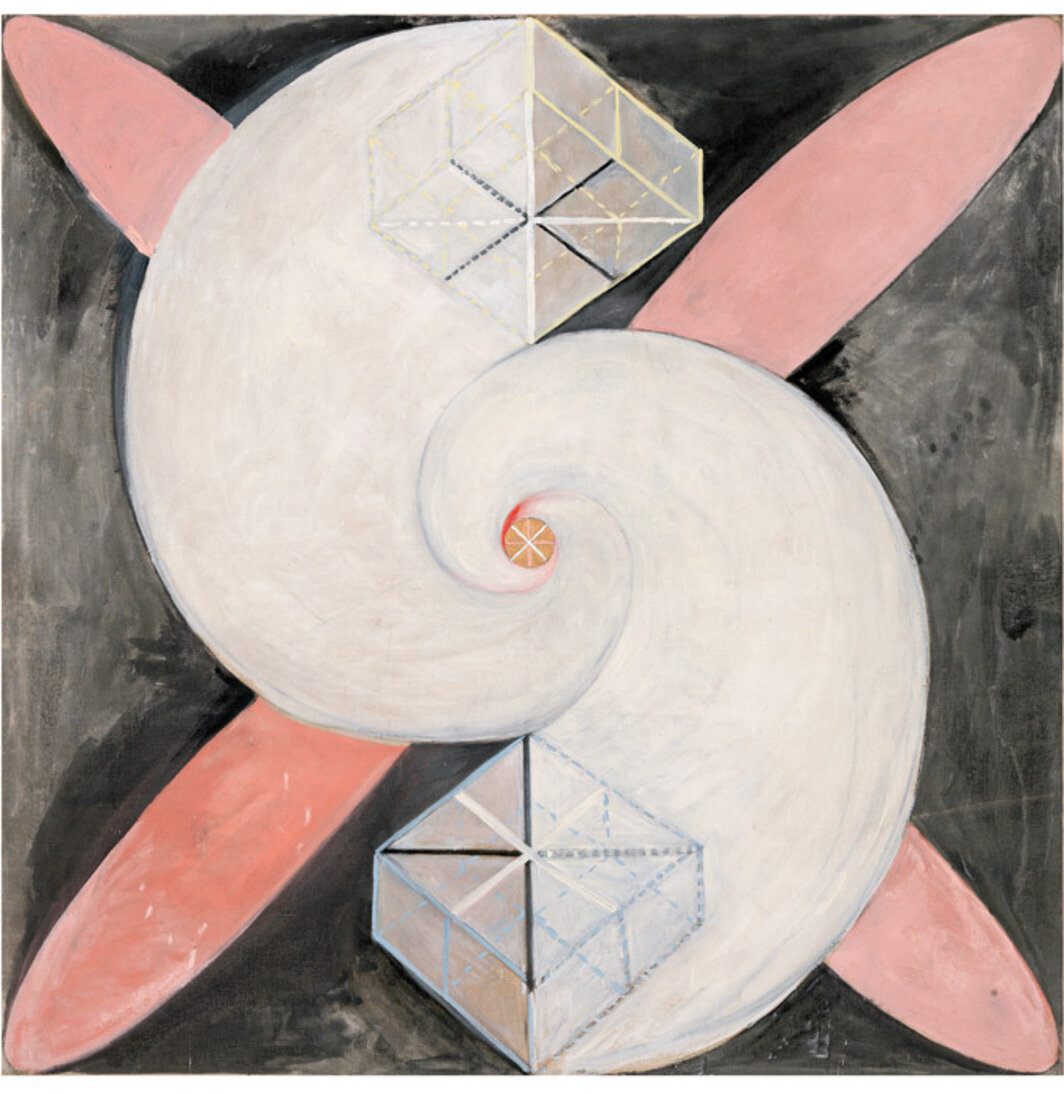
The Swan, No. 21, Hilma af Klint, (1915)
The Excerpt Series
We here at Mutable like excerpts, the pieces of a larger puzzle. Below you will find series inside of series. We have a series of excerpts from novels by Michael S. Judge. We have a series of letters from The Wes Letters. We have, as always, excerpts taken from various Mutable publications, such as Welcome to Weltschmerz, Revelation, and A Survey of my Failures This Far. As well as a few other random excerpts, because we’re always Mutable all the time!
Walker Zupp
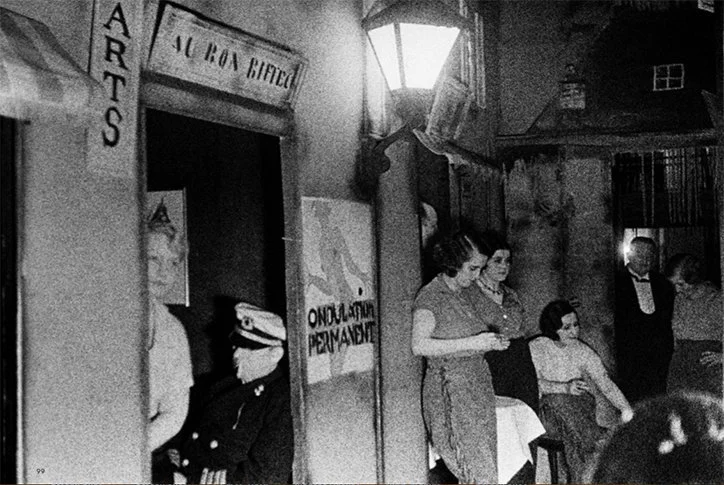
Lavinia’s cold when she wakes up. Head reeling like a German trade union dispute. And given the General German Trade-Union Federation, the German Trade-Union Federation and the Hirsch-Duncker Federation of German Labour Associations—those three mutually hostile Spitzenverbände—are about as friendly as a kick in the teeth, she must have the mother-of-all-headaches: which sounds like an opera. But she’s not singing this morning: not with that throat of hers. A bout of morning sickness pushes her over clutching her stomach. And when she observes the room the results are terrible. Dishes piled high, the acrid stench of rot and bioengineered hand towels, broken glass under the only window, and freezing air filling the putrid apartment—beyond which a dank alleyway echoes with prostitutes and urchins. Before she can wince at the brown stains on the mattress supporting her tired body the door bangs open. In walks a Marlene Dietrich rip-off complete with penciled eyebrows, a John-Waters-esque moustache, a top hat cocked at an angle. Must’ve been a decent wife-cum-agent before the Great War. Before the Weimar Republic. Before inflation and prostitution went hand in hand. “Decided to wake up, huh?”
“Where’s Foost?” Lavinia asks.
“Only God knows. But I’m Agnes. And this is my daughter Barbara.” Pointing to the corner: looking like a rejected set from the film The Cabinet of Doctor Caligari. Amongst an architectural zone where lines and shapes go nowhere and everywhere, a shivering girl’s sitting there with dyed ginger hair wearing a German alpine hat with frayed string and block stockings made traitorously by a Swiss cheese factory.

Walker Zupp
1
Now it was 6:00 a.m. and everyone was tired from weeks of travelling to this benighted spot the locals called Isandlwana and Lorne Novak was wincing before a small parade of his fellow soldiers, including Captain Wallass, whose pocket-watch Lorne had pocketed the night before.
Their superior’s sjambok split the sun in two before whistling through the air and striking Lorne’s hairy spine.
“It didn’t work, sir!” Lorne assured him, referring to the pocket watch.
“Be quiet, Novak!” the Officer replied, raising his sjambok again, cutting the sun, and adding another red bar to Lorne’s skin.
“Twenty-second of January,” Captain Wallass noted inwardly, enjoying the sight of Lorne’s penalty, but also thinking about what the damaged Lorne had in stall for him…
After he delivered the last blow, the Officer replaced his pith helmet, mirroring the submarine-like protuberance that shadowed the campsite. It seemed to have burst though the dry landscape like a modern submarine through arctic ice, and the British soldiers were afraid of the odd dark tower.

Stephen Scott Whitaker
Ostrich Derby took place every year on the same day as the Kentucky Derby, starting approximately an hour after the winning horse made his/her triumphant cross over the finish line. Ostrich Derby took place on Mung’s Farm, about four and a half hours north of the Hayes farm and environs. Jeffery Mung and his wife Fay raised ostriches, two and a half dozen of them usually, sometimes as many as three dozen on a sizable chunk of land on Maryland’s Eastern Shore. Mung had begun commercial ostrich farming for eggs, not the actual bird themselves, but the leather, the yolk, the albumin, the shell, the whole of the egg. Ostrich eggs retail somewhere in the high teens, sometimes twenties. There’s been rumor that Mung has branched out into farming the birds for meat, which he has yet to publicly confirm, or deny. All in all, it’s a labor of love, and Jeff Mung charges admission to local school kids to come to see the ostriches. Mr. Bill often reflects on the day he drove through the lazy Maryland countryside, almost identical to Virginia’s Eastern Shore in terms of vegetation, animal wildlife, etc., when he saw out the passenger’s window a large almost saurian looking bird running at high speeds round and round a fenced section of land. Mulch had casually remarked, “Oh yeah, ostriches,” and slowed so Mr. Bill could see the birds. Then even more casually Mulch remarked, “We’re coming here next weekend for the derby.” But Bill hadn’t heard that remark, he had been too busy admiring the stride of the birds, the large nine-foot body, the long sloping necks, and the head which reminded him of an old balding man. Bill then saw several other birds in orbit inside the black screened fence, high as an elephant’s eye. Bill, for a second, was transported somewhere else, a real honest to god mind-warp. Mr. Bill never forgot that moment, the odd, but quick black and white cartoon-like bird cutting, zipping across the long stretch of fenced-in green yard, backed by a row of large blocky shed-like things, which housed the dinosaur’s closest relative. For a moment Bill thought he was in another country. Where was the desert savanna, the palm trees, the Egyptian oasis? There was only Maryland humidity and hot summer sun.

Nick Perilli
On their way through Arlit, people sank into the sand. They sought Algeria.
Davies Tuch sat on a boulder—like a lizard—outside the city born from uranium mines. Davies appeared more vigorous, then. His hair gleamed blonde and his features were cut—almost chiseled around the cheek areas. Even with that vigor, he withered out there on his rock. A clogged rifle stuck in the ground beside him, reaching up out of the sand. A man’s shadow cast over Davies.
“Frenchman,” it said. Davies didn’t open his eyes. The man said it again.

Declan Tan
[Below is an excerpt from Declan Tan’s debut novel. As much a work of philosophy as a work of literature, it takes the reader in and out of abstract spaces, and exists somewhere in the space between 1984 and Infinite Jest. It’s a small book that packs a big punch. Enjoy!]
~
In this life we have everything backward. Born into death. Politeness before truth. The suicidal earth sets itself alight. And just as how death comes before life for some of us, man does not work because he has something to offer the world. Instead he is forced to work because he is told something can be offered to him. Forced to cultivate a personality beneficial to the slow suicide of the Earth. And where do we find acceptance? Always in another, always external. Rarely in these conditions could we hope to find it within. And we are taught many things out of blindness. We are told some are born for Greatness. We are told some have Greatness thrust upon them. This too is backward. Most, if not all, have idiocy thrust upon them. And then, again, som are born to it. And one day there will be no bone left to grind Some speckled wind will blow its heavy breath across our vision and over our trees and leave us all in the hollow.
Or is it not us but simply the murderous sun that has forsaken us? I lit a rotten cigarette and watched its burning ember glow, the ash over-running its edge until the small orange hum of heat was lost in the gray-black. I blink and wash my eyes with sparse tears.
The foreign body sensation.

Ben Segal
Dear Wes Anderson,
There’s a thing Feliz didn’t mention. Let me explain or at least narrate:
We left Crestline quickly and got our lunch in Lake Arrowhead Village. It isn’t really a village, just a collection of shops and underdeveloped attractions with a free parking garage. Its got an ugly bit of walk by the lake and seems mostly bent on clouding up its natural beauty with commerce. Still, the lake itself is beautiful. They can’t take that away.

Michael S. Judge
Mean density of rubber buckshot thuds against the left side of your chest, where cardiograph blossoms tangled with the disk-image star’s genomic stutter, dulled cartridge juddering newly nerveless across grooves worked into kerogen wax and compressed exoskeleton, the milk we’ve wrung from insect marrow,
eaten sunlight feathering the wet-gate star’s medical imagery with chordate quills of charcoal, vertebral preamps each potential for the signal it might route and amplify to some englobing flesh, a dendrite map dwindling with heat loss till it terminates into such gasping syntax as the glyph must break across to get metabolized,
if partially, erratically, momentum altered by the buildup of its own approaching wreckage, swaddled in fallout, cinders to turn the morning richly gray as carbon-heavy glass, optical track snarled up with the feedback of a cell-disruption star and peaking hard on all immunologic frequencies to matte down any EQ’s osseous smile again, the helpless seething grin of the dentition underneath what meat could lend it the appearance of a face you might interpret, still, even this late, render decidable and then pass fractious inaccurate verdict upon, unsure, as we must be, whether that constitutes a habit more tenacious even than the habit of survival or survival’s best remaining chance.

Brett Zehner
Dear Wes.
Hi again.
I just turned 28. I wrote a song called 28 with a sweater and a cup of tea.
Still no fame (that I know of) which is sort of good because I cleared the ol’ 27 hump with little damage.
But in fact it’s not true. There has been plenty of damage. A junkyard full of it. I tend to fib because I have a bad memory. But here are some true concrete checkable facts. A list in fact that I keep to help me fend off memory gaps:

Colin Jacks
1. Categories
1.0.0 :: Does the ground consist of spires?
What is and what is not within the world that you are planning to create? Does the ground consist of spires that reach to the tips of the atmosphere, or is the entire orb made up of a teaming mass of encephalocapsules? (Brain capsules.) All of this begins with categorization. Create a series of types, beginning with animate and inanimate matter, or god and mortal, or up and down, and from these preliminary dichotomies you can create the great font of being, the million hordes and so forth.

Feliz Lucia Molina
February 9, 2012
12:54pm
Dear Wes,
Have you watched the 1960s documentary Endless Summer? After drive-thru at In-N-Out I went home and turned on Netflix. The sunny California male voiceover truly lifts my heart. And I never say lifts my heart. That two surfer friends went around the world searching for the perfect wave is a cute representation of a philosophy of sport or aesthetics of time. Do you know Roland Barthes’ little masterpiece What Is Sport? I wonder what he would have said about surfing.

Ben Segal
Dear Wes,
Will you ever go bald? Do you worry about it? Do you worry that people won’t want to work with bald Wes Anderson, that they’ll see balding as a sign of antiquatedness, that your career might be divided between the haired and hairless eras?
I worry about it, but then again I worry about almost everything.

Michael S. Judge
People are the first indication that you’ve moved from Djuna’s city to Tom’s. People: better to call them figures. They behave in only one way, not the same way but one way each. They’re doing what they do whenever you look. Unobserved they likely hide, lay folded or at length in canisters under the street like tanks of obsolete poison.
The ones wrapped in on themselves may burst with new selenotropic buds that spring up where brows rub wrists. Dirt-caked blooms with stiff seaweed fans, picked by other flowers and other fish into a comb of rigid tendrils. Fed by cool milks of the moon. Fed on white drink with ribbons curling through it, blue and moonflecked like Pierrot’s face.
The ones laid out full-length must grow by diminution, like corpses getting bigger. Their chests will rise to lower points and filter out less yeast; their eyes will sink nearer to the tank’s tarnished surface and take root in metal clefts. With their other flesh laid aside, stretched full elsewhere and eyeless, such eyes would stand like glistened marshland plants. An eye unglassed, unglazed, still shocked by sight, atop a stalk of greasy nerves. And every slump toward the floor makes these bodies longer. When they die, we think, they die as man-shaped patches of damp. Not a fingernail thick, but thirty feet between their toes and the eyes that stand still upright.
Cave paintings made with human soap.

Feliz Lucia Molina, Brett Zehner, & Ben Segal
January 25, 2012 2:00pm
Dear Wes Anderson, I heard you took the train from Chicago to southern California. I thought it was kind of cute to hear you don’t like airplanes. They scare me too, somewhat, but not enough so that I can’t ride them. The other night, Brett told us the story. He’d been gone for Christmas to Columbus, Ohio. He didn’t mention the train story until after a couple beers at the kitchen table. I showed him I Love Dick by Chris Kraus—a series of billet-doux glitter bombs from a married couple to a man named Dick.

Gabriel Boyer
[The excerpt below is from Mutable’s most recent release, a memoir of the summer Boyer spent touring America with a woman named Jill, performing plays with strangers in their bedrooms as the two made their way south to New Orleans, west to LA, and north to Seattle, the madness that ensued, and how it all began.]
Bedroom Theater began when my roommate changed the light bulb in my bedroom, or rather, it began when he pointed out to me that he had changed the light bulb and for a moment I thought the bare bulb made my room look like an experimental theater space or heroin den, and then I thought that I should do that someday (start an experimental theater in my bedroom not start doing heroin) and then I forgot, for I was constantly slipping in and out of depression in those days, or rather, mostly slipping in and very rarely slipping out of the yearlong depression I was at that moment in the middle of. Most days it would take me a good half hour to put on one sock and even when I was fully clothed in socks, I would still spend hours sitting in the dark of my room contemplating literally nothing while staring at the brick wall facing my couch and the word “Safety” painted on it and above my queen-sized bed.

P. D. Ouspensky
BEFORE I BEGIN TO EXPLAIN TO YOU in a general way what this system is about, I want particularly to impress on your minds that the most important ideas and principles of the system do not belong to me. This is chiefly what makes them valuable, because if they belonged to me they would be like all other theories invented by ordinary minds—they would give only a subjective view of things.
When I began to write A New Model of the Universe in 1907, I formulated to myself, as many other people have done before and since, that behind the surface of the life which we know lies something much bigger and more important. And I said to myself then that until we know more about what lies behind, all our knowledge of life and of ourselves is really negligible. I remember one conversation at that time, when I said, ‘If it were possible to accept as proven that consciousness (or, as I should call it now, intelligence) can manifest itself apart from the physical body, many other things could be proved. Only it cannot be taken as proved.’ I realized that manifestations of supernormal psychology such as thought transference, clairvoyance, the possibility of knowing the future, of looking back into the past, and so on, have not been proved. So I tried to find a method of studying these things, and worked on that line for several years, but the results were very elusive; and though several experiments were successful, it was almost impossible to repeat them.

Richard Meros
Privatised parts would look something like this: an individual surveys her preferences and enters her desires as data into a machine that is apt at recording and memorising all intimate ideas. Her mind will be recorded in various qualitative sessions, her data stored as vast quantitative sweeps, and her energies directed towards a lover, or a group of lovers, who satisfy her present condition and who are likely to parallel the trajectory of her expected desires. A primitive system named Lex Sexualis will try the formula of ultimate availability for one citizen for any other citizen, but the project will derail other concerns of the state. Abandoning Lex Sexualis means abandoning all idea that the individual instinct should be able to choose their lovers. Lovers will still choose their lovers, and any other one human will be an option, but the choices will be made from the results of a vast survey of the human body and mind. Without intimate specialised knowledge this part of the love finding sounds difficult, but it is merely technique.

Clark Cooper
Technology has advanced again, and your father feels out of date having all his boxes of old photographic slides sitting around when you could scan them for him and keep them electronically. You are scanning the slides. If you scan them at very low resolution—say one pixel per image—the job will be very efficient and quick but you get more or less nothing; a plain block that averages the colors of the whole picture. As you increase the resolution you get images that look less and less chunky, then less and less blurry, then more and more like the picture, and pretty soon you have something that to any unaided eye pretty much is the picture.

Michael S. Judge
ubixic [ubi’∫ikʔ], n.: the “reading” or signification of a sign
(Quiché Mayan)
Diviners are semioticians by profession; they start from signs (etal), in this case signs that take forms other than those of spoken words, and try to arrive at a “reading,” as we would say, or ubixic, “its-being-said” or “an announcement,” as is said in Quiché.
—Dennis Tedlock, The Spoken Word and the Work of Interpretation (Philadelphia: University of Pennsylvania Press, 2011), p. 132.
~
Black boughs etch the nightblue’s magnet fluid. A fleshed lithograph: how wasp-star veined our eyes.
The photographs of undeveloped cities still lie in wellwater’s black feather-silt. Compost of river-birds and what of river they managed to take with them. This is a linguistics: etymon was water cutting through the continental shelf, and now syllable will molt, and now vowel’s bone or system of cartilage locks will spread out the homology of wing drowned in the meat of different hands.

Colin Winette
From the cliff, it looked like an enormous pecan shell. As they climbed down the rocks, Marcus could better see the soggy outline of each broken plank. Below them was a wooden hull, flipped on its side.
The old water had worn a smooth stone grotto into the cliff set. It also left pieces of a ship there.
Most of the planks came loose with a tug. Marcus removed four pieces and laid them beside one another on the stone at their feet.
“This ship,” Colin said, “was a model ship.”
“How do you mean?” Marcus rearranged the boards into a square, brought together the corners. “It was a battleship or something.”
“Someone built it like a battleship. Someone built this thing to look exactly like a Roman battleship. See, these are the oarlocks, below deck, because warriors didn’t row. Slaves did.”

A D Jameson
(A D Jameson has a new book out by Lawrence & Gibson, a remarkable little outfit in New Zealand renowned for their beautiful hand-sown craftsmanship. Jameson’s new book, entitled Giant Slugs, is a strange and alluring creation; it’s narrator exiled, ousted, put out by those oozing outsized interlopers, denied his true inheritance, his due kingly crown. So begins this epicene narrator’s epichorial wanderings (part epicrisis, part epicedium) in this largely silly, slightly filthy, pun-laden Epicurean retelling of the ages-old Epic of Gilgamesh.)
On the fifth day, our class was taken on a field trip to Ninja City’s secret portions, the developing suburban bailiwicks, expanding eastward at the rate of three blocks per year. The slogan of these newer parts was, “Virus-Free Since ’93!” Their motto was, “We Will Find the Serum.”
The ninjas who lived there, global warming enthusiasts, threw webbed geodesic domes over desolate tracts—the war-scarred landscape it had been left to them to develop. When the finished dome was turned on, it generated an interior rain that lasted for forty days and thirty-nine nights. When the domes were taken down, the desolation had been transformed into normal, productive topsoil, rich loam like you’d find in a national forest. Other ninjas, the ones whose talents disposed them to comprise the follow-up crew, paved over the mess and poured concrete sidewalks marked with their handprints and the date. Then they built roadside stands from which they sold pints of Noby Sheets’s coleslaw. (She used her spare time once a week to make big vats of the stuff, the most delicious slaw I’d ever tasted.)

as translated by Charles Kay Ogden
The family of Karl Wittgenstein, who was one of Austria’s richest men when he died, in 1913, may deserve some gloomy sort of prize, the Palm of Atreus, perhaps. His youngest child, the philosopher Ludwig Wittgenstein, once asked a pupil if he had ever had any tragedies in his life. The pupil, evidently well trained, inquired what he meant by “tragedy.” “I mean suicides, madness, or quarrels,” replied Ludwig, three of whose four brothers committed suicide, two of them (Rudi and Hans) in their early twenties, and the third (Kurt) at the age of forty. Ludwig often thought of doing so, as did his surviving brother, Paul. A budding concert pianist when he lost his right arm to a Russian bullet, in 1914, Paul was imprisoned for a time in the infamous Siberian fortress where Dostoyevsky had set his novel “The House of the Dead.” Ludwig later claimed to have first entertained thoughts of suicide at around the age of ten, before any of his brothers had died. There were three sisters: Gretl, Helene, and Hermine. Hermine, the eldest child (she was born in 1874; Ludwig, the youngest, arrived fifteen years later), and the guardian of her father’s flame, never married. Helene was highly neurotic, and had a husband who suffered from dementia. Gretl was regarded as irritating by most people, including her unpleasant husband, who committed suicide, as did his father and one of his aunts. Bad temper and extreme nervous tension were endemic in the family. One day, when Paul was practicing at one of the seven grand pianos in their winter home, the Palais Wittgenstein, he leaped up and shouted at his brother Ludwig in the room next door, “I cannot play when you are in the house, as I feel your skepticism seeping towards me from under the door!”

R. Sachs
Something about the fact that each of us is the product of several billion years of successful reproduction tempts me to believe that there is a kind of providence at work in mating. That for each of us, our perfect mirror exists. For the fat, the ugly, the hopeless, the deranged there is their compensatory fetishist and mate. Me, I’m lazy—or something like it. I have my interests, but I pursue them with the intensity of one watching goldfish. I think about having a perfect sex life, what it might be like, how it work, but I do little to make it a reality. Do I really want to spend that much time brushing my teeth, washing my hair and combing my pubes? And so I have fallen into a kind of romantic complacency—a sort of challenge to the women of the world that they will have to be more desirable than a night alone, or I will remain, prized gem, undiscovered.