The notorious Neptune are on the road once again promoting their new album, Play Some Music. What began as a sculpture project for Jason Sanford in the 90s evolved into Boston’s perhaps most iconic art-rock group, Neptune. Guitars hacked together from soldered refrigerator doors and homemade synths—a melding of hardware store and landfill as they put it—Neptune has continued to shock and awe with their signature discordant sound, and this summer they’ll be touring the US, beginning June 10th at The Dunken Unicorn in Atlanta, GA, and ending in Minneapolis, MN, on the 28th. Full tour dates and locations can be found here. Mirror Side below is from Play Some Music.
Feature
“Unpluggers who seek new forms of dwelling”: Ivan Illich on dwelling and the vernacular
D. Alan Dean
“To dwell is an art […] The human is the only animal who is an artist, and the art of dwelling is part of the art of living.” So says Ivan Illich in an essay called “Dwelling” that appears in In the Mirror of the Past. The modern world has rendered this art increasingly difficult. Many of us are liable to experience housing, he says, more than dwelling. Housing embeds us in a discourse of management, biology, or political economy. Housing provides a place to live in a biological sense, or in a bureaucratic one, but not a place to dwell.
Read MoreA Song That Ends
Mutable Sound of the Month
We here at Mutable have been recording various musical projects in the privacy of our piano schools in the suburbs of Hanoi and while losing our minds in Kathmandu. These albums remain hidden in our most secret places but we thought we’d share A Song That Ends, recorded and our favorite on both. It hearkens back to the classic country of Patsy Cline and George Jones and its simpler poetics. It is nothing but a song that ends.
Mutable Sound is pleased to present a unique musical experience every month or so by ourselves or someone we’ve been introduced to. These are from the reel-to-reels and tascams of the garages and basements of the world. If you have a track you would like us to hear, please feel free to send it on to mail@mutablesound.com along with credits and a brief description.
The Indifference Engine
In the Mutableye
[For this In the Mutable Eye, we are posting a selection from The Indifference Engine, Clarke Cooper’s unpublished masterpiece on neo-totalitarianism. The full manuscript can be found on Substack here.]
*
Part I, Chapter 4: Efficient Systems
The classic totalitarianisms were evil and violent from beginning to end, but Hayek showed that a nascent totalitarianism need not begin that way and I have showed that it need not run that way. Totalitarianism is not what people think. The hallmarks of totalitarianism are not the brutality or the extravagant autocracy—those were only ancillary characteristics of a particular type of totalitarianism; side effects. The real essence of totalitarianism is the primacy of a System.
Not every system can do it, of course. Arendt noted that for a classic totalitarianism to really get going and achieve a decent approximation of totality it has to be based in a country that's big enough and powerful enough to have at least a rhetorical chance of actually taking over the world. Germany had the industrial power and just barely enough bigness; the Soviet Union had all the bigness and just barely enough power. Similarly, for a System to be effectively totalitogenic it must meet three interdependent criteria. It has to be big enough and general enough to plausibly encompass most activity. It probably has to be or promote a spontaneous order—it needs laws of its own innate physics that can determine (or equivalently, explain) the "natural" behavior of every element; this is how it can live. And it should exhibit positive feedback: any compliance should generally encourage more compliance; this is how it can grow, which it must if it's going to become properly infinite.
Read MoreFrom Robert Filliou to Mario Merz: The Contemporary Relevance of the Barabar "Caves" (India) in Light of Contemporary Art
Dominique de Varine
[The below text has been translated from the French. The original French text is at the bottom if you are so interested.]
It took the developments in painting during the 19th and early 20th centuries, from William Turner to Henri Matisse and Georges Braque, for our gaze to be freed and for us to allow ourselves to examine parietal art with an unprejudiced spirit. Similarly, certain developments in art from the twentieth century onward, particularly from its second half, are needed to approach the "caves" of Barabar in their singularity, overflowing any referential framework.
The Void and the Full, the Nothing and the Everything, the Hare and the Rifle
No figuration of any kind, no statuary or engraving adorns the interior volumes with their clockwork precision. Nothing but emptiness. And formal resonance.
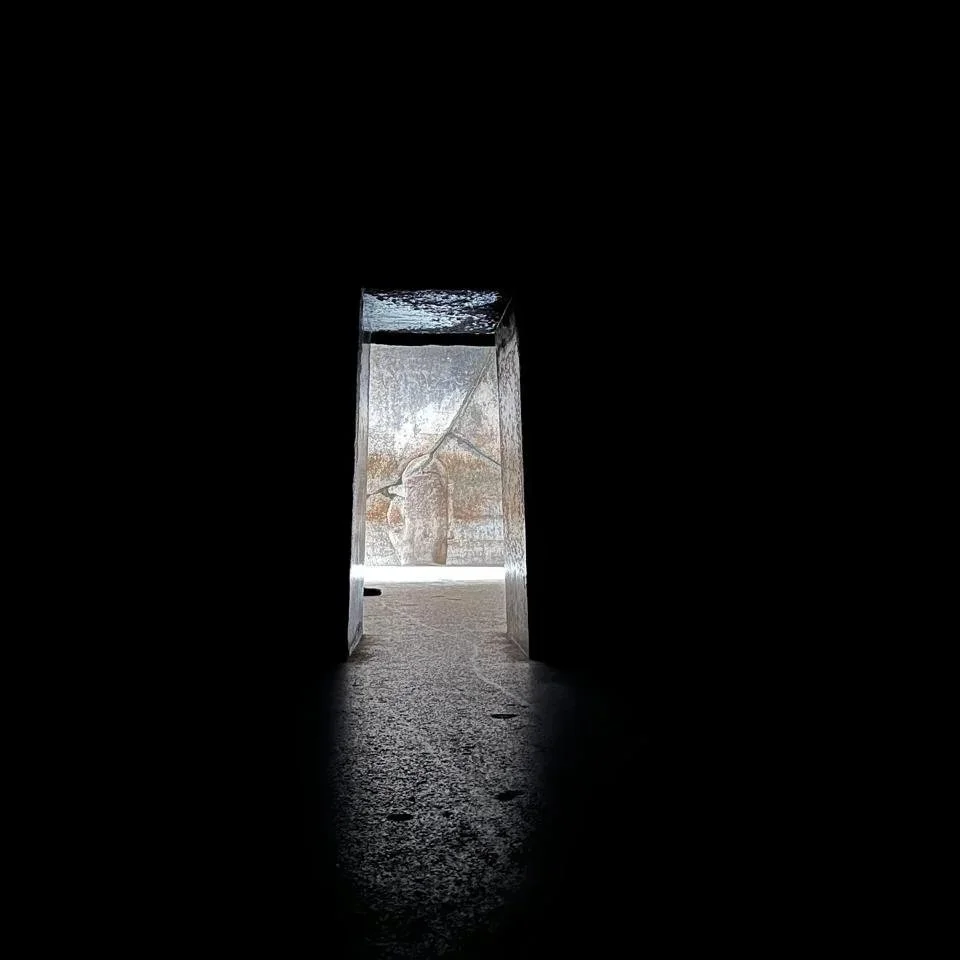
Membrane, cocoon, receptor, chrysalis of granite polished to the micron on whose surface your body is reflected, but equally folds and gullies. The Barabar caves defy all interpretation, which remain contradictory beyond their possible assimilation to Ajivika culture (Maurya Empire, around the 5th century BCE). Therefore, this text will offer no explanation of what these caves are, their possible past role, or the reason for their creation. The technical aspects remain a mystery. But an attempt to read their formal deployment.
Read MoreThe Gnostic Manifesto
Manifesto of the Month
You think you know where you’re going but you’re not going anywhere.
The world as presented is not the world.
You’re in a small village in the mountains of Nepal and barely a week ago Kathmandu erupted in violence. You see no violence. You hear no violence. One morning, you walk through the town, and you notice the large white house now has burnt and blown-out windows. A week later, you go into Kathmandu and are confronted by the long arched windows of Singha Durbar (or Lion Palace) framed bonfires swelling out from their neoclassical cage to turn the night red but in the morning all that was left was the scorched aftermath. You are removed from the act and the seeing of the act is filtered—through news that is 6:1 paid PR people to independent journalists—through social media that feeds you a personalized stream of information, misinformation, skewed information—through the chatrooms of your friends and the twitter feeds of your favorite celebrities. What you see is not the thing as it is.
As your day evolves into a haiku of habits. As you wait for the moment when everything turns clear as crystal and a way out of your own decaying self. Who do you think you are? Who are you in truth?
Read MoreInterview with Dominique de Varine
[This week we thought we’d share an interview with artist, Dominique de Varine, who calls Brittany home, but who we met in the Tibetan colonies of Northern India.]
*
Mutable: I think a good place to start our conversation is Dharma and Karma, as this was where our conversation began. What is the relationship between Dharma and Karma in your work? Has it always been this way or has their relationship evolved over time? And also, was there a time when these concepts were not important to your work and some moment when they became more so?
Dominique de Varine: Karma, Dharma, I don’t really know what it is. My ideas are fleeting, they fade with time. When I began my work on the Galipettes series, the question that series seemed to me to be answering was this issue of emptiness. Over time, the echo of fullness invited itself to the point of playing equal with emptiness, and as a dialectic. A reading is complementary to it, to be grasped from the side of reality since it is from this material that my research is ultimately made, and simultaneously to be grasped from the side of the order of the narrative, since reality only exists in relation to the form that we lend it. This narratological order can be pointed out from the opposition between engagement (narrative) and disengagement (narrative). The void, disengagement in the here and now. The fullness, engagement with all the shaping of the world. From there, Dharma and Karma.
Read MoreWhat Light Becomes Me
“Imagine an AI trained on Quentin Tarantino films, William Burroughs novels, a few bits of David Ohle's weirder surrealism, and a Pittsburgh street map is told to write a dystopian noir, and halfway through that project someone feeds in a bunch of William Gibson and Philip K. Dick, and the AI meanwhile has fleshy arms and is growing sticky and pungent and wet. And imagine this AI hands off a first draft to a wandering poet with an ear for torqued language, a lonely figure, a touch sentimental but with a bitter streak. And then this poet revises the draft while reading abstruse philosophy and accounts of mystic visions. Now speed up whatever you're imagining, such that it becomes a propulsive hyperviolent plunge through fractured layers of perception and possibilities, ends of the world without end, the impossible tortures of the post-post, the indifference of hallucination and prophecy. Perhaps this might approach Devil Everywhere I Look, but it's still unlikely you will have anticipated the bears,” Ben Segal, author of The Wes Letters and Pool Party Trap Loop
Pretty much sums it up. You can find a copy of What Light Becomes Me by Mutable regular Gabriel Boyer … here.
In the Mutableye is a segment that sometimes showcases something interesting that is happening somewhere in the world at this moment, and sometimes showcases some fad or person from the past that we here at Mutable acknowledge is still cool s**t.
Submergent 01
Mutable Sound of the Month
Jason Sanford experiments with technology to create new kinds and sorts of sounds with old tones and out of step algorithms, and Submergent is one of these sounds. It’s a sound like the hive has woken and it is hunting around the corner. It is a sound that presents only questions. Mr. Sanford has been bending the minds and metal of the music world for thirty years and he’s not finished twisting your soul into pretzels of itself using methodologies verging on the unacceptable. Enjoy!
Mutable Sound is pleased to present a unique musical experience every month or so by ourselves or someone we’ve been introduced to. These are from the reel-to-reels and tascams of the garages and basements of the world. If you have a track you would like us to hear, please feel free to send it on to mail@mutablesound.com along with credits and a brief description.
The Declaration of Independence
Manifesto of the Month
[As we enter the home stretch of the 2024 electoral season, we here at Mutable wanted to pay tribute to a pivotal manifesto that is often overlooked in the history of political and artistic movements, the Declaration of Independence. Presented both as a set of grievances and a rationale for extreme action, it is also presenting a radical worldview wherein we are all equal and that governments exist to serve us rather than for us to exist to serve the whims of monarchs. You could argue that it’s the most successful manifesto. It’s movement is still going strong.]
*
The unanimous Declaration of the thirteen united States of America, When in the Course of human events, it becomes necessary for one people to dissolve the political bands which have connected them with another, and to assume among the powers of the earth, the separate and equal station to which the Laws of Nature and of Nature's God entitle them, a decent respect to the opinions of mankind requires that they should declare the causes which impel them to the separation.
We hold these truths to be self-evident, that all men are created equal, that they are endowed by their Creator with certain unalienable Rights, that among these are Life, Liberty and the pursuit of Happiness.--That to secure these rights, Governments are instituted among Men, deriving their just powers from the consent of the governed, --That whenever any Form of Government becomes destructive of these ends, it is the Right of the People to alter or to abolish it, and to institute new Government, laying its foundation on such principles and organizing its powers in such form, as to them shall seem most likely to effect their Safety and Happiness. Prudence, indeed, will dictate that Governments long established should not be changed for light and transient causes; and accordingly all experience hath shewn, that mankind are more disposed to suffer, while evils are sufferable, than to right themselves by abolishing the forms to which they are accustomed. But when a long train of abuses and usurpations, pursuing invariably the same Object evinces a design to reduce them under absolute Despotism, it is their right, it is their duty, to throw off such Government, and to provide new Guards for their future security.--Such has been the patient sufferance of these Colonies; and such is now the necessity which constrains them to alter their former Systems of Government. The history of the present King of Great Britain is a history of repeated injuries and usurpations, all having in direct object the establishment of an absolute Tyranny over these States. To prove this, let Facts be submitted to a candid world.
Read MoreAI Art, Camp, Kitsch, & the Singularity

In the Mutableye
AI art has proven both divisive and alluring, prompting Chomsky to describe AI and language learning models as, “plagiarism software because it doesn't create anything, but copies existing works of existing artists modifying them enough to escape copyright laws,” and, from Hayao Miyazaki: “I will never apply AI art to my work. The art form is an insult to life itself.” But there are those of us who can’t look away from these monstrosities, precisely because of their wrongness, their near-campiness and quasi-kitchiness.
It is in the ways that AI art fails that we are drawn to it. We chuckle knowingly at the oddly rendered hands even when we are unnerved by the humanity of the face we are looking at. We point out which actor this image was clearly based on, and how it’s just a little bit off, but we can’t stop looking at the sky behind.
As Susan Sontag says in Notes on ‘Camp’, camp sees everything in quotation marks. “It’s not a lamp, but a ‘lamp’; not a woman, but a ‘woman’” and this is exactly what AI art does to everything, but in both a more abstractified and specific way. It’s not Chris Pratt, it’s ‘Chris Pratt’. It’s not the Matrix. It’s ‘The Matrix’. It’s not a person, it’s a ‘person’. It takes units of culture and processes it into an ironic and alien counterpoint to the actual article, which is perhaps why Hayao Miyazaki sees it as an insult to life itself. Artifacts of human ingenuity are turned simulacra of themselves in a trick of computing mirrors that will always and forever render images that are somehow ‘off’, but it is precisely this offness that draws us to them, that turns them into units of camp, a kind of standardization of the so-bad-it’s-good aesthetic through the functioning of the attention transformer mechanism itself.
We here have Mutable have put together a collection of some of our favorites from the library of Abandoned Films and from TRGNY, as well as a few other examples indicative of trends in AI art as a whole.
Read MoreLa Galerie Lente 1: Denis Colin
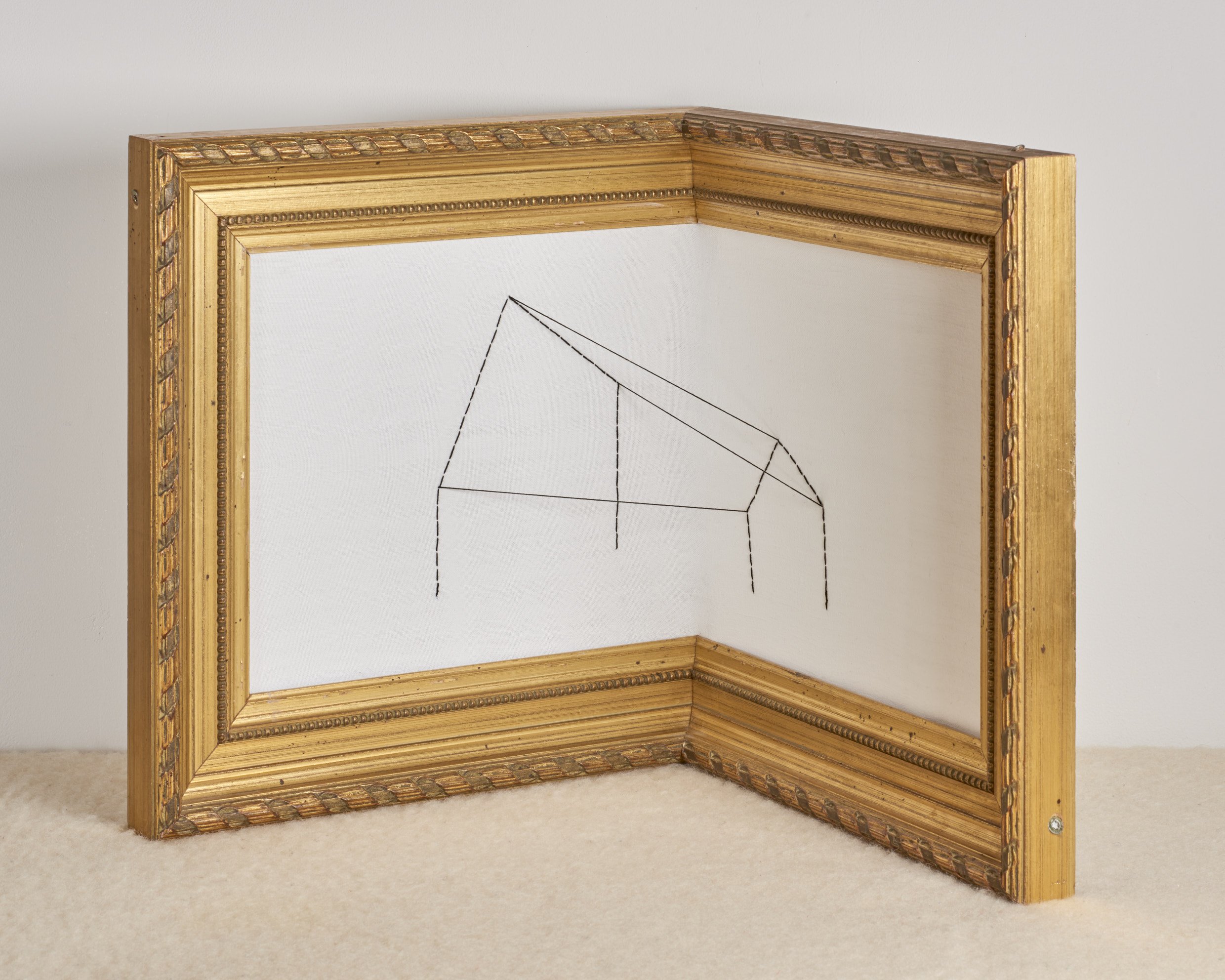
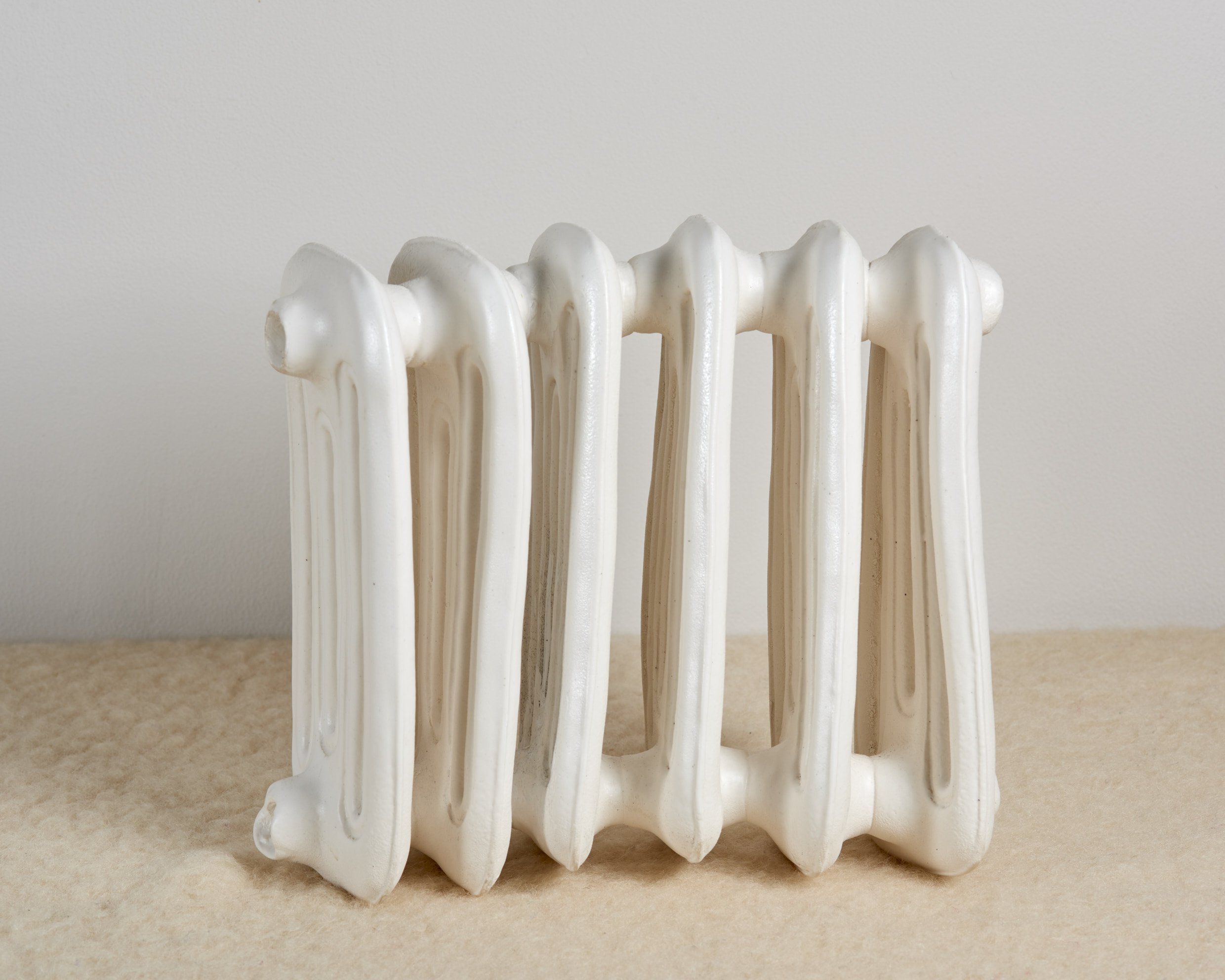
L’œuvre de Denis Colin se développe en gambade, discrètement. La simplicité, l’humilité de son économie vous poursuivent de leur charme, de leur humour enfoui. Le plus souvent crée en regard d’un lieu, pour un lieu, un évènement, elle s’y insère et s’en libère aussitôt.
J’ai proposé à Denis Colin des images de son travail tournant autour de la question de l’habiter.
All photographs © Philippe Robin. To see more of his work go here.
Video: Bardo Songs in Dharamshala
Mutable Sound of the Month
We here at Mutable have been venturing into the Far East and its vicinity for some time, and this most recent addition to our library of auditory delights comes from one of these forays. To Dharamshala and Cafe 129 where Mutable regular Gabriel Boyer was performing songs from various unreleased albums, and one or two you may have heard before but never like this. In this most intimate of concerts, at a venue perched high in the Himalayas and coming directly from the monastery he has been calling home for more than a year, Mr. Boyer sings songs of heartache in the Vietnam jungle and songs steeped in a wistfulness he wrote while living with the Tibetan monks of Northern India. Enjoy!
Mutable Sound is pleased to present a unique musical experience every month or so by ourselves or someone we’ve been introduced to. These are from the reel-to-reels and tascams of the garages and basements of the world. If you have a track you would like us to hear, please feel free to send it on to mail@mutablesound.com along with credits and a brief description.
HUMAN Constitution
Manifesto of the Month
[We here at Mutable stumbled upon the most outlandish of web pages and felt the need to post an excerpt of this endless and multi-pronged manifesto here. If you enjoy the twisted logic, you can find more at Evolutionary Economics.]
Abstract. The structural constitution of a super organism, are its physiological networks, which distribute:
The proper energy: blood, financial, economic system of re=production of goods.
Information: legal, cultural system of informative just laws and customs that synchronize the motions of its body cells.
Entropy=motion to the system:digestive territorial system from where to extract the raw materials for entropic motion
And so a legal constitution of the Human super organism will be a set of laws that maximize the WHEALTHY (healthy wealth), efficient distribution of energy, information and goods to the entire human kind, as all cells-citizens in any true working, efficient super organism receive enough of them to survive.
Read MoreThe Early Cinema of Jamaa Fanaka
Walker Zupp
Welcome Home Brother Charles (1975) was the first film by Jamaa Fanaka (1942-2012). Fanaka was a film undergraduate at UCLA when he made the film, and it was an attempt to make use of the equipment he had access to. “They’d have these assignments called a Project 1 then a Project 2, which were usually five or ten minutes without sound,” Fanaka recalled in an interview with Jeff Brummett*. Although turning one’s “Project 2” into a movie was unheard of, Fanaka decided to “take advantage of this blessing” and started production on his first feature-length film*.
1975 was a watershed year for the United States. It saw the evacuation of American soldiers from Saigon and the takeover of Cambodia by Pol Pot and the Khmer Rouge. The American merchant vessel, Mayaguez, was also rescued after being seized by Cambodian forces. Lastly, Americans and Soviets launched their respective spacecraft—Apollo and the Soyuz—into space for a U.S.-Soviet link-up, which led to new developments in space travel. In the United States things were equally tumultuous. John N. Mitchell, H.R. Haldeman and John D. Ehrlichman were found guilty of covering up the Watergate Scandal and were sentenced to up to eight years in jail. Then Gerald Ford—who had only recently been sworn-in as president—survived two assassination attempts within seventeen days†. (Both attempts were carried out by female shooters, one of whom was a member of Charles Manson’s cult.) In short, it was the right time for Fanaka to make a film about an ex-con’s murderous genitalia. As of June 2023, however, Welcome Home Brother Charles has 4.8 out of 10 on IMDB, is generally classed as a Blaxploitation movie and is about as obscure as the pioneers of Soviet animation, the epic Polish science fiction movie, On the Silver Globe (1988), and the experimental novels of Ann Quin.
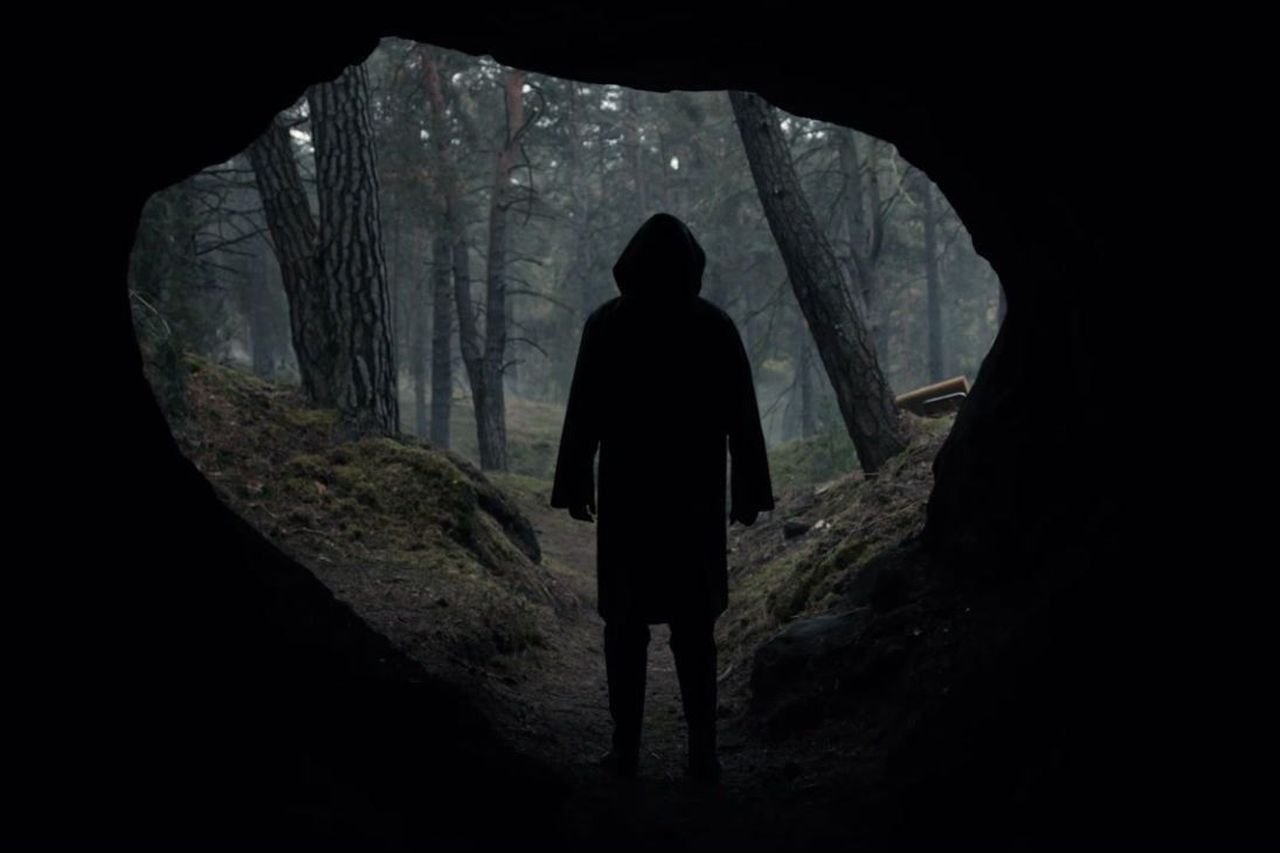
Read MoreThis is Not a Review: of Dark
Gabriel Boyer
Twin Peaks will forever be my favorite show of all time. It’s weirdness is unprecedented. It sits both at the peak of David Lynch’s career and at this perfect point in history when television was still just trash and when you consumed it, you did with the same relish that you consumed Bagel Bites or Oreo O’s. It was a time when FOX was just getting started with shows like 90210 and Married With Children, when trashiness and disgustingness were hilarious, when Jerry Springer was both a genius and a charlatan, a world of satire and deadpan comedy that will never come again.
But in the sea change that came with the coming decades, new kinds of serialized video content began being produced. There are those shows everyone talks about: The Sopranos, Breaking Bad, Game of Thrones… The first two seasons of both True Detective and Westworld were a revelation. But these were all masterful works of genre, whereas with Dark something new came into the world that for once could rival Twin Peaks with its weirdness.
Dark raises questions of causality and plays with dichotomies like good and evil, but it also manipulates our expectations in an almost mathematical way. What is so mind-meltingly good about it isn’t the dialogue or the characters, but the puzzle of its narratological universe and the way in which this puzzle has been realized. In a streaming universe dominated by sequels and spin-offs, Dark is something of a miracle. It exists in a genre all its own, a genre that is distinct from science fiction, a kind of postmodern realism.
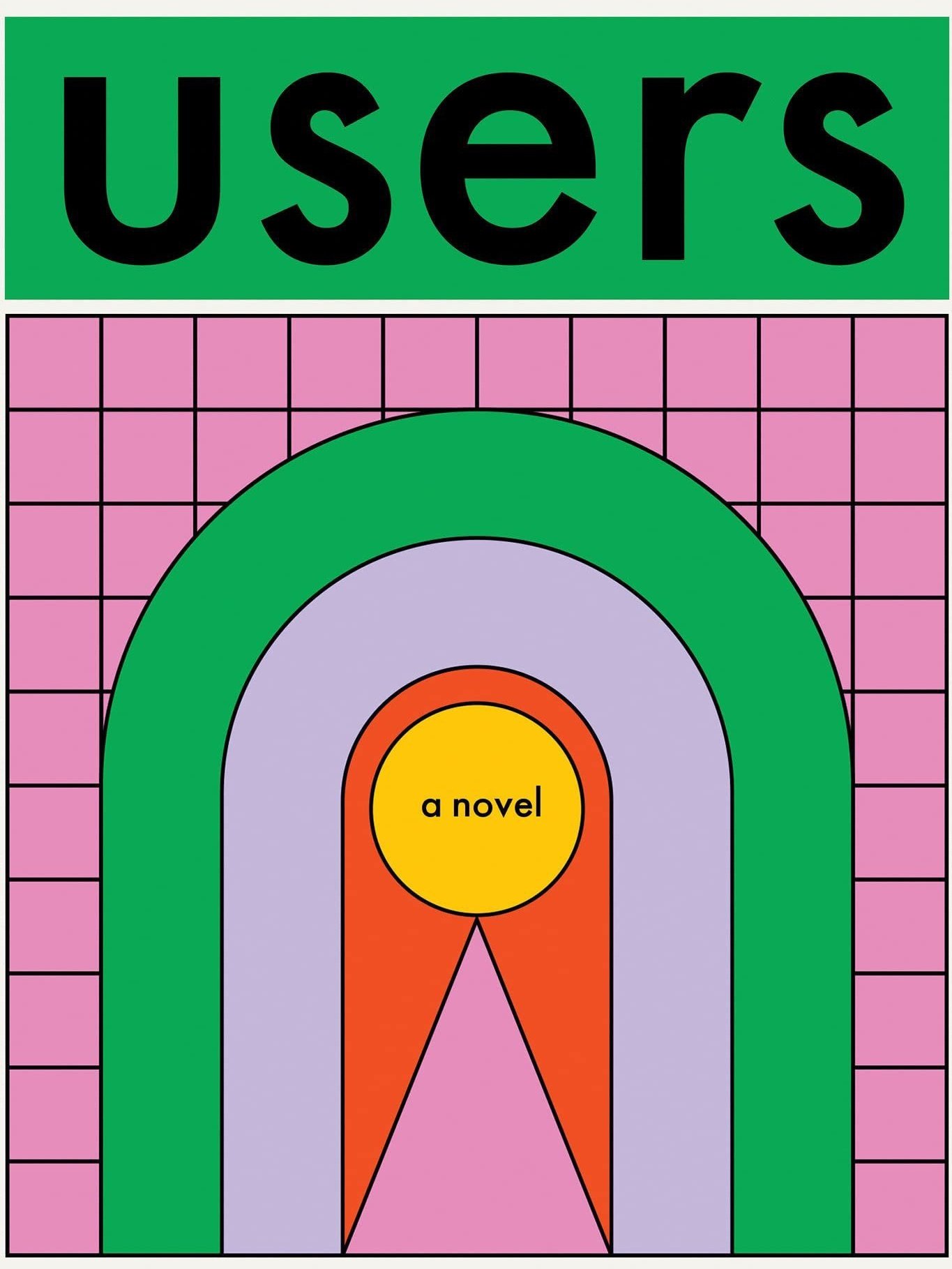
Read MoreColin Winnette's Users
We here at Mutable first met Colin Winnette in a loft in Chicago sometime in early 2009, and have delighted in watching as his career has blossomed in the last decade-and-a-half. From the subtle allegorical realism of his debut novel, Revelation, a voice that matured with Coyote and Haint’s Stay, turned wondrously weird with The Job of Wasp, and has now founds its home with Users.
Hailed by the New York Times as “timeless”, the story also reads as very timely, centering around a tech creative and his efforts to create VR experiences from dreams, a premise which perfectly fits with Winnette’s signature dreamlike prose. From Western to sci-fi, the one constant is a kind of watery and elastic reality, a prose both biblical and sly.
You can read a sample of Users here.
In the Mutableye is a segment that sometimes showcases something interesting that is happening somewhere in the world at this moment, and sometimes showcases some fad or person from the past that we here at Mutable acknowledge is still cool s**t.
Video: Kenny Rogers Rock Opera
Mutable Sound of the Month
We here at Mutable asked you to send us your reel-to-reels and taskams of the garages of the basements of the world and the video below captures the most epic of these sorts of DIY moments, the end of the infamous Kenny Rogers rock opera and Saginaw in the bad old days when Green Anarchy was alive and well in the bosom of the Pacific Northwest. For a moment, this was a place where experimental film thrived in the larger primitive skills atmosphere, during the first few hesitent years of the new millennium. This moment captures the spirit of an era, and we here at Mutable cannot seem to stop watching it. It was a moment when the youth had this naive belief that they could change the future, maybe even save the planet. If only they’d been right.
Mutable Sound is pleased to present a unique musical experience every month or so by ourselves or someone we’ve been introduced to. These are from the reel-to-reels and tascams of the garages and basements of the world. If you have a track you would like us to hear, please feel free to send it on to mail@mutablesound.com along with credits and a brief description.
The Analog Internet
Manifesto of the Month
As we go cartwheeling over the edge and into a place of exhilarating uncertainty, as our paths forward corrode in the heat of the moment, and the bottom falls out and we are gone, would it not be wise then to come up with a plan? Somewhere to stash the jewels? A rendezvous point after we’ve escaped into the woods?
In this our end times, will we indeed each go diving off on our own into the hellscape? Is that the best avenue of egress as we slide over the horizon to impale ourselves upon the rocks below? Might there be some other way to enter the apocalypse?
The analog internet is a decentralized network of information holders and distributors who work as diplomats and ambassadors to surrounding communities and function as the librarians of the future, function as librarians in the rubble of the end times, dishing out the latest wasteland gossip, zines, and cooking tips for rat and rabbit, as well as a farmer’s almanac of DIY tips—a people whose sole responsibility is to hold onto the past as the present gets eaten up in our terror, to shine a light into the rising dark, and create a path once the path forward has been eaten in the madness of it all.
The analog internet is like a webwork of human connections, made up of people sharing information and ideas to local counterparts who then pass these ideas on to their own contacts.
But why?
Read MoreChadha Brahmi & the Unspoken Other
In the Mutableye
Chadha Brahmi, a 23 year old architecture student from Tunisia, never considered herself an artist. She compares her artwork to her weightlifting. She is suffering to create something better and beautiful.
There are various themes in her work, but the disembodied eye is the birthplace of it all, the form from which it all sprouts, and the foundation of her uncategorizable vision. Her depictions of eyes and the accompanying disembodied beauty verges on the horrific and occasionally slips into a kind of modern-day impressionism of body horror of the silenced subject. These are artworks that can seem like sketches or illustrations and can veer into collage, peppered with found objects or cut open like a pop-up book in progress to reveal the artifice of the 2-D. They can have the extreme allure of satire and its caricatured vision of reality even when they are always awash in watercolors that give an unnerving living quality to them, and often are like blood splatters on the page.
Read More