
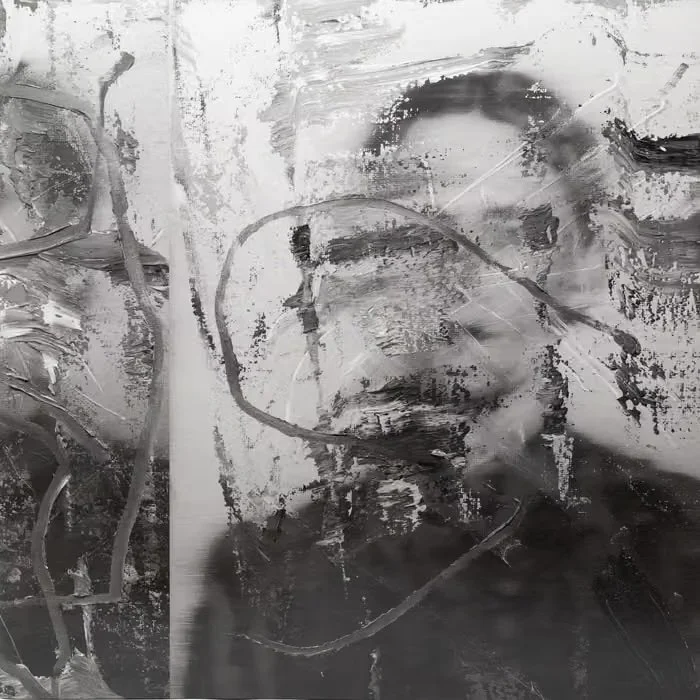
The notorious Neptune are on the road once again promoting their new album, Play Some Music. What began as a sculpture project for Jason Sanford in the 90s evolved into Boston’s perhaps most iconic art-rock group, Neptune. Guitars hacked together from soldered refrigerator doors, a feedback organ, electronic oscillators—a melding of hardware store and landfill as they put it—Neptune has continued to shock and awe with their signature discordant sound, and this summer they’ll be touring the US, beginning June 10th at The Dunken Unicorn in Atlanta, GA, and ending in Minneapolis, MN, on the 28th. Full tour dates and locations can be found here. Mirror Side below is from Play Some Music.
Isstillcools**t


The Indifference Engine
In the Mutableye
[For this In the Mutable Eye, we are posting a selection from The Indifference Engine, Clarke Cooper’s unpublished masterpiece on neo-totalitarianism. The full manuscript can be found on Substack here.]
*
Part I, Chapter 4: Efficient Systems
The classic totalitarianisms were evil and violent from beginning to end, but Hayek showed that a nascent totalitarianism need not begin that way and I have showed that it need not run that way. Totalitarianism is not what people think. The hallmarks of totalitarianism are not the brutality or the extravagant autocracy—those were only ancillary characteristics of a particular type of totalitarianism; side effects. The real essence of totalitarianism is the primacy of a System.
Not every system can do it, of course. Arendt noted that for a classic totalitarianism to really get going and achieve a decent approximation of totality it has to be based in a country that's big enough and powerful enough to have at least a rhetorical chance of actually taking over the world. Germany had the industrial power and just barely enough bigness; the Soviet Union had all the bigness and just barely enough power. Similarly, for a System to be effectively totalitogenic it must meet three interdependent criteria. It has to be big enough and general enough to plausibly encompass most activity. It probably has to be or promote a spontaneous order—it needs laws of its own innate physics that can determine (or equivalently, explain) the "natural" behavior of every element; this is how it can live. And it should exhibit positive feedback: any compliance should generally encourage more compliance; this is how it can grow, which it must if it's going to become properly infinite.
Read More
What Light Becomes Me
“Imagine an AI trained on Quentin Tarantino films, William Burroughs novels, a few bits of David Ohle's weirder surrealism, and a Pittsburgh street map is told to write a dystopian noir, and halfway through that project someone feeds in a bunch of William Gibson and Philip K. Dick, and the AI meanwhile has fleshy arms and is growing sticky and pungent and wet. And imagine this AI hands off a first draft to a wandering poet with an ear for torqued language, a lonely figure, a touch sentimental but with a bitter streak. And then this poet revises the draft while reading abstruse philosophy and accounts of mystic visions. Now speed up whatever you're imagining, such that it becomes a propulsive hyperviolent plunge through fractured layers of perception and possibilities, ends of the world without end, the impossible tortures of the post-post, the indifference of hallucination and prophecy. Perhaps this might approach Devil Everywhere I Look, but it's still unlikely you will have anticipated the bears,” Ben Segal, author of The Wes Letters and Pool Party Trap Loop
Pretty much sums it up. You can find a copy of What Light Becomes Me by Mutable regular Gabriel Boyer … here.
In the Mutableye is a segment that sometimes showcases something interesting that is happening somewhere in the world at this moment, and sometimes showcases some fad or person from the past that we here at Mutable acknowledge is still cool s**t.

AI Art, Camp, Kitsch, & the Singularity
In the Mutableye
AI art has proven both divisive and alluring, prompting Chomsky to describe AI and language learning models as, “plagiarism software because it doesn't create anything, but copies existing works of existing artists modifying them enough to escape copyright laws,” and, from Hayao Miyazaki: “I will never apply AI art to my work. The art form is an insult to life itself.” But there are those of us who can’t look away from these monstrosities, precisely because of their wrongness, their near-campiness and quasi-kitchiness.
It is in the ways that AI art fails that we are drawn to it. We chuckle knowingly at the oddly rendered hands even when we are unnerved by the humanity of the face we are looking at. We point out which actor this image was clearly based on, and how it’s just a little bit off, but we can’t stop looking at the sky behind.
As Susan Sontag says in Notes on ‘Camp’, camp sees everything in quotation marks. “It’s not a lamp, but a ‘lamp’; not a woman, but a ‘woman’” and this is exactly what AI art does to everything, but in both a more abstractified and specific way. It’s not Chris Pratt, it’s ‘Chris Pratt’. It’s not the Matrix. It’s ‘The Matrix’. It’s not a person, it’s a ‘person’. It takes units of culture and processes it into an ironic and alien counterpoint to the actual article, which is perhaps why Hayao Miyazaki sees it as an insult to life itself. Artifacts of human ingenuity are turned simulacra of themselves in a trick of computing mirrors that will always and forever render images that are somehow ‘off’, but it is precisely this offness that draws us to them, that turns them into units of camp, a kind of standardization of the so-bad-it’s-good aesthetic through the functioning of the attention transformer mechanism itself.
We here have Mutable have put together a collection of some of our favorites from the library of Abandoned Films and from TRGNY, as well as a few other examples indicative of trends in AI art as a whole.
Read More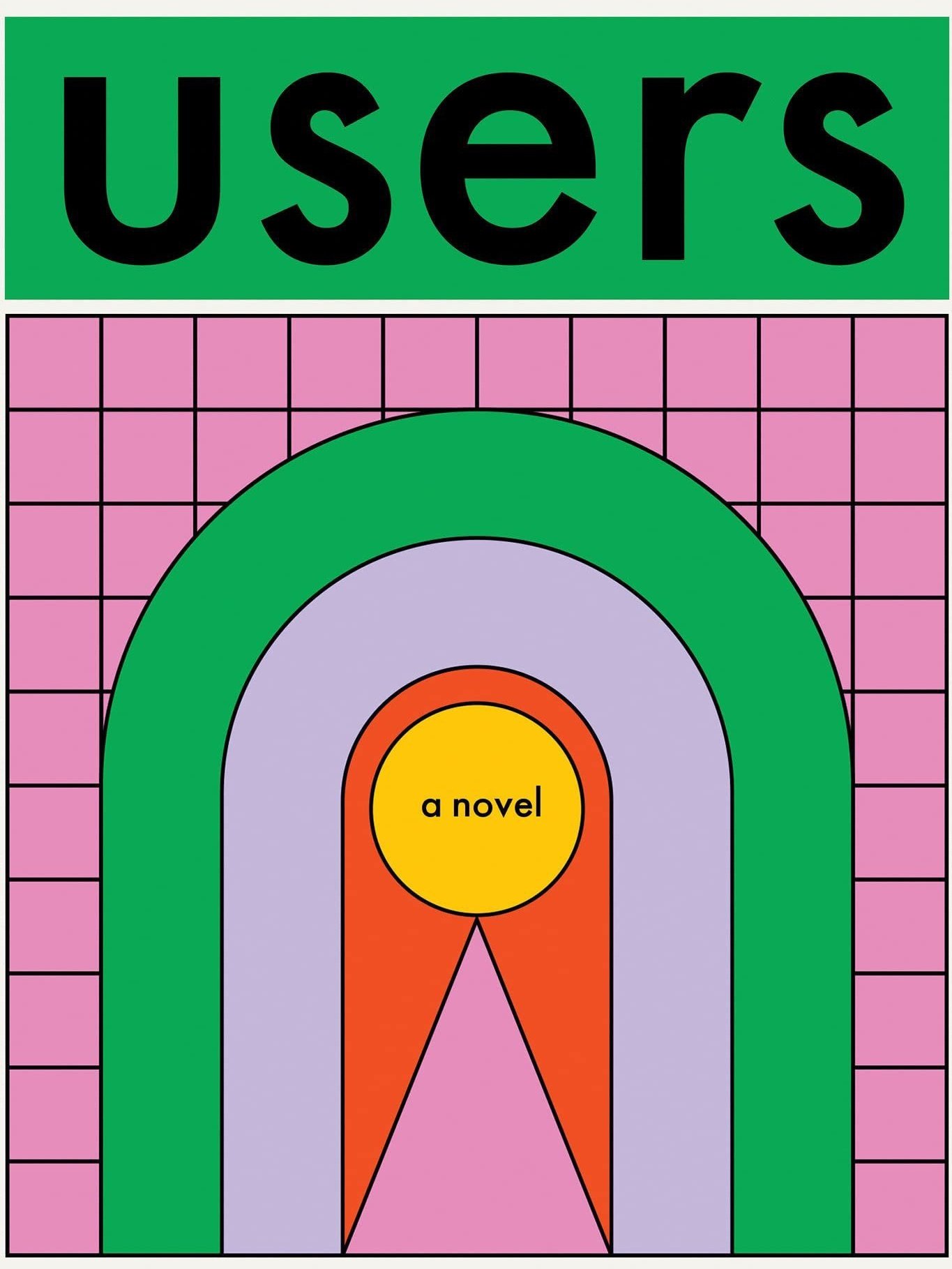
Colin Winnette's Users
We here at Mutable first met Colin Winnette in a loft in Chicago sometime in early 2009, and have delighted in watching as his career has blossomed in the last decade-and-a-half. From the subtle allegorical realism of his debut novel, Revelation, a voice that matured with Coyote and Haint’s Stay, turned wondrously weird with The Job of Wasp, and has now founds its home with Users.
Hailed by the New York Times as “timeless”, the story also reads as very timely, centering around a tech creative and his efforts to create VR experiences from dreams, a premise which perfectly fits with Winnette’s signature dreamlike prose. From Western to sci-fi, the one constant is a kind of watery and elastic reality, a prose both biblical and sly.
You can read a sample of Users here.
In the Mutableye is a segment that sometimes showcases something interesting that is happening somewhere in the world at this moment, and sometimes showcases some fad or person from the past that we here at Mutable acknowledge is still cool s**t.

Chadha Brahmi & the Unspoken Other
In the Mutableye
Chadha Brahmi, a 23 year old architecture student from Tunisia, never considered herself an artist. She compares her artwork to her weightlifting. She is suffering to create something better and beautiful.
There are various themes in her work, but the disembodied eye is the birthplace of it all, the form from which it all sprouts, and the foundation of her uncategorizable vision. Her depictions of eyes and the accompanying disembodied beauty verges on the horrific and occasionally slips into a kind of modern-day impressionism of body horror of the silenced subject. These are artworks that can seem like sketches or illustrations and can veer into collage, peppered with found objects or cut open like a pop-up book in progress to reveal the artifice of the 2-D. They can have the extreme allure of satire and its caricatured vision of reality even when they are always awash in watercolors that give an unnerving living quality to them, and often are like blood splatters on the page.
Read More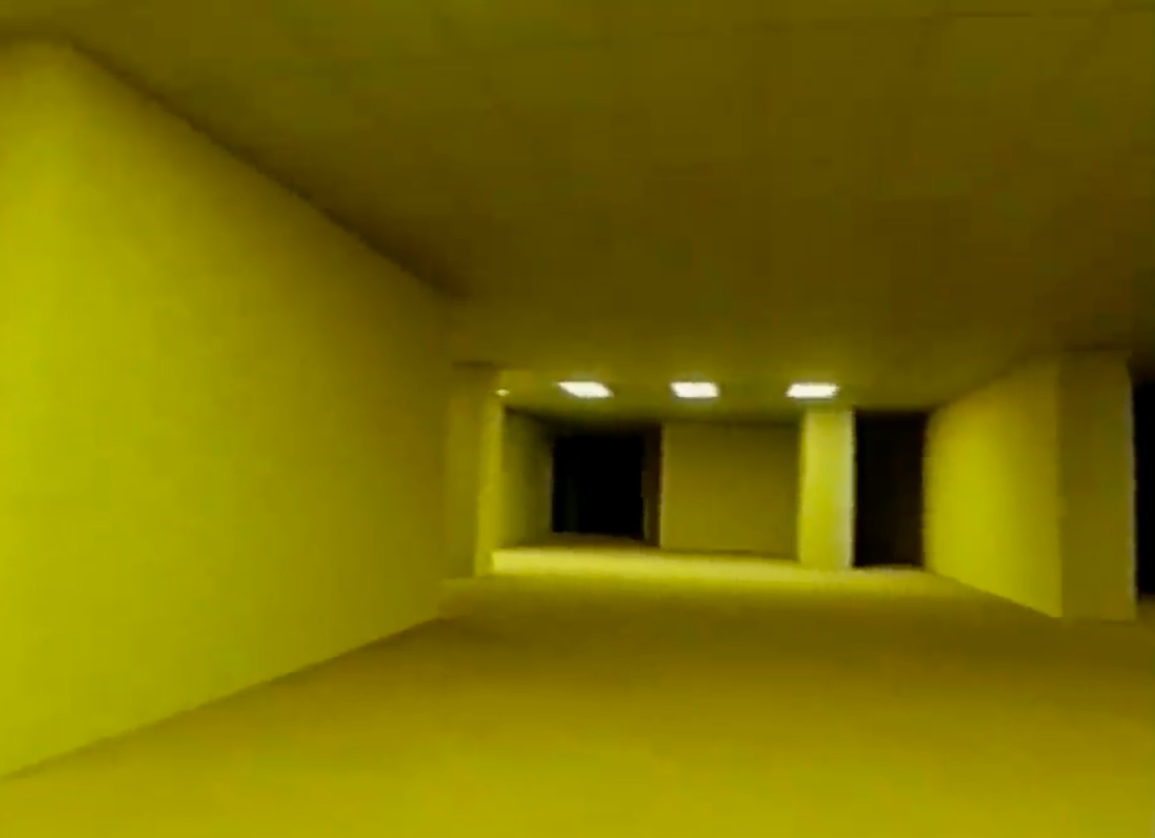
Video: The Backrooms
A bunch of teenagers are making a horror film when their videographer stumbles and finds himself in an abstract space. He wanders, Blair-Witch-style, breathing heavily and muttering incomprehensibly when he stumbles upon some terrified scribblings upon one wall.
The Backrooms began as a photograph on 4chan and evolved into a Reddit thread. (r/CreepyPasta.) It inspired fan fiction, followed by a backlash (r/TrueBackrooms) and then… Earlier this year…
A collection of shorts about the Backrooms, produced and directed by 16-year-old Kane Pixels, can be found on Youtube. The Backrooms is a k-hole of found footage from different people who have found themselves in “the Backrooms”, whether it’s the teen videographer or scouting parties from some underground government agency. The vintage video look combined with the generic, anonymous, and occasionally and increasingly surreal space is addictive. Start below and then continue to explore. The Backrooms is a paranormal mystery and horror film presented in bits and pieces that you can explore and peruse to manufacture your own story about what is “the Backrooms”.
Enjoy!
In the Mutableye is a segment that sometimes showcases something interesting that is happening somewhere in the world at this moment, and sometimes showcases some fad or person from the past that we here at Mutable acknowledge is still cool s**t.
Video: Deeply Artificial Trees
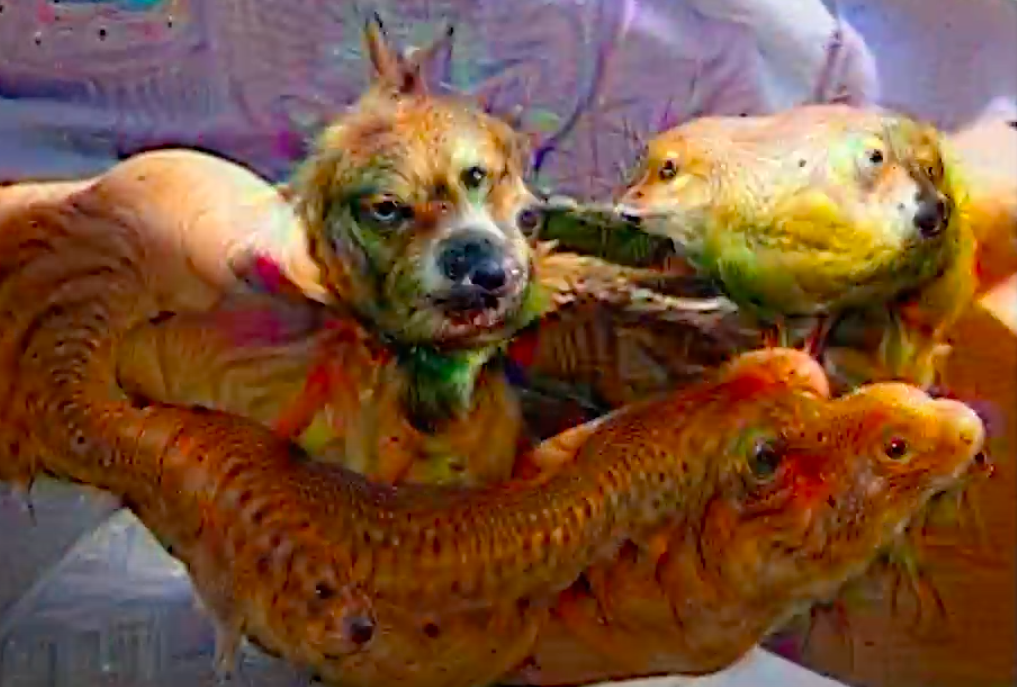
Everyone loves Bob Ross, but AI-filtered Bob Ross becomes like a mystical message full of the swirls of animals, eyes, and bits of insect, challenging how we think of the intersection between perception and reality. In parts hilarious, absurd, and downright disgusting, this dream journal of mad anthromorphisms and salacious animal graftings can be viewed again and again and new layers revealed, new possibilities discovered.
The below video was originally shown in 2017 at “Basilisk”, Nicodim Gallery, in Los Angeles, California, USA, and is by Alexander Reben.
In the Mutableye is a segment that sometimes showcases something interesting that is happening somewhere in the world at this moment, and sometimes showcases some fad or person from the past that we here at Mutable acknowledge is still cool s**t.

Darkleaf & Hymnal's Performative Philosophy
In the Mutableye
Many, many years ago, I heard a song that would haunt me, a rap song that seemed unlike anything I had ever come across before. For the next twenty years, that song would occasionally burble up like a puzzle. The mystery of Darkleaf would nag at me every so often. Who were they? The pieces never seemed to quite fit.
The song, a single called Caution, featured Mumbles, Acey Alone’s famed producer, and Cut Chemist, the notorious DJ behind Jurassic 5. The lyrics had a kind of mystical exactitude that I had never come across before.
A few years later, I discovered a “debut album”, F… the People, but it seemed off somehow. And it would take another decade before I discovered that this supposed debut album came out a full fourteen years from when the group was originally formed in ‘88, that much of the material had been reworked from a couple mixtapes that were coveted for their “abstract rhymes over primal beatscapes, infused with references and allusions to the occult and black mysticism” [The Untold Story of Terry “Hymnal” Robinson, by Nate LeBlanc]. The group had originally focused around the trio of Hymnal, Jahli, and Longevity, and were part of the notorious hip hop scene at The Good Life Cafe in LA.
Read More
Video: Alexander Ross
We here at Mutable just discovered Alexander Ross, and he has immediately become one of our new favorite humans. At first, we merely enjoyed him for the fact that his art is just the sort of abstract realism that we love to love. (See above.) Which for some reason reminds me of Kelly Reaves’ work.
But then, we discovered the album of his below, put out by our friends Audio Dregs, and featuring art that is more Jim Woodring than Salvador Dali. Then we listened to his music. Then we asked ourselves how it was possible we had never listened to his music before.
Of course, we had to immediately contact Eric Mast over at Audio Dregs to discover more about this mystery, and he was happy to explain how he had first discovered Fantastic Palace's music on a CD comp in ’92 called Chinny Chin Chin (See Eye) and played it on his college radio show at the time a bunch, listening to it for some 20 years, only to then discover it was his friend, Mike McGonnigal, who had originally released it, and the two got in touch with Fantastic Palace (Alexander Ross) to re-issue it on vinyl, a release that has just recently officially sold out.
As for the video below, it was not taken by Mast, but it certainly rounds out the mystery of who Alex Ross is and what he believes in.
Through the course of it, Ross discusses all aspects of his style, influences, and current experiments. The first painting they talk about is very different stylistically from the drawing above, and at first glance it seems almost cheesy, but when you get in close, you see the wonderful vibrancy of the piece. We have a special fondness for works that begin with clay sculptures and go from there, not to mention works that transform as you approach (think Chuck Close), and of course it’s also so illuminating hearing Ross talk about the “photorealism” of the paint versus the more abstract pencilwork in that first painting the video focuses on.
Over the course of the studio visit, Ross also talks about his distinct interests and many inspirations, from psychedelics, to silly putty, to mites, describing his drawings as a kind of monstrous R. Crumb scientific drawings. My favorite parts are always when Ross lets loose about how his ideas have evolved and are continuing to evolve.
Be sure to stick around to the end to get some nice peaks of some delightful experiments. “The most intelligent technology is nature.” Indeed.
In the Mutableye is a segment that sometimes showcases something interesting that is happening somewhere in the world at this moment, and sometimes showcases some fad or person from the past that we here at Mutable acknowledge is still cool s**t.

Jenn Pipp: Time Ceremony
Jen Pipp, self-styled spiritual modernist, creates online ceremonies to help the rest of us to manage our minds. “There’s so much spiritual information out there right now, it’s hard to know what resonates with us and what is not resonant with us.” She has a show, The Great Big Infinity, up at the Emerson Contemporary Gallery through May 9th. Gallery hours are Wed-Sun 12-7pm. Zoom Artist talk Tuesday May 4th at 5pm. Stop by and check it out!
In the Mutableye is a segment that sometimes showcases something interesting that is happening somewhere in the world at this moment, and sometimes showcases some fad or person from the past that we here at Mutable acknowledge is still cool s**t.

Gae Bolg: Requiem
I first discovered Gae Bolg more than a decade ego, while touring the Pacific Northwest. We were staying with a friend in Olympia, WA, and after playing us the remarkable composition he’d made from frog recordings, he put on a piece of music that would become a regular for me in the years to come, Requiem, by Gae Bolg.
As with everything from Gae Bolg, in this piece of music of French musician, Eric Roger. It is bombastic and medieval, yes, but in the context of the 21st century, it seems appropriately apocalyptic. It is, the appropriate response to the times we are living. You can listen to Requiem below, or check out their equally amazing Aucussin et Nicolette.
In the Mutableye is a segment that sometimes showcases something interesting that is happening somewhere in the world at this moment, and sometimes showcases some fad or person from the past that we here at Mutable acknowledge is still cool s**t.

Gloomy Sunday
In the Mutableye
According to one anecdote, the song Gloomy Sunday was originally written by Hungarian pianist and composer, Rezső Seress in Paris in December of 1932, the day after a row with his fiancée over his failure as a composer had led to her departure, this being a Sunday, but then again, Gloomy Sunday is plagued by anecdotal evidence. Mostly having to do with its ability to drive perfectly sane people to suicide, and who and when. Rezső Seress’ now estranged fiancée for example? It became famous in the states as the “Hungarian suicide song” before Billie Holiday ever touched it. However, speculation aside, that it was connected with a rash of suicides in Hungary around 1936 seems uncontested.
Read More
Kelly Reaves, Untitled (2019)
All the Unseen Things
Gabriel Boyer
Among the doodlers, portraitists, conceptual artists, and illustrators, there are some who lurk in a kind of indistinct atmosphere. Their works do not so cleanly fit inside the confines of an ideology. Their ideas follow a more intuitive path. They may be stuck between epochs, like William Blake, or they may be describing a taboo world. I am interested in two such artists that form a kind of subgenre of this larger type and kind of marginalized scribbler. Both of my subjects are holy wreckers who annihilate the very thing they are tasked with presenting—who wrestle with the paradox of the seen world and the unseen spirit—the contemporary Kelly Reaves and Hyman Bloom, an until recently lost artist from the height of Modernism.
Read More
Fatigue
Animal Hospital‘s Kevin Micka makes beautiful music. His luscious soundscapes mesmerize as they dig deep in with loops that dig deep and wailing riffs that cut. Long ago, we were lucky enough to put out one of his albums, Good or Plenty, Streets + Avenues, and have been following his career since with a keen interest. His most recent album, Fatigue, due out April 24th by White Sepulchre Records, can be pre-ordered now either on vinyl or as a digital download on bandcamp. This most recent post-rock masterpiece is another gem on par with Memory—dark, transcendent, and a lush ambient listening experience. But don’t just take our word for it. Hear for yourself below!
In the Mutableye is a segment that sometimes showcases something interesting that is happening somewhere in the world at this moment, and sometimes showcases some fad or person from the past that we here at Mutable acknowledge is still cool s**t.

Video: Eternal Family
In the Mutableye
Mac Demarco has long been known as an inveterate weirdo, but we here at Mutable went down a bit of a k-hole that began with the remarkable video to Here Comes the Cowboy, which introduced us to Cole Kush, of the GIMME SUMMN video fame, and from there, we discovered the wonderful world of Eternal, with its bizarre collage vignettes and delightful stock footage, and tips on how to set up your own recording studio or write a killer pop song. We were sold on the idea immediately. This is an artist-run streaming service with 60% of the funds going to the artists, and the rest to operations. And it’s a delight! Check out the trailer below.
In the Mutableye is a segment that sometimes showcases something interesting that is happening somewhere in the world at this moment, and sometimes showcases some fad or person from the past that we here at Mutable acknowledge is still cool s**t.

Neptune
Neptune was one of those bands that for the longest time the quintessential Boston art rock band. Jason was one of the first people to start hosting performance art in his loft in JP back in 1994, and his handmade scrap metal guitars have become symbols of another time in Boston—when the apocalypse was a quaint fantasy we longed for with baited breath rather than the disappointing s**tshow it’s turned out to be. Although, Jason has since moved on to the equally remarkable E with Thalia Zedek of Live Skull and Uzi fame, we will always remember with great fondness the mesmerizing grittiness of this particular long-running Sanford project. I will never forget standing in the dark of the Middle East and knocking my head back and forth to the rhythm of beer bottles being smashed in a generic metal trash can as the home-made guitars thrashed and Jason cut new grooves in his throat with his incomparable screams. All lovers of 90’s rock should have a copy of the recently re-released Studio Recordings.
In the Mutableye is a segment that sometimes showcases something interesting that is happening somewhere in the world at this moment, and sometimes showcases some fad or person from the past that we here at Mutable acknowledge is still cool s**t.

Video: M. Lamar
We here at Mutable are old enough to remember a time when performance art was everywhere you went. Maybe not everywhere YOU went, but everywhere we went. In every loft and coffee shop of 90’s Boston, on the loading bays of Brooklyn, and in the pizza parlors of Cleveland. It was inescapable. Then one day it vanished, and instead the world was waiting in line for the latest iPhone update. But M. Lamar, with his remarkable fashion sense, idiosyncratic sensibilities, impressive musical abilities and often poignant commentary, is keeping this tradition alive, and our hats go off to him. Below is a video of his performance, Re-Memberments / The Demon Rising.
In the Mutableye is a segment that sometimes showcases something interesting that is happening somewhere in the world at this moment, and sometimes showcases some fad or person from the past that we here at Mutable acknowledge is still cool s**t.

S**theads: In the Mutableye
The Captured Project originated as an online collection of drawings. In each portrait was depicted some person of note who should be in prison, and each of these portraits were themselves drawn by current prisoners. The project has since come to a close and a book has been printed of these many remarkable works of art, capturing such notable criminals as Ryan Gragg of Goldman Sachs and of course the Koch brothers. Please feel free to click through to look at more for yourself, and consider purchasing a book. All proceeds go to the Brooklyn Bail Fund. You can learn more about the project and how to purchase the book here, and can click on the image to find out what crimes have been committed by Rex Tillerson.
In the Mutableye is a segment that sometimes showcases something interesting that is happening somewhere in the world at this moment, and sometimes showcases some fad or person from the past that we here at Mutable acknowledge is still cool s**t.

Overland II
Bal Kaur
The above painting by Bali Kaur is a masterful expression of her on-going and ever-evolving aesthetic. Kaur began her work as a printmaker but over her twenty-some-year career has explored a variety of techniques and media. We here at Mutable are excited to see how her vision and her masterful understanding of space, color, and the dynamics of place continue to change and grow. Overland II is just one of several pieces currently on display at Silson Contemporary, 17 Harlow Oval, Harrogate, HG2 0DS. The gallery is open Fridays 10.30am – 4.00pm, and one weekend a month, 10.30am – 4.00pm, on Saturday and Sunday.