Walker Zupp
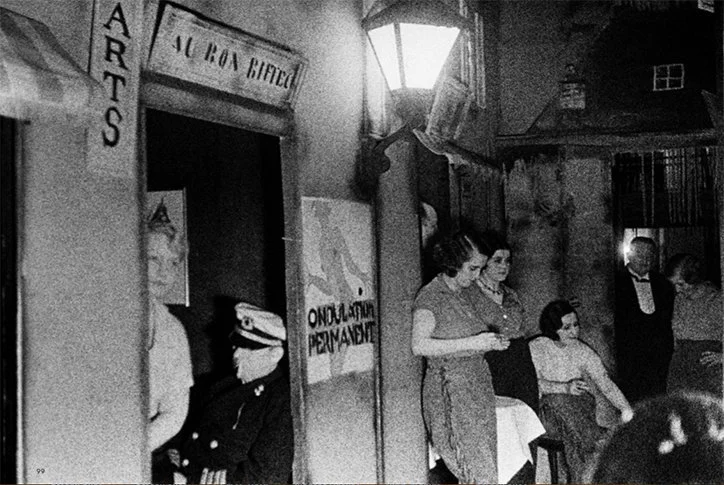
Lavinia’s cold when she wakes up. Head reeling like a German trade union dispute. And given the General German Trade-Union Federation, the German Trade-Union Federation and the Hirsch-Duncker Federation of German Labour Associations—those three mutually hostile Spitzenverbände—are about as friendly as a kick in the teeth, she must have the mother-of-all-headaches: which sounds like an opera. But she’s not singing this morning: not with that throat of hers. A bout of morning sickness pushes her over clutching her stomach. And when she observes the room the results are terrible. Dishes piled high, the acrid stench of rot and bioengineered hand towels, broken glass under the only window, and freezing air filling the putrid apartment—beyond which a dank alleyway echoes with prostitutes and urchins. Before she can wince at the brown stains on the mattress supporting her tired body the door bangs open. In walks a Marlene Dietrich rip-off complete with penciled eyebrows, a John-Waters-esque moustache, a top hat cocked at an angle. Must’ve been a decent wife-cum-agent before the Great War. Before the Weimar Republic. Before inflation and prostitution went hand in hand. “Decided to wake up, huh?”
“Where’s Foost?” Lavinia asks.
“Only God knows. But I’m Agnes. And this is my daughter Barbara.” Pointing to the corner: looking like a rejected set from the film The Cabinet of Doctor Caligari. Amongst an architectural zone where lines and shapes go nowhere and everywhere, a shivering girl’s sitting there with dyed ginger hair wearing a German alpine hat with frayed string and block stockings made traitorously by a Swiss cheese factory.