
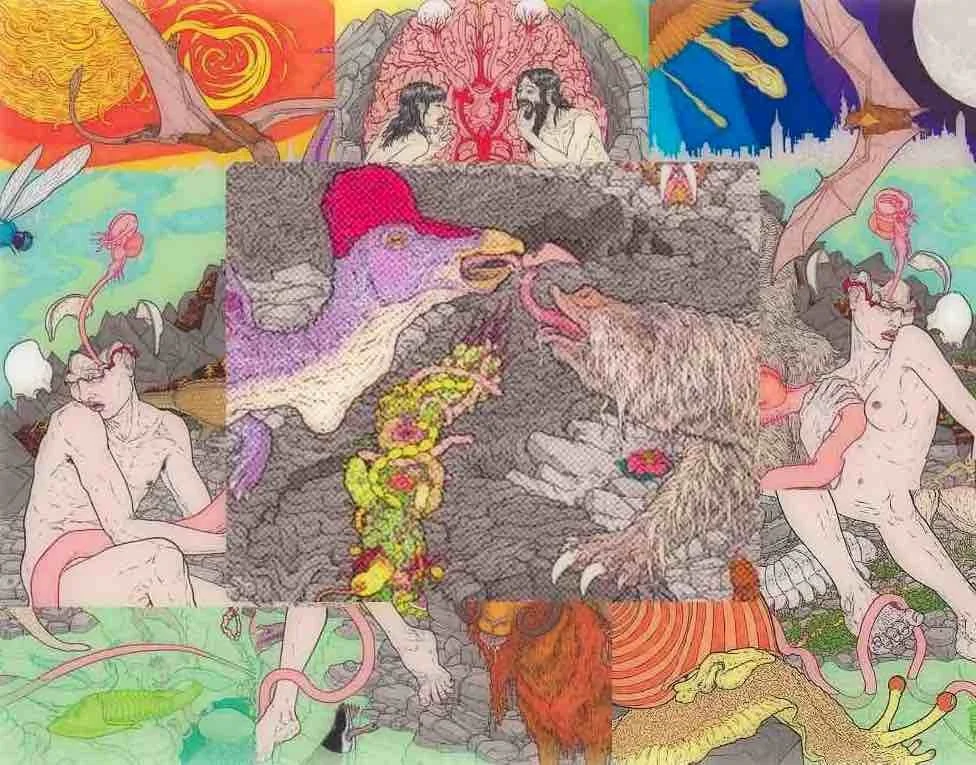
Gabriel Boyer
In Thomas Ligotti’s The Conspiracy Against the Human Race puppets, and more specifically meat-puppets, are a common occurrence. In it, he declares consciousness a cruel mistake of nature—the work’s fundamental premise—and furthermore, that if we were to pause for a moment and reflect on ourselves, we would find that we are neither gods nor apes but… puppets. With this treatise, Ligotti, more known for his horror fiction than as a philosopher, has created a powerful polemic against existence. Throughout his arguments marches the single refrain that we’d do well to end not just ourselves but the entire human race, that continuing to exist as a species is a cruel joke foisted on our descendants. He calls his position, the philosophy of pessimism.
Ligotti’s extremism is uniquely his. The authors he references are almost all obscure (except perhaps the famously pessimistic Schopenhauer) but Ligotti is not only the world’s pre-eminent pessimist, he is also the man who “modernized the weird tale” as Jeff Vandermeer succinctly declared [1] and thereby more than any other writer created the possibility of what would become the New Weird.
New Weird presented itself not as a “movement” but a “moment” that captured a certain stylistic tendency that exists between, is a genre beyond genre. It declared itself specifically as a trend without manifestoes, and Ligotti’s extreme pessimism would not sit well with many (if not most) who fill the ranks of this aforementioned literary moment but all the same I would argue that Ligotti’s treatise lurks in the background of its sitting rooms. Not because his ideas are shared but because their audaciousness comes from a similar openness to the impossible and uncomfortable that defines New Weird writings. These are writings that exist not just beyond genre but beyond the boundaries of the knowable, some more than others. There are those in the lower atmospheres of the New Weird that utilize their weirdness as a seductive and hypnotic style and there are those who search to bake the weirdness deep within themselves until we cannot say whether these are truly books in the sense that we’ve known them.
On the former end of that spectrum come the most notable and recognizable New Weird titles—China Miéville’s Perdido Street Station that was the catalyst that bought New Weird into the public and Jeff Vandermeer’s Southern Reach trilogy (now qaudrilogy) was like New Werid’s atom bomb, ensuring its place in history—while the latter achieved its most distinctive heights through the work of Michael Cisco. Cisco is an author whose work legitimately shocked me.
Not his earliest writings. The Divinity Student, with its dream logic and allegorical horror, vivid descriptions and gothic shamanism, was quite nearly a known entity. The Narrator is unsettling simply because the fairy tale physics background juxtaposed against what is otherwise a very gritty war narrative created an experience that was like Kafka churned through Norman Mailer. Then there’s Animal Money.
Read More