

Levi Fuller, who played in the little-known soul band Extra Play with Kevin Micka, Gabriel Boyer, and Malcolm Felder, all members of the Mutable universe, and played everything from stand-up bass to saxophone on A Journey to Happiness Island, has released a new album, Colossal. You can buy the vinyl at sonicboomrecords.com or buy the mp3s from iTunes, or read more at Levi’s website, denimclature.com.
Feature


This is Not a Review: of Transformers 2
Gabriel Boyer
Transformers. More than meets the eye. Although in the case of the most recent Transformers film the reverse is true, that everything is in full view, it’s just that there’s so much of it. The camera flits from shot to shot with the agitation of a hummingbird on steroids, thereby leaving the audience no room to question or even think as images wash over them at brainwash speed. It’s like someone’s raping your mind.
Three second cuts with impossibly intricate robot disappearing acts? A bevy of beautiful women? (Every woman in the film is either super-model status or the main character’s mom.) More explosions than I care to count and characters who are always just about to burst an adrenal gland in their excitment? Two gang banging illiterate autobots with large ears and gold teeth who speak in some painfully stereotyped street slang? Welcome to the world of Michael Bay.
Read More
From within the Animal Hospital (2)
(Below is the second of a two-part conversation we had with Animal Hospital concerning what he [Kevin Micka] has been doing with himself these days, in the distant past, and the elusive future, discussing both his signature sound, and the pivotal part that all variety of metal, from boxes and genres to genres of boxes and boxes of genres, has played on that aforementioned signature sound of his, as well as many other topics of interest. Please do not be alarmed at the shocking content of this interview. Trained professionals were at the ready, as will you be, for this is Animal Hospital as you have never seen him before.)
GABRIEL BOYER: Well, I’m thinking that there’s these two memories, right?
ANIMAL HOSPITAL: Yeah.
GB: You put them together do they? Do they STAY as those memories, but in but in relation to each other, or do they become a brand new thing, or?
AH: Again, I think it was more more like uh an emotion more than a specific, this makes me think of this specific moment.
GB: So, you’re saying at that time you were going through a specific emotion.
AH: Yeah.
GB: You were like swimming through it.
AH: Yeah, I was just trying to get through this.
Read More
This is Not a Review: of Sheila Heti
Gabriel Boyer
On the woman’s first day at work the poet helped her with her boxes, but as he was helping he was looking away.
“Do you know this is my seventieth sick day since I started here?” he asked.
“But you’re here,” she said.
“Yes, I know.” And he went to the bathroom and peed blood.
—from, The Poet and the Philosopher as Roommates
We here at Mutable first heard of Sheila Heti some six or seven years ago, when she went on tour with the event she founded, Trampoline Hall, while promoting her first book, The Middle Stories, put out by McSweeney’s. We were taken by her stories, and she has continued to tickle and tug at our interest both in her own writing and in the projects she involves herself in.
Read More
From within the Animal Hospital (1)
(Below is the first of a two-part conversation we had with Animal Hospital concerning what he [Kevin Micka] has been doing, what he will do, what he sounds like, metal, and other topics of interest. Please do not be alarmed at the shocking content of this interview. Trained professionals were at the ready, as will you be, for this is Animal Hospital as you have never seen him before.)
GABRIEL BOYER: So there was was was was. What made you decide to start start Animal Hospital?
ANIMAL HOSPITAL: Um. The girl’s dating at the time. We wanted. We were planning a trip. Um. To go to a comic convention and go visit her family.
GB: Mhm.
AH: So we were planning on going to San Diego and Santa Fe.
GB: Mhm.
AH: Um. So. [Clears throat.] Thought I would try to come up with something to do on the tour. On the trip. To play some shows and help pay for some gas.
GB: Mhm.
AH: See some friends and stuff on the way.
GB: Mhm.
AH: So I um. Started booking some shows.
GB: Mhm.
AH: Before I had like a real plan of what I was going to do.
GB: [Enthusiastically] Mhm.
Read More
The Art of Noises
Luigi Russolo
Dear Balilla Pratella, great Futurist composer,
In Rome, in the Costanzi Theatre, packed to capacity, while I was listening to the orchestral performance of your overwhelming Futurist music, with my Futurist friends, Marinetti, Boccioni, Carrà, Balla, Soffici, Papini and Cavacchioli, a new art came into my mind which only you can create, the Art of Noises, the logical consequence of your marvelous innovations.
Ancient life was all silence. In the nineteenth century, with the invention of the machine, Noise was born. Today, Noise triumphs and reigns supreme over the sensibility of men. For many centuries life went by in silence, or at most in muted tones. The strongest noises which interrupted this silence were not intense or prolonged or varied. If we overlook such exceptional movements as earthquakes, hurricanes, storms, avalanches and waterfalls, nature is silent.
Amidst this dearth of noises, the first sounds that man drew from a pieced reed or streched string were regarded with amazement as new and marvelous things. Primitive races attributed sound to the gods; it was considered sacred and reserved for priests, who used it to enrich the mystery of their rites.
Read MoreAnimal Hospital -- Good or Plenty, Streets + Avenues
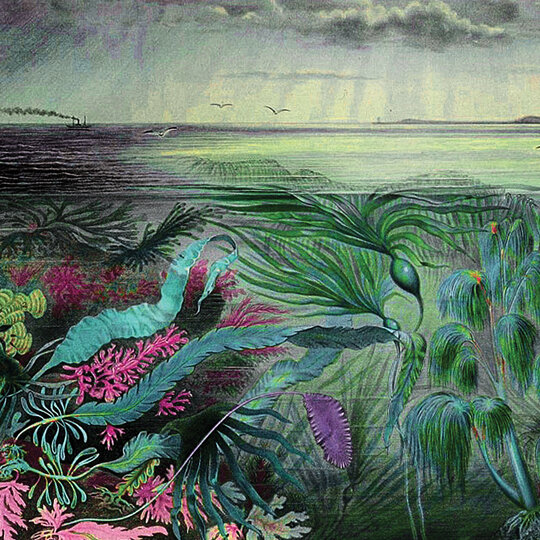
I guess 2009 is officially Animal Hospital’s coming out party. I first became smitten (and rightly so) by the release of Memory on the illustrious Barge imprint and apparently this little puppy preceded Memory by a month, so it looks like I am taking in the releases in reverse order. Of course, this matters not at all. A cursory listen to either album would quickly lead a listener to the other release on the basis of sheer goodness. Oh Animal Hospital, will you never stop healing our poor pets and wild Earthly co-inhabitants? Hopefully not. Good or Plenty, Streets + Avenues is a wonderful addition to the Animal Hospital repertoire that was presented on Memory. The album avoids the lengthy, dramatic surgeries displayed on that release and instead focuses on the standard day to day operations of animal hospitalateering: daily check-ups, medicine prescriptions, happy customers. GorP,S+A is a light hearted dip into the joys of healing animals via layers and layers of homespun loops. As a refresher for those who were unable to wade through my lengthy review of Memory (or simply missed it altogether), Animal Hospital is not “Animal Hospitals.” It is a single edifice and as such is the pseudonym designated for a single musician from Boston named Kevin Micka. Micka’s work here is built around his slowly evolving and elaborate looping of guitars, percussion and electronics. Unlike Memory, GorP,S+A steers clear of weighty crescendos and instead offers beautifully intricate character sketches with each track. In a way, this kind of meandering structure is harder to pull off, but Micka proves ownership of a keen ear and adept musicianship by executing each track with the utmost precision and always keeping things interesting. Good or Plenty, Streets + Avenues is one of those rare albums I’ve found that I can always listen to even when nothing else will do. Really solid work.
1. We Can
2. Novel Moments
3. March and June
4. 11 18 07
5. What If They Are Friendly
6. Good or Plenty
7. Define
8. Barnyard Creeps
9. Labor Day
Digital album available to stream or download now!
Animal Hospital -- "Good or Plenty, Streets + Avenues" (Copy)
Metropolinvisible
Originally published in Metropolinvisible
The first decade of the twenty-first century is almost over, and we still consider the post-rock reservoir of musical innovation to be pure folly. Though there are still bands that can interpret the sounds of Mogwai & Co. with extreme precision and dignity (see “our” Port Royal, the Low Frequency in Stereo, This Will Destroy You and a few others), it is undeniable that the vast majority of contemporary post-rock is marked by what can only be termed a mannerist period.
Precisely because of these considerations, the work of Kevin Micka (formerly of the Common Cold) and his Animal Hospital takes on a more pronounced value because it manages to escape from the net of label support, showing an attitude that reminds us of another time, about fifteen years back, when post-rock was anything but a simple genre, instead representing a global transformation of music.
Five years after he started his official one man band, in 2009 this Boston feels that he has lots to say, releasing two albums in short order: “Memory” (published in early March by Barge recordings), and the latest “Good or Planty, Streets + Avenues.” The latter contains a number of tracks recorded by Kevin in an off-handed manner between 2007 and 2008, which were only later collected in a single record.
And it is perhaps because of this extemporaneous quality that the full expressive power of Animal Hospital is unleashed here, that after the intro of “We can” invades our senses, “Novel Moments” opens with a visionary drone-folk imbued the best of Roy Montgomery. The slight sway and move of “March and June,” calibrated by the beautiful voice of Katharine Fisk Shields, pleasantly recalls the atmosphere of winking Aerial M, while the quasi-fennesziana “11:18:07” with its harsh environment and “What If They Are Friendly” appear to be symptoms of a deviated isolationism and convulsive. The electroacoustic interlude of “Good or plenty” then ferries in the final part of the disc, which is more properly post-rock. “Define” is poised between Tortoise on the one hand, and Fly Pan Am on the other, while “Barnyard Creeps” recalls the valuable with elaborate textures of Windsor for the Derby sometimes topped with glimmers of noise, and the concluding “Labor Day” is an array of environmental and noisy psychedelic abstraction which seems vaguely reminiscent of the settled cosmic country of Rex. The post-rock of the 90’s was an open laboratory for testing and contamination: Animal Hospital has revived that spirit and the rest of us will never be grateful enough.
(The above article was translated from the original Italian by the editors with the help of Google Translate. We apologize for any mistakes.)

1. We Can
2. Novel Moments
3. March and June
4. 11 18 07
5. What If They Are Friendly
6. Good or Plenty
7. Define
8. Barnyard Creeps
9. Labor Day
Digital album available to stream or download now!
Even More Majestic: A Review of Big Trouble in Little China
Maarten Schiethart
Originally published by Penny Black Music 04.25.2009
Named after the 19th century Hungarian composer, the Liszts, however, are a combo singing in both Mandarin and English alike. Their diction and phrasing give away an American heritage and while (obviously I cannot account for having any detection quality when the language in question originates from a country I have never been to) also that of China. As foreign as that may all seem, the Liszts deal in rather familiar ethics. And before you even became aware of it, the Liszts embrace sounds that one would not be able tell apart from that of other established indie rock or college radio starlets, so let us forget about any exotic ethnicity for once.
Read MoreAnimal Hospital -- "Good or Plenty, Streets + Avenues"
Besides being a frequent cause for derision from my fiance, music that falls into the “ambient-drone” category is a staple for me. It lends itself to heavy headphone affairs in which I can be completely lost in washes of synths and looped guitar distortion to a diligent companion to late night War and Peace read-a-thons with Addy. The only downside is that when I hear an amazing instrumental album I immediately get a sense of sadness once the giddiness goes away, I think, when am I going to listen to this again? When can I recapture the thrill of the first time I heard this? The good thing about bands that fall into the ambient drone camp is that they always retain a sense of “newness” at every listen, without recognizable hooks or melodies each song is a limitless resource of sounds and musical ideas that gather weight with each listen. Animal Hospital’s Good or Plenty is an album in which every song is as fresh and exciting as it was on first listen (as exciting as an ambient drone album can be). is a remarkable recording full of sunny, beautifully recorded instrumental forays into sound and texture. Kevin Micka is a masterful sound manipulator, taking seemingly standard song arrangements of guitars, drums, turntables, hand claps and the human voice and creates looping soundscapes that are rife with discovery. Never giving into the temptation to let his wanderings turn into an irrelevant wad of noise, Micka lets his instruments prop up each song giving them of a depth of a fully fleshed out pop song. His layers of shiny guitar washes over processed feedback and manipulation put him in the ranks of Aidan Baker and Christian Fennez, while his aural dexterity and dedication to creating beautiful soundscapes recall a Talk Amongst the Trees era Matthew Cooper. Good or Plenty is what I am guessing is a companion to his full length put out on the amazing Barge Records earlier this year, I’m guessing they both go in my list of favorite instrumental albums of the year.
1. We Can
2. Novel Moments
3. March and June
4. 11 18 07
5. What If They Are Friendly
6. Good or Plenty
7. Define
8. Barnyard Creeps
9. Labor Day
Digital album available to stream or download now!
The Orgasm Manifesto
Harry Polkinhorn
1
America hates sex in general, but it especially hates orgasms, the pinnacle of the experience. It hates that which it doesn’t understand.
2
America if nothing else is an ideological construct. But so is sex, and so especially is orgasm.
3
The value is on change, and the rapidity of it. Burn your bridges. Don’t look back. This doesn’t change the way it worked for millennia but a kind of hyper-change, or high-speed motion that moves us out of a Newtonian sociality into chaos. Orgasm then becomes a strange attractor.
4
As such attractors, orgasms undo all this. They are a mode of resistance, if viewed in these admittedly fake political terms. This is the old boring tale of subversion of desire. Romanticism, really.
5
Orgasms happen in bed (usually) just as naming happens in print or through an electronic medium (usually). Or in the streets through spontaneous linguistic intervention. What I am calling naming as a language function always is embedded. We go to bed for very few purposes: to sleep, to dream, to make love, to give birth, to be ill, and to die.

From Here to John C. Lilly & Beyond
Letter from the Editor
“In the province of the mind, what one believes to be true is true or becomes true, within certain limits to be found experientially and experimentally. These limits are further beliefs to be transcended. In the mind, there are no limits… In the province of connected minds, what the network believes to be true, either is true or becomes true within certain limits to be found experientially and experimentally. These limits are further beliefs to be transcended. In the network’s mind there are no limits,” Lilly, J. C. (1974). The Human Biocomputer. London: Abacus.
For this second Letter from the Editor, I wanted to speak about one of my favorite philosophers of the 20th Century, John C. Lilly.
Read MoreAnimal Hospital: Good or Plenty, Streets + Avenues
Ron Schepper
Good or Plenty, Streets + Avenues, the second full-length album by Boston-based musician and producer Kevin Micka (aka Animal Hospital ), presents a satisfying, forty-three-minute set of guitar-based instrumentals and electro-acoustic explorations. Not having heard his 2004 self-titled release, I can only imagine how it compares to the new material but I’m willing to bet Good or Plenty, Streets + Avenues represents a significant advance (something I’m sure we’ll also hear when Micka’s Barge recording, Memory, is released). The range of sounds he coaxes from the guitar shows he’s clearly a resourceful player, and one who, to his credit, eschews histrionics for a subtler approach. He proves equally capable of folding repeating patterns into hypnotic lattice-works (“Good or Plenty”) as he does sculpting meditations both vaporous (“What If They Are Friendly”) and shuddering (“Labor Day”), and he’s also got a nice way of using well-timed stabs to kick the material into a higher gear when necessary; hear, for example, how the otherwise polite funk workout “Barnyard Creeps” springs to life the second Micka’s guitar roar enters. Contrasts abound: a seeming septet of electric guitarists collectively threads melodic patterns into a ruminative whole during “Novel Moments” while steely tones and washes stretch across the background; waves of guitars swarm and cascade throughout “11 18 07” while a plodding rhythm keeps funereal time; and the jubilant and light-footed “March and June” drapes wordless vocals by Katharine Fisk Shields and Micka over a lightly swinging, Afro-tinged rhythm base, with acoustic guitar and a celeste-like melody adding further colour. Good or Plenty, Streets + Avenues doesn’t radically advance the guitar-based soundscaping genre but there’s still much to admire about Micka’s execution of his material and his conceptual approach (love the album cover too).

1. We Can
2. Novel Moments
3. March and June
4. 11 18 07
5. What If They Are Friendly
6. Good or Plenty
7. Define
8. Barnyard Creeps
9. Labor Day
Digital album available to stream or download now!

S**t Happens When You Party Naked
Dmitry Samarov
Dmitry Samarov is a local cab driver and artist who puts out a semi-regular blog called Hack, stories from his hours spent driving a hackney through the streets of Chicago. His most recent entry is about waiting out late-night revelers with a man who’s been driving a cab since ’73, the man’s scraggly white beard yellowed around the mouth from the nicotine who we learn, through the course of the entry, has been writing science-fiction stories on a manual typewriter for years, the latest involving a human-sized insect who’s also a detective. At the end of the post we learn that the detective has discovered ‘the remains of a person’s arm, chiseled to the sharpest point ever detected on his planet…’
Samarov was born in Moscow in 1970, emigrated to Boston in ’78 with his family, studied art at the Parsons School of Design and the Art Institute of Chicago, and has been driving cab for god only knows how long. The story of his first days as a cab driver is some of my favorite stuff, both awkward and lude, the drawings crude and poignant, full of vignettes with hookers and undergrads. Samarov is like a cross between Bukowski and Scorsese as seen through a murky watercolor-drawn world.

In the Mutableye is a segment that sometimes showcases something interesting that is happening somewhere in the world at this moment, and sometimes showcases some fad or person from the past that we here at Mutable acknowledge is still cool s**t.
For our second Is Still Cool S**t, we wanted to showcase an unknown artist & author who has been lurking in the taxi’s of Chicago and all the while recording this seedy world through words and images. Welcome to the universe of Dmitry Samarov!
Animal Hospital -- Good or Plenty, Streets + Avenues
Love and Mathematics
Originally published 02.15.2009
My favorite Brian Eno album always has been and always will be “Another Green World.” Anticipating Eno’s ambient work that soon followed in its use of meditative repetition and quiet electronics, that 1975 lp has always been more interesting to me because of its added complexity: the way, for instance, that guitars, bass, drums, and the occasional vocal allow the music to retain contact with the standard rock format even as the compositions moved far beyond. So you might call “Another Green World” an “ambient” album, but it’s much more than that; and you might call it “experimental rock,” but it’s much more than that, too.
Read More
Me Time
Scott S. Greenberger, Globe Staff
A curtain is furled under a pipe that runs just beneath the ceiling, and a spotted cat wanders in. On the makeshift stage there is a ripped couch, a battered metal file cabinet labeled “This Was Your Life,” and a swath of green shag carpet.
Sporting long sideburns and blue Chuck Taylor sneakers, Gabriel Boyer takes the stage and launches into a reading of “Dracula.” The spectators arrayed on the performer’s bed are less than comfortable: The slats beneath his mattress aren’t nailed in, so they tend to shift whenever somebody moves too much.
This is “Bedroom Theater,” freewheeling performances that take place in Boyer’s Jamaica Plain loft every eight days. Boyer, 26, is a frequent actor and the author of some of the plays and skits that have been staged in his bedroom for the past year. He and a friend have even published a guide, “Seven Short Plays for the Bedroom.”
Read More
The Manifesto of Negativity
Harry Polkinhorn
1. Prescript: I have nothing to say.
2. Nothing counts any more; nothing ever did.
3. Culture is dead. It committed suicide because it had become successful.
4. The liberation of language, a poetics of freedom of the word, the Futurists’ parole in liberta, the jouissance of schizophrenic discourse, the transrational zaum of the Russians, all fit perfectly into their preordained boxes, gagging them forever.
Read More
This is Not a Review: of George MacDonald, David Lindsay
Gabriel Boyer
We here at Mutable wanted to commemorate George MacDonald this week, and his esteemed lineage. Though he, along with several of his more interesting intellectual progeny are no longer well-known to the world at large, I would suggest that MacDonald is essential in any “secret history” of the industrial and post-industrial mind, not entirely dissimilar to Greil Marcus’ own secret history of the twentieth century, Lipstick Traces, that when we consider the history of revelation in relation to the culture industry and the prefabricated visions it has produced in the form of lighter allegorical fair such as Final Fantasy: The Spirit Within and The Matrix, what we are seeing is a similar degradation of this unacknowledged literary tradition as filtered through Alan Watts’ watered-down buddhism.
It should be obvious to anyone who has read George MacDonald why he has not retained whatever renown he had in the nineteenth century. As vivid and fabulous as the worlds he created are, the message is unabashedly Christian, and not the sort that can live in a suburban library either—like C. S. Lewis would be—a man who called George MacDonald his master. MacDonald is just a little more restrained than Blake in terms of his sometimes bizarre imagery—note the hawthorne tree as an old man in chapter four of Lilith below—and not surprisingly, because Blake was one of his key influences, as well as Novalis, and Swedenborg.
George MacDonald (10 December 1824 — 18 September 1905) may no longer be well-known in the world of fantasy, but besides being the “master” of C. S. Lewis, he was the mentor of Lewis Carroll, it being both Macdonald’s advice, as well as the hearty reception of his daughters, that convinced Lewis Carroll (the pen-name of Rev. Charles Lutwidge Dodgson) to publish his manuscript, Alice in Wonderland. MacDonald was admired by W.H. Auden, J. R. R. Tolkien, and Madeleine L’Engle. G. K. Chesterton cited MacDonald’s The Princess and the Goblin as a book that had “made a difference to my whole existence”. Even Mark Twain, who initially disliked MacDonald, eventually befriended him. (As if genius were solely dependent upon likability.)
Read More
SP Weather Station: September
Fake is the new real
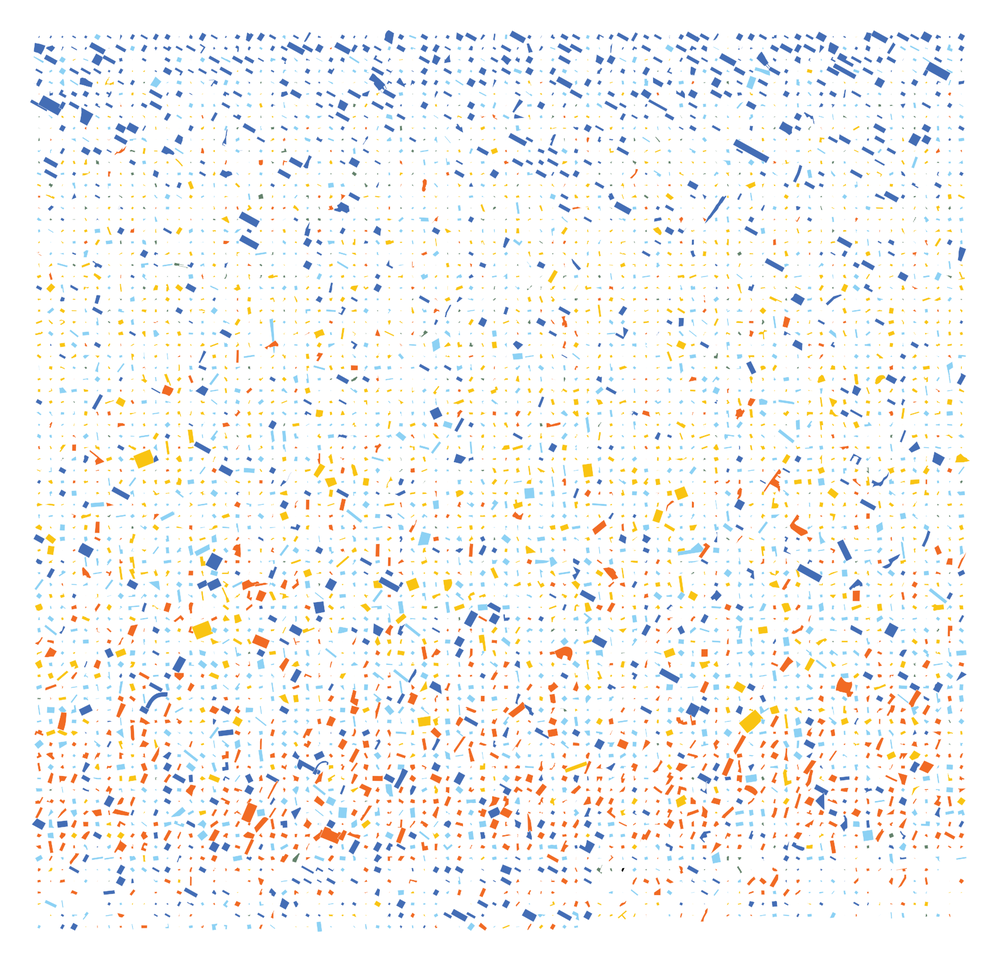
Fake is the new real contains the artwork and photographs of Neil Freeman. We just liked it, and thought others should check it out. Please do! Some samples below.
New York City block groups (median income)


Solar Alignment Walk (2011
In the Mutableye is a segment that sometimes showcases something interesting that is happening somewhere in the world at this moment, and sometimes showcases some fad or person from the past that we here at Mutable acknowledge is still cool s**t.

Josh Glenn
Friend of Mutable Sound, Joshua Glenn, has recently released a book entitled, The Idler’s Glossary, with Canadian publisher, Biblioasis, in which he explores idleness from every angle, with a comment concerning The Situationists here and Hannah Arendt there, he runs the gamut from playful to informative. Throughout, within the confines of his premise, that what he’s offering us here is an amusing glossary of arcane and everyday terms to denote the idle, he has created a very powerful critique of the work-a-day world. From Aestivate and Flazy, to Labor and Dissolute.
Glenn made his name as editor-in-chief of Hermenaut, a subversive magazine of ideas couched in readable and engaging prose. It was inspired by the teen magazine phenomenon, full of intriguing profiles and wry correspondence, and a distinctive world-view cultivated during his time at the Utne Reader. Having surrounded himself with a close circle of editors and authors often groomed by himself into maturity, Glenn went on to capture the imaginations of burgeoning elite everywhere. He rose from the zine culture of the early nineties (along with The Idler and The Baffler, among others) to achieve national reknown at the cusp of the new millenium, going on to develop the Ideas section of the Boston Globe, and continue his forays into the effluvium of culture as a freelance writer, pumping out some truly inspired pieces for N+1, a periodical itself inspired by Hermenaut. As well as continuing his cultural discourse on hermenaut.org, a blog aggregator he runs, he has put out Taking Things Seriously with Princeton Architectural Press, and of course, The Idler’s Glossary.
Mark Kingwell’s introductory essay offers a playful defence of the idler as homo superior, and it is here in this alternate universe, that Glenn has always soared. Idleness is the cornerstone from which this cultural critic has spun a collage-like discourse, his prickly critiques into everything from fake authenticity to camp, all stem from the bedrock of a simple ideology, that there is nothing more revolutionary than doing nothing. Much of his kaleidescopic learning is apparent in miniature within this book, perhaps the nicest example of which being his note about Joe Bousquet in his definition for Beautiful Loser. “My life is externally the life of a reject, and I wouldn’t want it any other way,” Bousquet is famous for saying, his own idea of the homo superior being one in which persons are excellent at what they are born to do, but failures at everything else.
Mr. Glenn paints an amusing, poignant picture, that I personally find proves more emotionally charged than Ambrose Bierce’s classic, The Devil’s Dictionary. More enlightened, less Child of the Enlightenment.