

Long before the more famous Wizard of Oz starring Judy Garland, L. Frank Baum himself made a series of Oz films with his company, The Oz Film Manufacturing Company. The blow film was released in 1914, and was directed by J. Farrell MacDonald. It was the first film made by his esteemed company, and after its failure, Baum found it increasingly more difficult to find distribution, and eventually his production company went under, but we can still enjoy this amusing fantastical romp with its rectangular cardboard cat, Woozy, and its Lonesome Zoop, seductive statuette, and the loopy Patchwork Girl herself. Enjoy!


Headmistress Ursula
Episode 25
Simone Fairfax is possessed by the devil, and a stranger has arrived at the Lady Jane Grey College for Little Ladies, but right now we are going to take a trip down memory lane to Headmistress Ursula’s young adulthood in Shanghai and the stranger she met and how he changed her life, and not for the better!

A new episode of Twilight at the Lady Jane Grey College for Little Ladies aired on a semi-weekly basis.

Kibo's Happynet Manifesto
James Parry
From: kibo@world.std.com (James “Kibo” Parry)
Subject: THE FUTURE OF THE NET IS AT HAND!
Distribution: world,alt,happynet,secretdistribution
Date: Sat, 2 Apr 1994 09:48:40 GMT
Approved: by all right-thinking persons everywhere!
P R O C L A M A T I O N & M A N I F E S T O
***********************************************
WHEREAS, the computer network named USENET has insurmountable flaws:
=> It is cluttered with thousands of disorganized groups.
=> It is difficult to use due to the various software interfaces.
=> It is infected with viruses, especially in the .signatures.
=> There is no formal rulebook and no official administration.
=> Bozos abound.
Read More
The Crucible as a Oneman Show (Pt 1)
in Podcast, Bedroom Theater, Series
Arthur Miller, wherefore art thou? Very probably turning over in your grave at this minimalist interpretation of your classic play by Mutable’s own Gabriel Boyer, done in the same manner as it was done for Bedroom Theater some six years ago to an audience of two. This is the first of two installments of the Crucible. Enjoy the antiquated language, the muppet-like voices, the Morton Feldman score, and general witchery with the knowledge that you are safe several centuries in the future of these dramatically reproduced historical events, a time when you can laugh, cry, and reproduce at your leisure. To hear the second installment go here.
As read by Mutable’s own Gabriel Boyer.

Bedroom Theater began when my roommate changed the light bulb in my bedroom and ended in a five-hour crying spree in the Nevada desert. There is no audience, only people performing for each other. For more on this, please see Welcome to Weltschmerz.
A Review of Boyer's Survey of My Failures This Far
D. Quentin Miller
The size of this tome makes one think of Wallace’s Infinite Jest, or Stein’s The Making of Americans. Boyer’s iconoclastic style would seem to bear out these comparisons, yet the subject of this book does not pretend to the coherence of Stein’s or Wallace’s. There is no single consciousness bringing the work together, which may be part of the point: the second sentence of the book reads, “I am so many different sorts of people it makes me want to stick my fingers in your mouth.” The surreal, absurd non sequitur here is a consistent feature of a book that is, ultimately, a mystifying miscellany. A Survey of My Failures This Far is seven books in one volume. Each is markedly different in terms of genre as well as style and subject matter. “Chewing in the Land of the Bonobos” is written as absurdist drama in the manner of Beckett; “Shorthand with Periodic Tenderness” is a collection of poems reminiscent of Kerouac’s Mexico City Blues. Boyer’s experimental impulse occasionally yields nuggets of philosophical wisdom or narratological insight, but a large part of the appeal of this work is musical and imagistic. Much of it operates according to the logic of nonsense: even individual sentences plunge us down into a new rabbit hole. In the central book within the book, “The God Game,” Boyer gives us some sense of his method in the form of a playful instruction manual about creation itself: “[W]e are using words in a manner similar to their original meaning, while simultaneously giving a new twist for our purposes. This level of involvement is post-culture creation, or rather simultaneous with culture creation.” Got that? This is Barthian postmodernism on crack, or one man’s insistence that printed narrative may not be exhausted, but it can be exhausting.

Paperback Book
9" x 6"
952 Pages
$12.00
Now Available

This is Not a Review: of Fletcher Hanks
Gabriel Boyer
Last month we here at Mutable attended a convention at the University of Oregon that focused on the superhero genre in comix, and specifically giving credence to these outlandish figures with their outlandish stories. Herein we hoped to give a few highlights of the weekend. It is perhaps in poor taste to point out that we were in a full-body spandex superhero costume the entire time.
Names that stuck out were Charles Hatfield and Douglas Wolk, the former for his lecture on Jack Kirby and the sublime, and the latter for his talk on eschatology and the Marvel universe, specifically that here’s a world that’s often on the brink of destruction, but never destroyed, even when it is in fact destroyed.
Read More
The narrator’s true form
Episode 26
Simone still remains in the infirmary, her mind becoming less and less her own, and more and more a place populated by demons, while Boo Boo and the boy from the preparatory school down the lane look on, but we will not witness this scene today because the narrator is currently in the midst of a struggle himself, a polite conversation between his own will and that of the Dark Lord, while the Headmistress and her staff give Jack’s childhood friend a warm welcome in the front hall.
A new episode of Twilight at the Lady Jane Grey College for Little Ladies aired on a semi-weekly basis.

Seven Movie Reviews
A D Jameson
1.
At the stroke of three-thirty the missile lurches from the ceiling and forcefully imbeds itself inside the giant globe. Only the missile is the prong of a fork, and the globe is a sugar gum-drop. Welcome to the miniature world of THE MICROS, a likeable little people whose adventures are recounted in this amazing series of family films. No more than one centimeter in height, the Micros experience one exciting adventure after another, as they make their way in a world so much larger than they are. Now, experience that adventure and dream about being as miniscule as a Micro. In the first tape, we are introduced to the world of the Micros, in which many of the everyday objects we take for granted are shown to be treacherous hazards for our miniscule heroes, because they are so small. A drop of water is a giant pond, a speck of tin foil a dangerous open blade. We meet various prominent Micro citizens who serve as the major characters in the series. In the second tape, Scrunchy is discovered to be missing, and the other Micros fear the worst. Meanwhile strange new objects keep appearing in Lothar’s hut. In the third tape the Micros confront their murderous arch-foe Pepperton, who has sworn to rid the earth of what he considers “disgusting, disease-causing Micros.” In the fourth tape, the Micros must work in concert to save an orphaned boy from the bitter reality of life on the street. Through their efforts, a new home is found for the boy, but not before many exciting adventures are had. These and other wonderful videotapes form the collection of MICRO films now available for home viewing by you and your family. Welcome to the miniature world of THE MICROS, where the people are small in stature, but big in caring, and in courage.

Live at the Pie House
in Product
This is a recording of a remarkable evening in which Malcolm Felder, Gabriel Boyer, Jeff Black, and the Eugene Community Choir joined hands to recreate the magic of our favorite jazz standards, but how was it to be done? Were they going to play them straight or in a curlicue? Boyer’s velvet voice was offset by his angular piano stylings, while Black wailed on his clarinet in a manner reminiscent of some extinct bird of paradise, the Eugene Community Choir backed up Boyer with their eerie a capella renditions of some big band instrumentation, and Felder rapped his hands round his kit in a series of giddy runs. That man can tease the rhythm out of a lame dog running for its life.
For these were to be free jazz versions of the below standards, performed as they had never been performed before, and here at the notorious Pie House, the crowd was getting violent for the players had yet to arrive. Only the Eugene Community Choir was in attendance, and conductor Joe Ullula was frantic. Then, just a moment later the other players were running onto the stage, their eyes glassy with some feverish drive to transform sound into something inhuman. The evening was underway.
Performed by
Gabriel Boyer: Vocals, piano
Jeff Black: Clarinet
Malcolm Felder: Drums
Oregon Community Choir: Backing vox
Recorded in Eugene, OR
Production by Malcolm Felder
1. Baby, It’s Cold Outside (Loesser)
2. The Ballad of the Sad Young Men (Wolf/Landesman)
3. Night and Day (Porter)
4. Willow Weep for Me (Ronell)
5. A Love Supreme (Coltrane)
6. Isn’t it Romantic (Rogers/Hart)
7. My Funny Valentine (Rogers/Hart)
8. What the World Needs Now (Bacharach)
9. Band Introductions
10. My Favorite Things (Rogers/Hammerstein)
11. Where or When (Rogers/Hart)
12. God Bless the Child (Holiday/Herzog)
13. Georgia on my Mind (Charles)
Digital album available to stream or download now!

Ephemera Revealed
In the Mutableye
Recently we here at Mutable were introduced to a website full of all sorts of neat goodies from the image-making world of the past. Above is an example from their collection of prints from the Russian underground, circa 1905-1906, but you can find everything from tibetan anatomical drawings to vintage matchooks. Peruse some of our selections from this wonderworld below.
Read More
Thunder, Lightning, Rodeo, & Radio
Letter from the Editor
A friend of mine once said that Brian Chippendale of Lightning Bolt fame did for drums what Jimi Hendrix did for guitar. And there have been conversations I have overheard in garden parties where people spoke of Lightning Bolt in general as if they were talking of the risen Christ. A Noise duo, bass and drums, with the driving force of a Led Zeppelin but with a minimalist Philip Glass bent and the psychedelic experimentalism of a Sun Ra. I remember a night long ago and myself in a throng of adoring fans pressing against the invisible bubble surrounding Lightning Bolt as they performed in the direct center of the warehouse floor.
But Chippendale is not just a risen brother of Jimi Hendrix on his kit of clouds. He is also a comix illustrator and one of the founding members of Fort Thunder—a warehouse space in the Olneyville district of Providence—a place he moved into with his friend Mat Brinkman in the mid-nineties. The space eventually came to house a number of local avant-garde artists and musicians, was the home to Paper Rodeo, Paper Radio, and of course, Lightning Bolt, until it was shut down in 2001.
Read More
Video: The Governator!
Perhaps the most famous Austrian next to Hitler is Arnold Schwarzenegger, current governor of California, former heavyweight champion of the world, and Hollywood film star, known for such memorable lines as, I’ll be back, and more recently for lines like, She’s either Puerto Rican, or the same thing as Cuban, I mean they are all very hot. They have the, you know, part of the black blood in them and part of the Latino blood in them that together makes it, while talking about California Assemblywoman Bonnie Garcia, the lone Latina Republican in the Legislature, or, To those critics who are so pessimistic about our economy, I say, Don’t be economic girlie men, but back in the late 90’s, when none of us foresaw this turn in Schwarzenegger’s career, he was an idol to some. (True, he’s still and idol to some, but who are these people, and why?)
I remember, a friend of mine, Chris Huggins, had a Scharzenegger concept band, in which he sang songs of tribute to the man, and did body-building training throughout the show, a wiry little redhead with a Schwarzenegger mask and t-shirt. He was my roommate at the time and would occasionally break one of the panes in my wall of windows facing the hallway in the midst of a demonstration of his skills as a black belt, but I’ll never forget that performance he did in a loft in Brooklyn, his legs straddling the weights bench, a lifesize Schwarzenegger cut-out by his side, or how I vomited through a woman’s underwear that night because she wasn’t quick enough climbing off the toilet seat.
It was from Chris that I first heard about Pumping Iron, the 1977 documentary about Schwarzenegger and the larger world of competitive body-building. He was inspired by the innocent, youthful, athletic Arnold, waxing poetic when he started in on the man’s great feats of the past. He talked of Schwarzenegger quite a lot in those days, as Arnold were indeed Hercules or Conan, as opposed to a Kindergarten Cop, and eventually Governor of California, although perhaps Schwarzenegger’s shift towards politics began with True Lies. Enjoy the peak into a younger, kindler, and gentler Schwarzenegger below.
In the Mutableye is a segment that sometimes showcases something interesting that is happening somewhere in the world at this moment, and sometimes showcases some fad or person from the past that we here at Mutable acknowledge is still cool s**t.

Requiem for Christian Loidl
William Levy
In a way, the Austrian poet Christian Loidl’s demise was an Icarus action, radical as was his life. Chris’ partner wrote me—“It seems that he had taken mushrooms and jumped out the window, out a of a closed window, so he had to break the glass first, and then he fell or jumped and broke his neck. That’s all.”
People who are afraid of heights are not afraid of accidentally falling. They are terrified of their inexorable urge to jump, to fly, an abyss-merge-craving-rapture as a triumphant exit strategy to Zion, the highest region. Chris called himself an “airpoet,” he lept at life—in the faith that he could grab it. He believed: Let’s be realistic and demand the impossible; and, The only thing worth contemplating is that which cannot be contemplated.
Read More
Wittgenstein's Tractatus Logico-Philosophicus
as translated by Charles Kay Ogden
The family of Karl Wittgenstein, who was one of Austria’s richest men when he died, in 1913, may deserve some gloomy sort of prize, the Palm of Atreus, perhaps. His youngest child, the philosopher Ludwig Wittgenstein, once asked a pupil if he had ever had any tragedies in his life. The pupil, evidently well trained, inquired what he meant by “tragedy.” “I mean suicides, madness, or quarrels,” replied Ludwig, three of whose four brothers committed suicide, two of them (Rudi and Hans) in their early twenties, and the third (Kurt) at the age of forty. Ludwig often thought of doing so, as did his surviving brother, Paul. A budding concert pianist when he lost his right arm to a Russian bullet, in 1914, Paul was imprisoned for a time in the infamous Siberian fortress where Dostoyevsky had set his novel “The House of the Dead.” Ludwig later claimed to have first entertained thoughts of suicide at around the age of ten, before any of his brothers had died. There were three sisters: Gretl, Helene, and Hermine. Hermine, the eldest child (she was born in 1874; Ludwig, the youngest, arrived fifteen years later), and the guardian of her father’s flame, never married. Helene was highly neurotic, and had a husband who suffered from dementia. Gretl was regarded as irritating by most people, including her unpleasant husband, who committed suicide, as did his father and one of his aunts. Bad temper and extreme nervous tension were endemic in the family. One day, when Paul was practicing at one of the seven grand pianos in their winter home, the Palais Wittgenstein, he leaped up and shouted at his brother Ludwig in the room next door, “I cannot play when you are in the house, as I feel your skepticism seeping towards me from under the door!”
Read More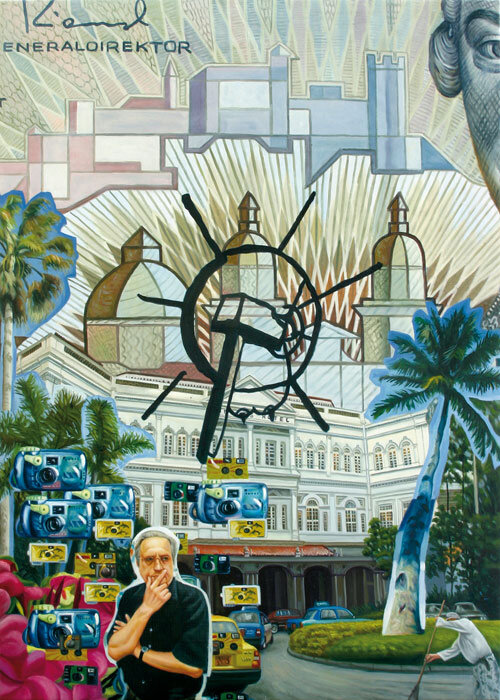
Monochrom: The Art of the Prank
Austrians in April
Monochrom purports to be what hydrogen atoms are capable of when you give them 15 billion years to evolve, but what does this mean? For one thing, we know that this means an arts collective where all members work together to create multi-media projects that are often presented as absurdist attacks. From Marxist puppet shows to Nazi petting zoos, a virtual soviet village called Soviet Untersoegersdorf to bar-bots and Arse Elektronica. Projects abound at monochrom, but monochrom is also a blog about the political and the pop, the absurd and the outlandish, e.g. Indiginous leaders brought to Quito to watch “Avatar”.
Considered Austria’s “art-pranksters”, they call themselves an “art-technology-philosophy group of basket weaving enthusiasts and theory do-it-yourselfers,” but who are they really, or are they even really at all? In 2002 they were invited to represent Austria at the São Paulo Art Biennial, and decided to manufacture a non-existent artist to represent them for the event. “People would ask, ‘So where is Georg Paul Thomann? I’d like to meet him again; I think I met him twenty years ago at an art fair in Dusseldorf,’ or whatever. We would reply, ‘He’s just sitting in his hotel room. We’re rather happy that he doesn’t show up, because he’s quite an asshole.'”
Read More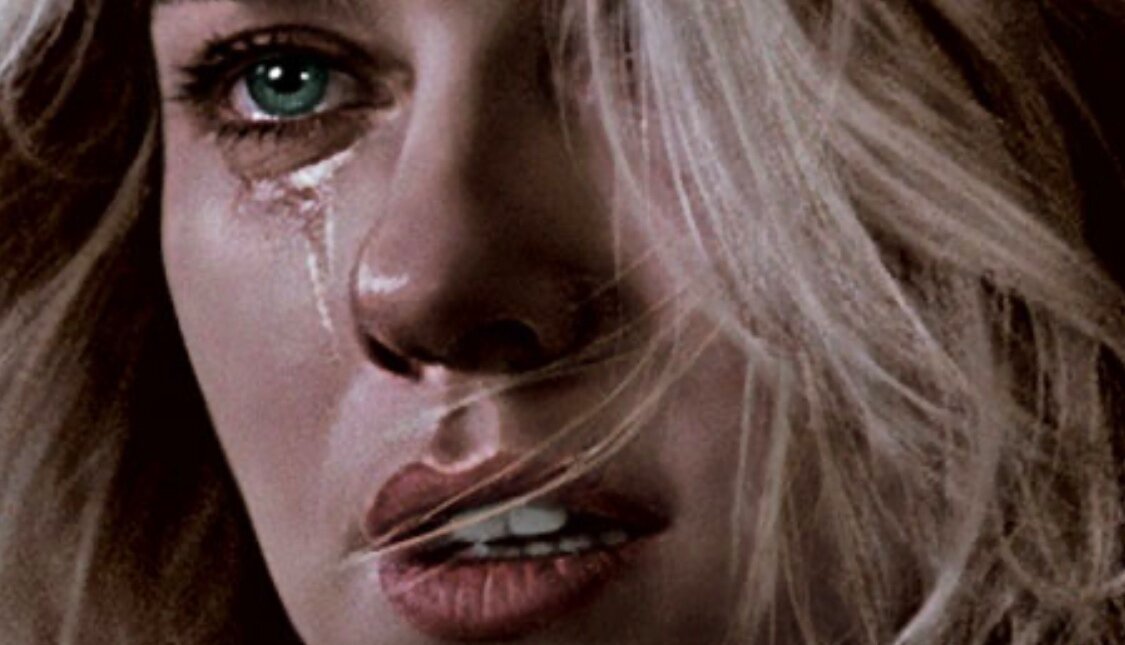
This is Not a Review: of Michael Haneke's Perverse Cinema
Gabriel Boyer
I was working at the Film Forum in NYC when the original Funny Games was released—as in the one starring Susanne Lothar and not the shot for shot remake starring Naomi Watts. This was in 1997 and here in America we were still suffering from a quaint post-apocalyptic ethos in which the world as we know it was bound to end any moment now. We were hopeful that things as they stood couldn’t go on much longer. And then we saw Funny Games.
Funny Games is a perverse vision largely because it presents a human view of persons we at the time could only despise and envision skewered on the meat-hooks of industry. Georg and Anna are upper middle class and middle of the road, off to their summer retreat when two unexpected guests arrive at their door asking for eggs, two youths wearing white gloves who they were introduced to just a while earlier by an oddly anxious neighbor. The youths proceed to break the eggs, and work their way into the home, first through a play-acted buffoonery and then through acts of violence, sadistic games, the family strung up and forced to go along with their captors so as to keep each other alive just a little while longer.
We were those youths.
Read More
3 Pieces by Gert Jonke
as translated by Vincent Kling
Gert Jonke, who died last year just shy of 63, depicted with grace and mad humor what his fellow Austrian Hermann Broch once called the “jolly apocalypse” (“die fröhliche Apokalypse”) that accompanied the collapse of Europe from 1914 to 1945 and that’s anything but past and gone in the era of the European Union. The three short works here are a farewell tribute meant to show various related aspects of Jonke’s art. The first is a letter to his baby son Hans, who died suddenly at age four months, and is taken from a book that mingles fiction, autobiography, reminiscences, tributes to friends, and brilliant essays on music. “Hyperbole 1,” from a series of snapshots or vignettes in drama form called Insektarium, is one of several studies by Jonke showing the social origins of perception and memory. In his last few years, “Leavetaking” became Jonke’s much-anticipated signature piece.
Read More
ZOCK: Outlaw Manifesto of the Age
William Levy
My first contact with the Vienna Action Artists was through the DIAS, or Destruction In Art Symposium held in London during the autumn of 1966. Gunter Brus, Otto Muehl and Hermann Nitsch, and also Gustav Metzger, received a lot of publicity during this season. By art critics and underground newspapers, of course. Why not? Jean Tinguely’s Homage to New York blew itself up at the Museum of Modern Art in 1960, watched by a distinguished audience. Robert Rauschenberg had just spent a month slowly erasing a Willem de Kooning drawing. First there were Constructivists, then there were Destructionists. Yet even Time magazine was not outraged. In the article they wrote about these events, the Wiener Aktionismus, or Vienna Actionists, were grouped favorably within the in vogue international Happenings movement. And it became well known among certain circles that the then famous Pete Townsend, lead guitarist of the pop group The Who, had seen the DIAS actions. He adapted them to his guitar smashing performances that became a moving icon, the kinetic ideogram, of a widespread artistic ferment against the frame, the gallery, the museum, all received genres and the proscenium itself in its many manifestations. Transformed into a swank craze, indeed, the influence of the Vienna school became almost a leitmotiv of London’s Swinging sixties. Destructive art was featured again, and used as such, in the nightclub scene in Michelangelo Antonioni’s film Blow-Up. Jimi Hendrix showcased destruction art in his Monterey Festival performance.
Read More
Austrians in April!
We had this thought here at Mutable.
Recently we’ve been hearing quite a bit about Austria and Austrians, because things don’t start coming to the surface in one’s and two’s, but in clumps upon clumps. From Otto Muehl and his ZOCK manifesto, to Michael Haneke and his theater of the perverse, from Wittgenstein to Monochrom, we’re all about Austria this month.
Perhaps the most famous Austrian, unfortunately, is Adolph Hitler, who we will not be writing about this month, not from some fear of shying away from those gritty issues keep stations like HLN, CNN, and FOX on the air, but because our history happens on the cutting room floor, in the studio, and at a writing desk, not on a battlefield or in parliament. So keep your eyes on Austria this month. It’s worth the look.

Levi Fuller
Levi Fuller, who played in the little-known soul band Extra Play with Kevin Micka, Gabriel Boyer, and Malcolm Felder, all members of the Mutable universe, and played everything from stand-up bass to saxophone on A Journey to Happiness Island, has released a new album, Colossal. You can buy the vinyl at sonicboomrecords.com or buy the mp3s from iTunes, or read more at Levi’s website, denimclature.com.