

Hearts keep on beating and take beatings and keep on bleeding. Manson & Madri want to give you a lesson in anatomy. “We were built to bleed. We were built to take a beating.” The video for this paired down minimalist rock-and-roll ditty can be found below. It is just one of a series of rock videos we have been posting from their collaboration, all of which can be found under the Song-A-Day link along the sidebar and you can find a selection of these songs on their album Secret Griefs here.


Video: Alexander Ross
We here at Mutable just discovered Alexander Ross, and he has immediately become one of our new favorite humans. At first, we merely enjoyed him for the fact that his art is just the sort of abstract realism that we love to love. (See above.) Which for some reason reminds me of Kelly Reaves’ work.
But then, we discovered the album of his below, put out by our friends Audio Dregs, and featuring art that is more Jim Woodring than Salvador Dali. Then we listened to his music. Then we asked ourselves how it was possible we had never listened to his music before.
Of course, we had to immediately contact Eric Mast over at Audio Dregs to discover more about this mystery, and he was happy to explain how he had first discovered Fantastic Palace's music on a CD comp in ’92 called Chinny Chin Chin (See Eye) and played it on his college radio show at the time a bunch, listening to it for some 20 years, only to then discover it was his friend, Mike McGonnigal, who had originally released it, and the two got in touch with Fantastic Palace (Alexander Ross) to re-issue it on vinyl, a release that has just recently officially sold out.
As for the video below, it was not taken by Mast, but it certainly rounds out the mystery of who Alex Ross is and what he believes in.
Through the course of it, Ross discusses all aspects of his style, influences, and current experiments. The first painting they talk about is very different stylistically from the drawing above, and at first glance it seems almost cheesy, but when you get in close, you see the wonderful vibrancy of the piece. We have a special fondness for works that begin with clay sculptures and go from there, not to mention works that transform as you approach (think Chuck Close), and of course it’s also so illuminating hearing Ross talk about the “photorealism” of the paint versus the more abstract pencilwork in that first painting the video focuses on.
Over the course of the studio visit, Ross also talks about his distinct interests and many inspirations, from psychedelics, to silly putty, to mites, describing his drawings as a kind of monstrous R. Crumb scientific drawings. My favorite parts are always when Ross lets loose about how his ideas have evolved and are continuing to evolve.
Be sure to stick around to the end to get some nice peaks of some delightful experiments. “The most intelligent technology is nature.” Indeed.

In the Mutableye is a segment that sometimes showcases something interesting that is happening somewhere in the world at this moment, and sometimes showcases some fad or person from the past that we here at Mutable acknowledge is still cool s**t.

My Asinine Life: The Ghost Hand
in Article, My Asinine Life, Series
Gabriel Boyer
I have lost my imaginary friend. She went out for a stroll and never came back. And other things have come to take her place.
Their paperwork was very official. They claimed themselves to be legitimate representatives of my imagination. We have on occasion been taxed with playing you in the early morning, they claimed. But in truth, these were things that wouldn’t play in the familiar ways upon the sprawling filaments of the universe my work station contains.
Sorts of things have hands where they should have eyes, and have eyes everywhere in between. Crawling insufficiencies and elongations of the lower intestine. The underthings—and the overdrive gone into overdrive. And everything in between.
I have been put into quarantine here in my suburban Vietnamese home. I have been in contact with a person who was in contact with a person who was in contact with a person. I have a cat who lives in my yard, and this is not a healthy cat. Old women scale the walls of my garden to chop down bananas and shout at me across the many leafy plants.
So, I’ve become reflective.
Read More
Neptune: Cave Drawings
Mutable Sound of the Month
This month, we have chosen the re-issued LP, Cave Drawings, from Neptune. The best thing that ever happened to art rock, Neptune featured guitars and other instruments constructed by Jason Sanford, and was a staple of the Boston scene throughout the 90’s and 00’s. This album, originally released in 2013, is just now being re-released through WWAB. Give it a listen and consider purchasing it for Bandcamp Friday, during which time all proceeds go to the artist. And while you’re at it, pick up one of the many fine Mutable products available as well!

Mutable Sound is pleased to present a unique musical experience every month or so by ourselves or someone we’ve been introduced to. These are from the reel-to-reels and tascams of the garages and basements of the world. If you have a track you would like us to hear, please feel free to send it on to mail@mutablesound.com along with credits and a brief description.

Video: International Writers' Conference
A few weeks ago, Mutable was invited to attend the International Writers’ Conference. Since then, the video feed has been made available by John Wojewoda. Although many speakers at this conference had useful information to offer, the first speaker, Angus Fletcher, gave a remarkable talk on the neurobiology of storytelling technologies. The audio for just that piece can be found on John’s podcast. (And please consider subscribing to it if you like what you see here. He’s always adding author interviews and insight into the creative writing process.) Other keynote speakers included Kosta Ouzas speaking on digital advertising for authors, Charlie Franco on the state of independent publishing, and John Wojewoda himself on NFT’s and the future of publishing.
In the Mutableye is a segment that sometimes showcases something interesting that is happening somewhere in the world at this moment, and sometimes showcases some fad or person from the past that we here at Mutable acknowledge is still cool s**t.

Mosaic of Time: My Vestibule School
in Series, Mosaic of Time, Poetry, Story
The poem is from my 2020 collection titled Between Plague & Kleptocracy: Invented Poetic Creations & Conversations of Seva & Bill.
The collection cross-references poems of two dead poets: Vsevolod Nekrasov and Bill Knott, and the narrator/poet (Lina Ramona Vitkauskas) serves as medium, fusing bits of posthumous conversations and imagined collaborations between them. Vitkauskas hybridizes and recreates their texts, projecting possible dialogues during this perilous time in history: of pandemic, forced isolation, economic decline, and the US finding itself with a pack of kleptocrats and their sycophants overtaking the three branches of government.
The poem itself (below) was written in early 2020, beginning of pandemic. Special thanks to PEN America, which offered a relief grant to the author while unemployed, providing a chance to write the collection.
Poem:
My Vestibule School
National someone
future
something
sometimes
your toes
are a crystal ball
and sometimes
mini executioners

Mosaic of Time is a monthly series that each month explores another cinepoem by author and artist, Lina Ramona Vitkauskas. This month marks her first collaboration with video artist, Michael Lewy.
The whole body of the “Mosaic of Time” section will create a broader mosaic, over time, and ideally capturing time as the world progresses or regresses—plunging into global events and out again.
.


Chapter 3: The Van & The Camera
in Podcast, Series, Weltschmerz
In this installment of Boyer’s audio memoir we find Gabe and Jill back in Boston and waiting on the van so that they can bring theater to bedrooms across America in a 1971 VW minibus, as well as hoping to get Zach to perhaps, possibly buy a camera to document this event. But will Jill and Gabe ever even get on the road? Featuring the occasional flashback.

Paperback Book
8" x 5.25"
560 Pages
$16.00
Now Available

I Am the Hostility Queen
Liz Coffey
This is the tale of that time I inspired John Updike.
My parents’ friends called them one day in 1993 and said something like, Have you seen the latest issue of the New Yorker? Is it possible John Updike wrote about your daughter on the last page?
I’m from Beverly Farms, a part of Beverly, Massachusetts that is both Tony and Townie. (Note to self: new drag name = Tony Holmes.) We have private beaches, a small downtown, commuter rail service to Boston. John Updike was our most famous neighbor. We moved there in 1974, he moved there in 1982. My clever parents bought the cheapest house in the fanciest neighborhood for something like 35k. As middle class newcomers, we were neither Tony nor Townie and will never be. The house is an easy bike ride, a long walk, or a five minute drive to the beach. John Updike purchased a much fancier house with walking access to an even more exclusive beach a mile down the road.
Read More
Jenn Pipp: Time Ceremony
Jen Pipp, self-styled spiritual modernist, creates online ceremonies to help the rest of us to manage our minds. “There’s so much spiritual information out there right now, it’s hard to know what resonates with us and what is not resonant with us.” She has a show, The Great Big Infinity, up at the Emerson Contemporary Gallery through May 9th. Gallery hours are Wed-Sun 12-7pm. Zoom Artist talk Tuesday May 4th at 5pm. Stop by and check it out!
In the Mutableye is a segment that sometimes showcases something interesting that is happening somewhere in the world at this moment, and sometimes showcases some fad or person from the past that we here at Mutable acknowledge is still cool s**t.

Video: Knights
Knights can have days. They can make a day of it. Sometimes, they take on more than they can chew. Sometimes we pray but pray for what? As we continue our journey through the mind of Manson & Madri, perhaps now would be a good time to ask how we got here? From Angels to Bliss, and now… “Every knight has his day.”
And you can find a selection of these songs on their album Secret Griefs here.
John Manson and Dan Madri of The Gondoliers, became involved 4 years ago in a project called Fun-A-Day. (Or FAD.) And now John and Dan are continuing this tradition under the title Song-A-Day or SAD, and over the course of the coming months, we here at Mutable will be posting them regularly for your viewing and listening pleasure. Enjoy!

Boston Bands in the 90's: Crank Sturgeon
Crank Sturgeon is a phenomena. He has continued to perform and tour from Maine, and has released an album through Mutable, an album where his noise art was remixed by Lineland as Other Occasions Not Minded. Crank Sturgeon is a tireless innovator with an indomitable spirit and an endless capacity for the most abstract forms of play. He can be seen here playing at the Middle East Upstairs, all footage care of the legendary and now deceased Billy Ruane and his Road to Ruane feed.

Billy Ruane was a staple of the scene at one point, and he documented endless shows throughout the 90’s and beyond. These videos came out of that.

Pisces, Nakrob Moonmanas (2020)
A Review of Coronavirus Manifestoes
Manifesto of the Month
As the number of total recorded deaths from the novel coronavirus also known as COVID-19 slides past the 3 million marker worldwide, we here at Mutable thought we would give you a showcase of some of the manifestoes that have resulted. Due to space restrictions, we have chosen to on occasion present abridged versions or excerpts with links to the original. If you’re wondering how we organized them, they are listed from most manifesto to least manifesto. Although we tried to be as inclusive as possible, there were one or two “manifestoes” that were just TOO academic to truly be understood as manifestoes, or posing ideas (such as that COVID-19 is a hoax) which we felt we could not in good conscience reproduce.
*
A Manifesto of Sorts for Covid-19
[This manifesto from the author Zillah Eisenstein appeared on the NYU Press web site a year ago, in March 2020. You can see the original here.]
“We can rise together against COVID19 and make a better world”
A few thoughts to share:
COVID19 like most disease is democratic—it can affect anyone, although with differing options to respond to it. The world, including the US is not democratic. This does not bode well. But we can move forward because simple individualism contradicts the interdependency of this COVID crisis. “We” all suffer when one person circulates with symptoms—and we will flourish if we accept responsibility to isolate/distance and protect one another.
Read More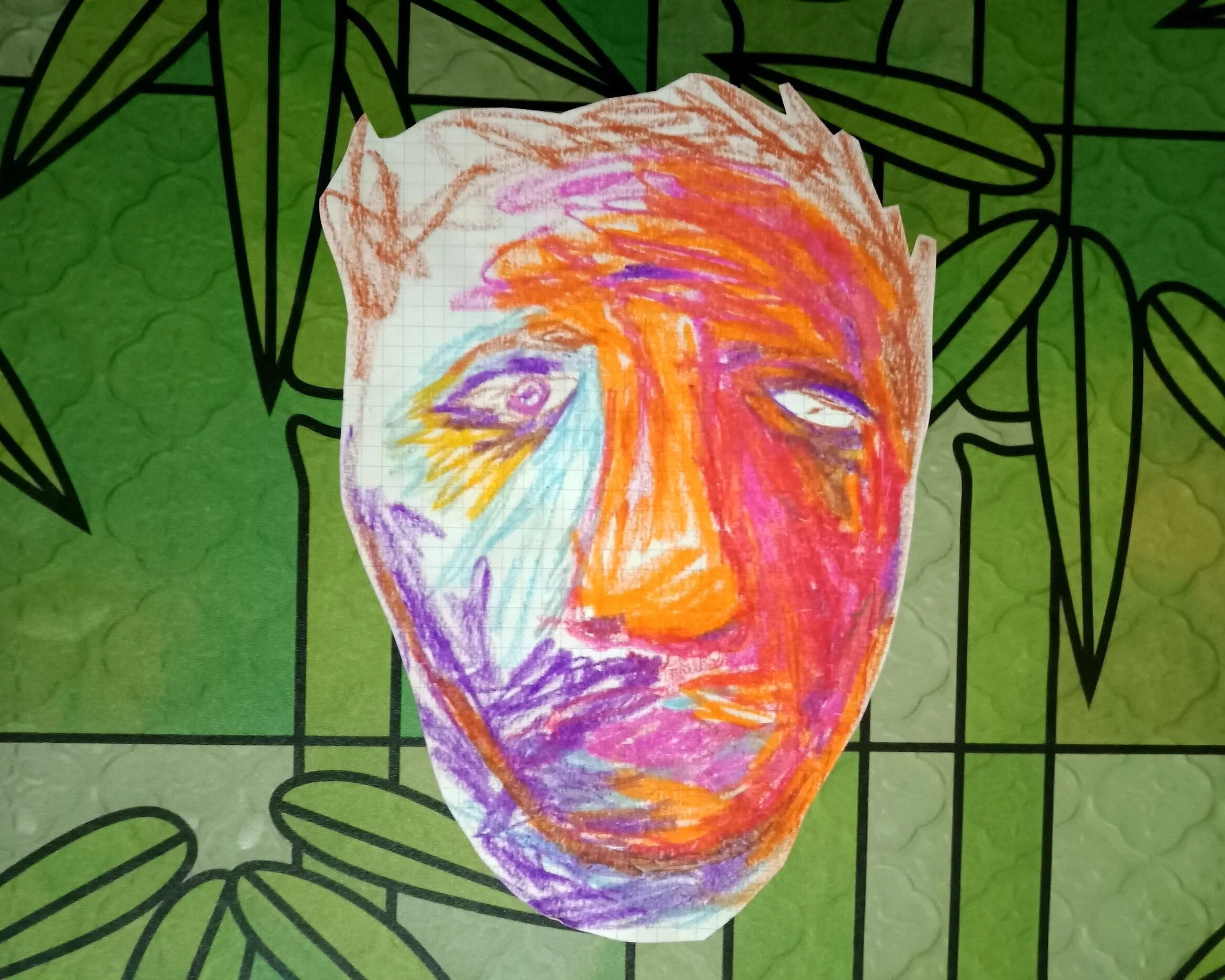
Chapter 2: Dream a Little Dream of Dramamine
in Podcast, Series, Weltschmerz
In this second installment of Boyer’s audio memoir of the summer he spent traveling the country, bringing theater to ‘bedrooms across America’ in a 1971 VW minibus, we travel to Brooklyn and the other burroughs, Boyer tries Yohimbe, and an author of comedic drama doubles as a private dick, but what happens when our heroes become lost on the backroads of NYC at 2 something in the AM? Where is it all going? Or is it all just going back?
To hear Chapter 1, Last Week’s Broadcast, go here.
Paperback Book
8" x 5.25"
560 Pages
$16.00
Now Available

Bode Radio: Dusk at Reikai
Mutable Sound of the Month
This month, we have chosen a track off Bode Radio’s most recent album, Onosea. We here at Mutable have been watching Bode Radio’s progression with keen interest over the years. Alex Yoffe, the man behind the music, is deeply involved in Gamelan, and was trained in composition, and Bode Radio emerges from all of these interests. Recorded in Chicago, Boston, and Java between 2015 and 2017. It’s a very dynamic album that takes the listener to many places, sometimes more loping and trancelike and sometimes more frenetic, but always masterfully constructed, with layer upon layer of nuance. Enjoy!
Mutable Sound is pleased to present a unique musical experience every month or so by ourselves or someone we’ve been introduced to. These are from the reel-to-reels and tascams of the garages and basements of the world. If you have a track you would like us to hear, please feel free to send it on to mail@mutablesound.com along with credits and a brief description.

This is Not a Review: of The Reeking Hegs
Gabriel Boyer
Modernist literature was working to uncover something. It had a purpose. It existed in the age of Freud, back when there was a strong faith in the power of dark truths revealed, and what wisdoms can be found hidden undetected in our streaming consciousness—but ideologies wane and ebb. They surge. They subside.
There was a time when manically playful experimental literature was a mainstay of the art, and the lone scribner penning a piece of madness, comedic or otherwise, was a type. From James Joyce to John Kennedy Toole, writers were treated as a kind of amusing malady of the age, to be found in the cafe’s of Paris or living with their mothers, and sometimes, these madmen and madwomen could actually write. But that idea, of geniuses peering over the heads of their small-minded peers, began losing its definition somewhere around midcentury, and slowly morphed into something more insidious. The MFA student.
Nietzsche was right to mistrust the institution. It has done little good for philosophy. Throughout the twentieth century, philosophy has become an increasingly academic pursuit. These days, our philosophers are either populists (like Sartre) or produced by and for the institution (Lyotard and really the whole postmodern school), and at best a bit of both (Foucault and Žižek). The dangerous exoticism of a lone philosopher pontificating in print seems almost as quaint today as the tradition of prophecy that came before.
And the institution is doing the same thing to literature.
People say that writers who learn at MFA programs and writers who sprout from the sidelines are equally numerous, but that is not the point. The point is that, just as the philosophy being produced today is entirely academic, the type of literature being produced is now wholly commercial. You will disagree, I am sure, and rightly so, but when I say something is ‘commercial’, what I mean is it’s written up to the audience, rather than written to some point beyond the audience. There is no more writing for posterity. The thinking class has lost hope in their grand project, and so the publishing industry has lost its purpose beyond the barest of business models.
Experimental literature itself only exists as a subgenre of the institution. We call it “experimental” because it fits that genre, but actual experimenting is no longer something we envision being done by covens of artists with manifestoes clutched in hand but by grad students who are more articulate at pontificating upon their ideas than in presenting coherent works. Which is why The Reeking Hegs is such an important book.
It doesn’t fit into any of these little holes.
Read More
Video: Bliss
“I just feel like I might be done.” Another heartwarming song from Manson & Madri on this Sunday morning. Angels become Fillies and Rage evolves to Sirens, then Surge until a Brigade of Maidens feel the need to let off some Steam. Where is this all going? Could it be bliss? Are John and Dan telling us to find our bliss? Where is your bliss? What is bliss? Listen and find out!
And you can find a selection of these songs on their album Secret Griefs here.
John Manson and Dan Madri of The Gondoliers, became involved 4 years ago in a project called Fun-A-Day. (Or FAD.) And now John and Dan are continuing this tradition under the title Song-A-Day or SAD, and over the course of the coming months, we here at Mutable will be posting them regularly for your viewing and listening pleasure. Enjoy!

Mosaic of Time: Poets
in Series, Mosaic of Time, Poetry, Story
“Film fixes reality in a sense of time—it’s a way of conserving time. No other art form can fix and stop time like this. Film is a mosaic made up of time.”
When director Andrei Tarkovsky put forth this notion, he was before a live audience of cinephiles at the Conference Cinema Thieves: International Intrigue, held at the Centro Palatino in Rome (1982). There, the event itself, was a breathing mosaic of beings captured in a moment with the director. The conference was being filmed, and so, this moment is documented and frozen in time as well. We can go back to this moment and hear the artist carefully describe how he arranges within his artform—as a composer would arrange notes on a scale.
What we think of a mosaic is a whole unit—a piece of art made up of pieces. When we look at each of the pieces—we can see the materials, the tangible elements of which they are made: ceramic, glass, wood, plastic, etc. The mosaic itself comprehensively represents an idea. The object is made of objects but the whole is a concept. The scenes of the movie themselves are a part of the greater, larger, mosaic. The artists and actors who make the film are pieces and parts of the film, the mosaic. The moments a director captures/records is the harnessing of time that Tarkovsky describes.
Short films, specifically poetry films (cinepoetry), can be viewed this way. Tiny pixels are the pieces or elements to make an electronic vignette, or, mosaic. Poems themselves are intangible and only represent (or do not represent) a concept or idea. A part of the whole. Poetry on film is not made of physical film, not made of anything but digital pixels, but is made of the arrangement of digital sequences. When you edit a film, there are scenes and transitions—and these are a part of the mosaic.
This month, we feature a cinepoem by Lina Ramona Vitkauskas (also the curator of this series). This is a cinepoem that captures a moment in time during the pandemic. It was recently featured in the Halifax-based poetry series, EVE OF POETRY. It illustrates how poets (who operate in already isolated, private spaces) have dipped further into isolation and insecurities during pandemic times. The original poem comes from her 2013 collection, Professional Poetry, available on Lulu.
Mosaic of Time is a monthly series that each month explores a cinepoem by a different artist.
The whole body of the “Mosaic of Time” section will create a broader mosaic, over time, and ideally capturing time as the world progresses or regresses—plunging into global events and out again.
Mosaic of Time is curated by Lina Ramona Vitkauskas.

Gae Bolg: Requiem
I first discovered Gae Bolg more than a decade ego, while touring the Pacific Northwest. We were staying with a friend in Olympia, WA, and after playing us the remarkable composition he’d made from frog recordings, he put on a piece of music that would become a regular for me in the years to come, Requiem, by Gae Bolg.
As with everything from Gae Bolg, in this piece of music of French musician, Eric Roger. It is bombastic and medieval, yes, but in the context of the 21st century, it seems appropriately apocalyptic. It is, the appropriate response to the times we are living. You can listen to Requiem below, or check out their equally amazing Aucussin et Nicolette.
In the Mutableye is a segment that sometimes showcases something interesting that is happening somewhere in the world at this moment, and sometimes showcases some fad or person from the past that we here at Mutable acknowledge is still cool s**t.

Chapter 1: Last Week's Broadcast
in Podcast, Series, Weltschmerz
In this first installment of Boyer’s audio memoir of the summer he spent traveling the country, bringing theater to ‘bedrooms across America’ in a 1971 VW minibus with a woman who’d broken up with him after the first week. In this first chapter learn how Bedroom Theater came to be, and the odd set of circumstances that led to this most useless of people somehow finding himself on the road and touring the country in the Summer of 2003.
Paperback Book
8" x 5.25"
560 Pages
$16.00
Now Available

Before the Ghosts Came (2 of 2)
D Howland Abbott
[For the first part of a two-part article go here.]
Dr. Bob wound a chewed pen in his wiry hair and looked at me over the top of his John Lennon spectacles. “So how is your testimony doing these days, David?” I was appalled at the question; he was asking if I was a good and faithful member of the Mormon church, which was none of his business. This question had no place in what was supposed to be a therapeutic relationship; fortunately I knew the language of this particular lie very well. I’d had to recite it dozens of times in my life, and my response was thoroughly scripted.
“Well, doc, I believe that God and His Son appeared to Joseph Smith in the Garden of Gethsemane. I believe that Gordon Hinckley is a prophet, and that God speaks to him directly. I pay my tithing, I attend all my church meetings… My testimony is in great shape.”
Read More