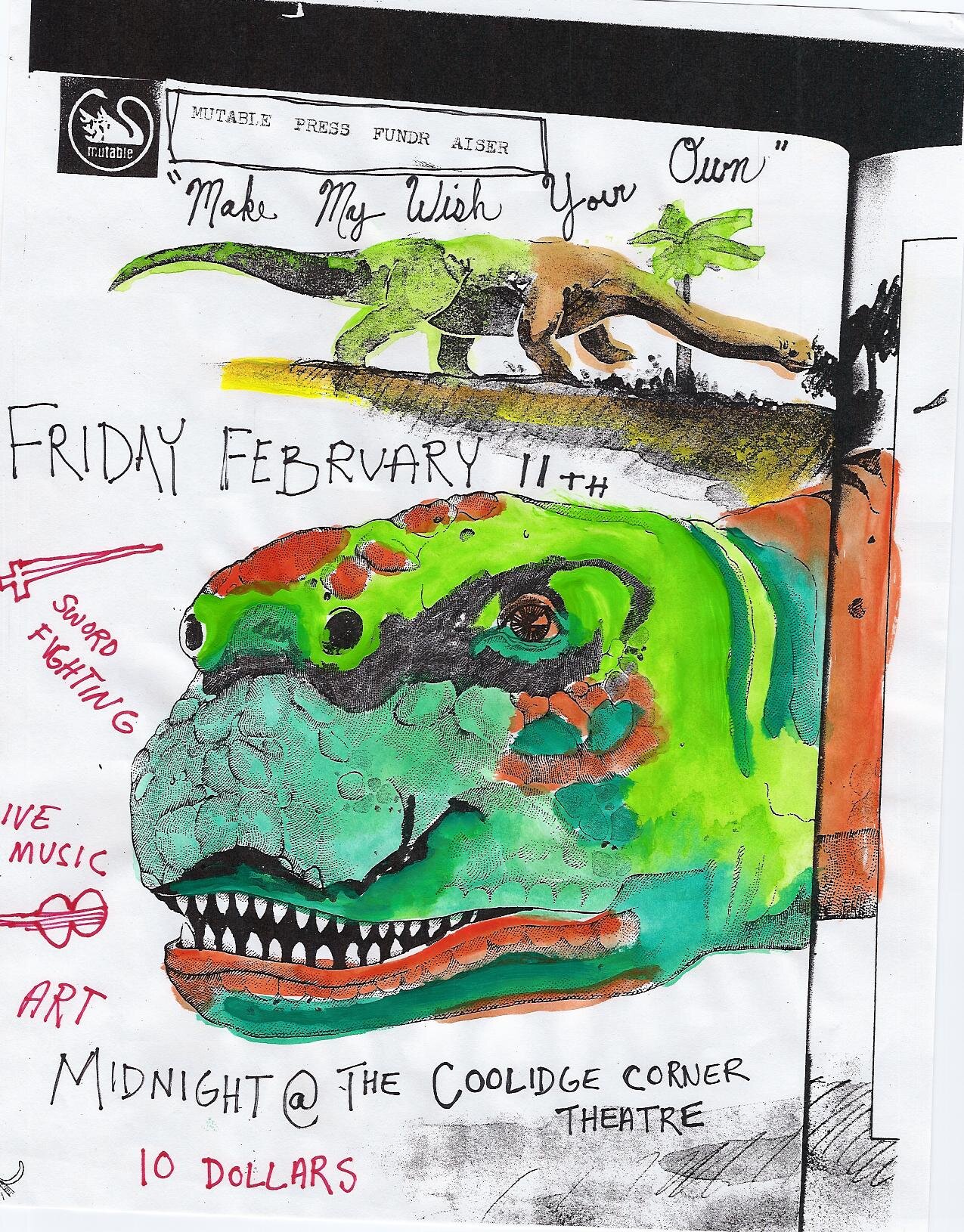
The end is so nigh it’s beyond nigh. It’s so nigh that it’s fore and then nigh again, and then fore and then nigh again. In short, this is the final episode of Twilight at the Lady Jane Grey College for Little Ladies, and Isabel and Nathaniel have found themselves within the belly of the beast! Prepare yourselves for the shocking ending, or is it?
Liszts
Your neighbor’s wife looks prettier than your own.
Follow the local custom when you visit a foreign place.
Elephant tusks cannot grow from out a dog’s mouth.
The participant’s perspectives are clouded while the bystander’s views are clear.
Pick the flower when it is ready to be picked.
When the tiger comes down from the mountain to the plains, it is bullied by the dogs.
It is impossible to change your basic characteristics.
One bitten by a snake, you are even frightened by a rope that resembles a snake.
When you go up to the mountain too often, you will eventually encounter the tiger.
Releases
A Bohemian in Brookline
Scott S. Greenberger, Globe Staff
A curtain is furled under a pipe that runs just beneath the ceiling, and a spotted cat wanders in. On the makeshift stage there is a ripped couch, a battered metal file cabinet labeled “This Was Your Life,” and a swath of green shag carpet.
Sporting long sideburns and blue Chuck Taylor sneakers, Gabriel Boyer takes the stage and launches into a reading of “Dracula.” The spectators arrayed on the performer’s bed are less than comfortable: The slats beneath his mattress aren’t nailed in, so they tend to shift whenever somebody moves too much.
This is “Bedroom Theater,” freewheeling performances that take place in Boyer’s Jamaica Plain loft every eight days. Boyer, 26, is a frequent actor and the author of some of the plays and skits that have been staged in his bedroom for the past year. He and a friend have even published a guide, “Seven Short Plays for the Bedroom.”
Read MoreDown and Out in Allston and Brookline
Scott S. Greenberger, Globe Staff
A curtain is furled under a pipe that runs just beneath the ceiling, and a spotted cat wanders in. On the makeshift stage there is a ripped couch, a battered metal file cabinet labeled “This Was Your Life,” and a swath of green shag carpet.
Sporting long sideburns and blue Chuck Taylor sneakers, Gabriel Boyer takes the stage and launches into a reading of “Dracula.” The spectators arrayed on the performer’s bed are less than comfortable: The slats beneath his mattress aren’t nailed in, so they tend to shift whenever somebody moves too much.
This is “Bedroom Theater,” freewheeling performances that take place in Boyer’s Jamaica Plain loft every eight days. Boyer, 26, is a frequent actor and the author of some of the plays and skits that have been staged in his bedroom for the past year. He and a friend have even published a guide, “Seven Short Plays for the Bedroom.”
Read MoreLina Ramona Vitkauskas
Lina Ramona Vitkauskas (Lithuanian-Canadian-US, b. 1973) is an evaporating language photographer = award-winning cinepoet / poet. Her cinepoems have placed as a finalist in several video poetry festivals in the UK, EU, Mexico, and US. In addition, in 2020, she received a PEN America Relief Grant to complete her poetry collection (soon to be visual arts collaboration) Between Plague & Kleptocracy: Invented Poetic Creations & Conversations of Seva & Bill.
Read MoreA D Jameson
A D Jameson, quaint and childish, tired ex-wife of a rodeo angel, owner of an antique tortoise-shell comb, nice-mannered, respectable, having been seen crawling quickly across the dinette set, destined to someday become a vice president at the bank, and whom you long ago bought and sold, is nodding off. If you let him, he’ll fall fast asleep on the unread page in your lap. He’s still wearing the camisole that you gave him, the one embroidered with his initials. He still has the cameo that you stuck in his Christmas stocking.
Read MoreOTL Summer Music Project
The Summer Music Project at OTL was a two-month exercise in which the artists at Outside the Lines Studio paired up with Mutable Sound’s own Gabriel Boyer to create songs and do their own renditions of favorites from the far and recent past. These sessions were recorded and then edited and mixed by Boyer to create the blessed chaos, Falling Boxes, available for download here. All proceeds go to Outside the Lines Gallery.
Releases
Paplib
Paplib’s music is like a known concept re-interpreted through the vocoder of God. He lives in a world of bleating stars, a vaporous universe of loops and abyssal darkness.
Inspired by bands such as Panda Bear and SJ Esau, Paplib consists of one Germain Caillet, formerly of the band Bellyache. He hails from Rennes, France. Working with pedals, repetitive and insistent, he creates what he calls, “grooves mélancoliques”. His songs have been featured in these compilations: Une Rentrée 2010 Volume 2, Collection Printemps/Été 2010, Objectif 2011, and Objectif 2011 Volume 2, all released by Les Inrockuptibles.
The verdict by Subjective e-zine: “Paplib : substance extraterrestre dont l’absorption a des effets bénéfiques variés selon le moment de la prise.”
[i.e. Paplib: alien substance whose absorption has beneficial effects varied by time of dosing.]
Releases
Crank Sturgeon + Lineland
Crank Sturgeon: junk sound, faux pas, actionist ethos (act-shun pathos), fisch kopf psychedelia, non-art-performance-art, nothing too serious (and yet serious enough to keep doing it). Crank Sturgeon has been active in the wayward wandering peripheries of noise and performance art since 1992. Combining the foundations set forth by the Dadaists, Joseph Beuys, and Allan Kaprow, Crank has giddily blurred the lines of quasi-art lecture/presentation with a circus of high volume, irreverent pun, and punk sensibility. Whether just a solo voice and spontaneous poetry; or armed with an array of busted guitars, contact microphones, and the essential scrappy costume in tow, the show desires to connect sonic expression and visual distortion with athletics of the absurd: the cause and effect becoming simultaneously caustic and celebratory. Wriggling, combustible, sweaty, and delirious, in matters of fishnoise and man. And Lineland?
Shortly after moving to Queens in 1998, Malcolm Felder borrowed his roommate’s digital four-track and began recording whatever sounds he could make with some old synths and a memory-man pedal. After a while he got a little impatient with mini discs and decided to move the recordings to a computer. He employed his friend Adam to help him build a pc that they mounted inside of an old Dynavox record player. With this development, all the pieces were in place, and Lineland was born. He got the name from the one dimensional realm in the book, Flatland, by Edwin A. Abbott. He compiled a bunch of the songs onto a cd and gave copies to all his friends. Eventually, one of the cds got into the hands of Eric from Audio Dregs, who thought it would be a fine idea to make a proper release of it. In 2003, “Pavilion” was released. But where did their collaboration begin?
Crank, having retreated to Maine where he continues to experiment with sound and performance, and Malcolm having moved to Chicago where he continues to experiment with sound in a more intimate setting, the two decided to merge their particular aesthetics, Felder to take Crank’s dissonance and run it through his matrix of melody much as Charlie Chaplin was in that famous scene from Modern Times, to process the raw and elusive power that Sturgeon emits with the help of his various noisemakers and bring it to a new life, something sinuous and light perhaps, but a new thing is neither the one or the other, but beyond.
Releases
Box Kites
Box Kites are (from left to right)
Annie Heringer: Guitar, Vocals
Dalton Eljer: Guitar, Vocals
Maggie Peng: Bass, Vocals
Malcolm Felder: Drums, Keyboards, Vocals
Felder, Heringer and Eljer first joined forces tearing tickets at a movie theater in Brookline, Massachusetts. They began writing and playing music together a few years later while sharing a loft in Queens, New York. In 2008, Peng joined the group, and all four of them drove to Maine, piled what equipment they could into a small boat, and spent a few days recording on an island in Cobbosseecontee lake. The results became the bulk of their first album, Glitter Tracks.
Releases
The Mannerists
The players include Mr. Jeffrey Black, best known for his work on a musical called Free-Thinking Man as Commodity, on clarinet, Malcolm Felder of Lineland fame on drums, and Gabriel Boyer on vocals and piano. The album, “Live at the Pie House,” is to be released by Mutable Sound in 2009.
Releases
Gabe Boyer and The Thousand Eyes
This is a band that existed for a brief moment in time. The players included Gabriel Boyer, Hatim Belyamani, Malcolm Felder, Emily Hall, Annie Heringer, Adrianne Jorge, Jon Madden, Kevin Micka, Jon Natchez, Jason Sanford, Corey Tatarczuk, and Andy West. For more information concerning their project, The Textbook Tapes, go here.
Releases
Animal Hospital
We knew Kevin way back when we were both working at the Coolidge Corner Theater, and he had yet to pare down his musical aesthetic to himself alone, looping beats and letting loose the prettiest harmonies on electric guitar or other more mysterious bits of electrical equipment. He has played in several bands, including our own Extra Play as well as The Common Cold, before eventually becoming Animal Hospital.
Animal Hospital’s first CD (self-titled) was released through Mister Records in 2004. He has been playing in and around the Boston area, and stunned yours truly at a noise show in a loft in Allston last July, but he is softer than noise, more melancholy than abrasive. Mutable Sound put out his Good or Plenty, Streets + Avenues in January of 2009.
Since then, he has released two remarkable albums. Memory and more recently, Fatigue. For more about him and what he’s up to, you can check out his site.
Releases
Video: SAD
Jon Manson & Daniel Madri
Song-A-Day
John Manson of Neptune and Magic People fame, and Dan Madri, who played with John in The Gondoliers, became involved 4 years ago in a project at the Aviary gallery in Boston, where musicians and artists created a piece a day for the month of January, ending in a gallery show. The project was called Fun-A-Day. (Or FAD.) And now, 4 years later, John and Dan are continuing this tradition under the title Song-A-Day or SAD. Fun fact: the names of all the songs in this collection come from LFL team names.
Over the course of the coming weeks and months, the raw wonders they have produced will tickle at your ears and haunt your imaginings long after the audio’s cut short and the accompanying films have cut to black. For here at Mutable, we will be posting them regularly for your viewing and listening pleasure. Enjoy!
Seven Nights in the Bedroom
This is the story of Bedroom Theater, how it came to be, and how it made its way onto the road. Persons came on a weekly basis, and left in a huff. Eventually I needed to re-evaluate my own psychological scheme, and that perhaps something more should be asked of a person than that they open up their bedroom once a week to a slew of strangers with a hankering for theater.
It is as much a memoir of a particular time in Boston as anything else, a time when hopelessness was rife, but also a time when persons were doing their damnedest to create a modest creative atmosphere in which the best in us can sing. I often look back at that time as a perfect example of the Dickensian dichotomy in practice. We did what we could, but as usual all we could wasn’t good enough. Eventually, I would take Bedroom Theater on the road, my forays into the bedrooms of America ending in the Nevada desert, but that’s a whole other story.
I was slipping into debt at that time, and refused to leave my room, so I decided to bring the world to me instead, painting the plays for the week on my wall of windows. Eventually a stage was built by Mr. Waters (Somer, nephew to the more famous John), and the local newspapers took an interest, only to declare it a failed attempt as is to be expected. Occasional romantic failures dot these pages, and petty rivalries. It was the best of times, it was the worst of times.
Paperback Book
8.5" x 5.5"
199 Pages
$12.00
Now Available
Battery Power
On June 4th, 2003, Gabriel left the comfort of his city home to embark on a horrible journey of his own design. Along with his compatriots, Adam Scotto, and Malcolm Felder, Gabriel would brace the deep forest of Connecticut on a quest for truth, purity, and spiritual wholeness. The plan: compose and record an album of music and musings over a three-day camping trip, using only what instruments and battery-operated devices they could fit into the trunk of Malcolm’s 1989 Chevy Caprice Classic. What happened may shock, disturb, or confuse you, but it can’t be ignored. (Though we try.) It is a story unlike any other. A story of the unrelenting torment of Mother Nature, claustrophobic delirium, artistic delusions, non-conformist eating habits, and the occasional triumph of the human spirit.
So visit the site, download songs as you read the adventure, or just download the entire album.
Visit the interactive website below!
How to Tell the Living from the Dead
It is a life condensed into a slim volume in which the heartache that oozes from off every page is as much the author’s individual pain, as it is the reader’s indecision concerning his or her own purpose in reading this book. It was begun when I was only nineteen and conveys much of that adolescence frenetic need to know intermingled with the accompanying stillborn cynicism. There are those who find this to be a poetic and dense thing they pore through in an effort to discover some kernel of meaning within the extended descriptions of minute physical action. It was an effort to make the nonreal real, to push myself into an internal world more snug than the larger insecure world of everyday reality. It involves a man name of Reginald and his son Frank, and how little they understand each other, a man was born with his arms far apart and a space where his body should have been, and a son he abandoned when the child was no more than four come to find him again, and a never-ending stream of memories caught in frustrating little soundbites so that the moment vanishes just as that definitive line would’ve explained it all was about to be spoken.
Paperback Book
8.5" x 5.5"
143 Pages
$12.00
Now Available
The Textbook Tapes
This recording project, based on the classic work by Colin Jacks, The Manikin Textbook, also released by this publishing company in the larger collection, A Survey of My Failures This Far.
(An excerpt from the original liner notes below.)
I was sitting in a midtown cafe with these two chameleons in shark-skin. At least that’s how I saw them at the time, tired from years of broken dreams and shattered hopes, but as they spoke this initial impression erased itself from my forebrain and found me gawking at their open maws. They were gonna turn my book into music, make the words into nodes and lick them. That’s what they said. To create harmony out of the giggling whiplash I’d experienced some twenty years previous.
As I saw it, the words themselves were whole. They were large buttons you press when you can’t sleep at night. But these guys wanted to turn it into butter and pour it into people’s ears. I sat down. They sat down. We gathered round the half-sized pianette in the corner of Gabe’s Manhattan townhouse and Mal brought on the charm in the form of a B#.
But I jest. I really have no idea what key it was, but whatever it was it made me forget all the years I’d sacrificed to the sentences inching along like soldiers across my field of vision. The years huddled next to the stove with the pot boiling overhead, filled with a mixture of calamari, olives, chives, and ketchup. Thinking, “Tea… Ketchup… Tea. Ketchup.“ Tapping out the syllables on the kitchen floor.
I thought the book was terrible. It had no structure. No vision. No creative impetus, or natural force. It was, on the whole, a disaster. The year was 1976. I was working on the last chapter of The Manikin Textbook, and I was beginning to think that there were maybe two paragraphs out of the last forty chapters that made sense, that I’d have to re-write them all. Then it came to me.
The book was not some paltry attempt to grab the reader’s attention and turn it into cash. It was a visionary quest. I was a zulu warrior walking head-on into the den of the lion and I had to strangle my own convictions before firing through this thing and coming out like a shot in the dark on the other side. I left for Vermont the following morning.
My uncle had a cabin there, and let me move in for a few of the colder months of the year. I brought Dorothy with me. My chimpanzee. I wrote daily and constantly. My fingers clacked at the typewriter with the wild abandon of a forest on fire or an astronaut in the womb of the universe. I took off and touched down on a moment to moment basis, sharing a beer with Dorothy. That crazy chimp loved beer.
The day I finally finished the book started out in the hammock we kept on the porch. I was bundled up in six layers of flannel and two sleeping bags. Dorothy had stolen the bed again. I woke to her out front. I hoped up, slipped the sleeping bags from my emaciated form, and followed her towards the woodshed. We were intercepted by a dove-tail fawn, who seemed to be just waking herself.
The fawn was innocence in fur. Dorothy approached it. She held out her hand to the fawn, her hand full with the granola she’d stolen from my rucksack, and the fawn approached nervously. In my decaffeinated state, I was honestly touched by this moment of primate selflessness. Then, just as the fawn was within a nose of Dorothy, the chimp leapt back and with a maniacal cackle taunted the fawn with its jangling hand. It repeated this several times, and I have to say I found myself laughing as well.
Then my laughter turned to self-loathing. Myself and that chimp were both mocking nature. She was Johnny Carson and I was her viewing audience. In that single moment all of my book is summed up, and it was then the final line came to me.
But back to the townhouse, and Mal and his B#. I had met them a week earlier when they explained the concept. I guess in those lost and troubled years after its completion, the book had developed a small following of fans, spread across America, and beyond. It seemed preposterous, but Mal assured me that he had grown up with the book always at the ready, and now that he is a major player in the American music industry he had the wherewithal to fulfill his “dream“ of setting the novel to music.
(An excerpt from the liner notes by Colin Jacks)

All songs written by Gabriel Boyer and Malcolm Felder
Recorded in Queens, NY
Production by Kevin Micka and Malcolm Felder
1. Cadillac Song
2. Fugitive Whore
3. Frozen Midkiss
4. Wormdog
5. Fleshly Expansion
6. History
7. Manikin Textbooks
8. Classroom
9. Solarium
10. Gernomer
11. Cotton Undergarments
12. Circular Room
13. Live Broadcast
14. Metal Teeth
Digital album available to stream or download now!
Manifesto I
Various Authors
It began as a class. Zach and I were teaching a class on manifesto-writing. In the course of preparing for that class I fell in love with the style of the manifesto, and we agreed to put out a collection of manifestos culled both from the web and any persons could be cornered in a dark room to state in short declarative sentences their beliefs. Some of the texts contained in this book are beautiful manifestos of a nihilist variety, such as Manifesto of Negativity by Harry Polkinhorn, Society of the Future by Larthom Spirochete, or Performance Indoctrination Model by Ray Langenbach, while others play with the form of the manifesto itself, such as Meg Rotzel’s Declaration of Meg or Manifesto 72-B by Crimethinc., though quite a few are heartfelt expressions of a desire for change, such as The Culture of the Real by Sean Micka, The Wild Ranch Manifesto by Tim Haugen, FRICMT by Jonah Rapino, and Manifesto for a New Instrumentation by Jason Sanford.
Paperback Book
5" x 7.5"
91 Pages
$10.00
Out of Print
A Journey to… Happiness Island
‘A Journey to Happiness Island’ was recorded in a weekend. The product of years of conniving on the part of Malcolm Felder, this album was recorded some eight years ago, released on green vinyl through Mutable Press and Mister Records, and is just now being made available digitally to fans everywhere from Cairo to Vladivostok.
Malcolm had envisioned Happiness Island as not so much a parody of children’s music, but rather an exploration of the style of production that goes into the creation of a children’s album. It follows Mr. Tadpole as he leads Billy, Mr. Jeebee, the Sunflower Cabaret, and Mr. Chipmunkee to Happiness Island. The story is narrated by Dr. Esophagus, a dermatologist. We go everywhere we can think of, from in to out, from up to down, from playful banging to electronic ooze, all in one scatalogical adventure into a yesteryear that never was. All else can be said concerning the story is that things get worse only to get better. Happiness Island isn’t Sappiness Island, anymore.
18 tracks recorded in Brooklyn, NY in Dec of 2000
All songs written by Gabriel Boyer and Malcolm Felder
Engineered by Kevin Micka
Produced by Malcolm Felder
The back cover