Colin Winnette, Mutable author, recently informed us that he got engaged in Prague and to celebrate we’re putting the first chapter of his remarkable novel, Revelation, up for audio download.
Video: Smash putt!
In the Mutableye
The industrial artists of The Department of Culture re-apply and reinvent their practiced predilection for mechanized mayhem to the humble sport of miniature golf. Forget everything you would normally expect from this national past time and be prepared for innovative chaos teetering on pure bedlam. Smash Putt, originally opened in Seattle, has since moved on to Portland, and soon Denver, CO.
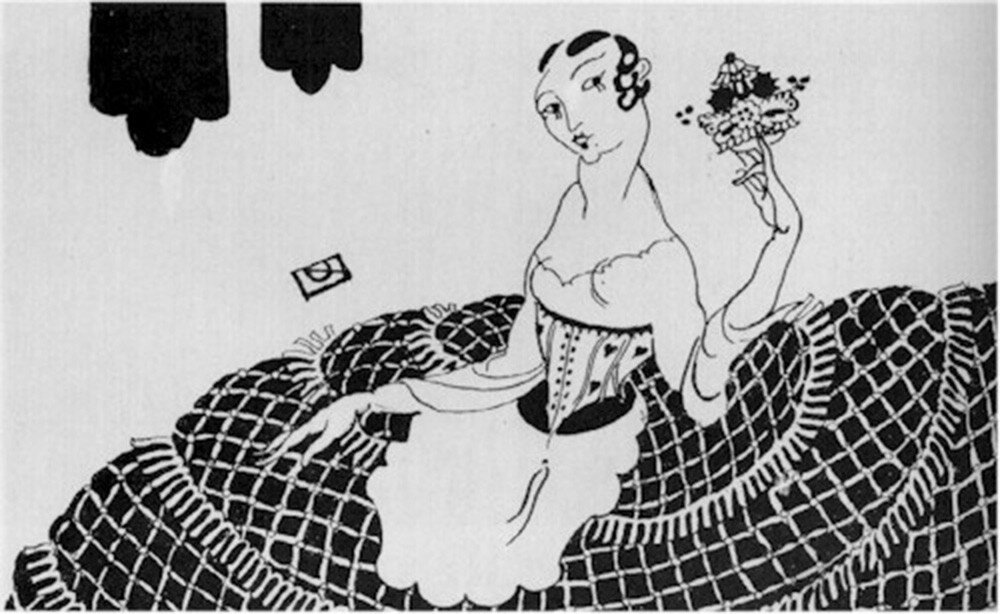
Read MoreConsider Your Grandmother's Stays, Mina Loy (1916)
Mina Loy's Aphorisms on Futurism
Manifesto of the Month
On the one hundredth anniversary of the publication of the Founding and Manifesto of Futurism, various poets read from their favorite Futurist Manifestos. Charles Bernstein chose to read from Mina Loy’s Aphorisms on Futurism.
Before Valerie Solanas coined her S.C.U.M. Manifesto, Mina Loy was writing on the emancipation of women, specifically in her Feminist Manifesto, a call for social and economic reform in the lives of women. Lifelong friends with Djuna Barnes and Gertrude Stein and one time lover of Futurist leader Filippo Marinetti, Loy is known primarily as a striking poet, artist, and thinker. The below reading was recorded on February 20, 2009 in the public space of MOMA’s Garden Lobby.
Download or listen below.
The manifesto as a literary art form is often forgotten, but we here at Mutable have had the audacious notion of collecting these remarkable objects for our Manifesto of the Month series.
We Don't Like Cats
Mutable Sound of the Month
The Mice Rock Group Band consists of Ray Davis (vox), Gabriel Boyer & Danyel Johnson (synth), and Mike Tolman (drums). It has had other members in the past, but always with Mr. Davis on lead vox, and Mr. Davis was always the inspiration and the reason for the rest of us to be there. His ideas, always versatile and pinging about the room, about whatever thread of thought he was stringing through his fingers.
That we could capture this moment with Mr. Davis is truly a blessing, and although we here at Mutable have not seen him for many years now, he should know that he is often in our thoughts, his delightful banter, and his occasional back seat serenade. If I had my way, Mr. Davis’ songs would be popping up on every radio, crackling through the fuzz as the car veered a corner down some blue highway. It’s a tragedy that he’s been lost somewhere in the sticks of Oregon, but he is not forgotten. His vision lives on!
The below recording is from an afternoon in May in which for once we all were able to bring it together and capture Ray as he freewheeled from song to song. Here is one of the highlights from that afternoon.
Episode 13
Boo Boo has gone rushing off into the marsh and has found a strange nest of unnatural things. We learn secrets of both Jack and Simone that we do not know. For the most part, Archibald’s colleagues have been very kind and courteous about his new tentacle arm, bu not everyone!
A new episode of Twilight at the Lady Jane Grey College for Little Ladies aired on a semi-weekly basis.
Diaries of a Garish Amateur: Happy Hour
John Wilmes
I’m playing piano at a bar. It’s just 7 PM on a summer Tuesday in Chicago, and I’m sort of drunk in my sky-blue tie.
I don’t really know how to play piano, in any sort of academic sense, but I know that if you’re hitting, exclusively, the white keys, and that if you’ve got a sense of rhythm, and that if you’ve got anything like a ‘feel’ that then—then you can’t really go too wrong. This much has gotten me dates with girls I didn’t really like, at this bar in the near-northwest side of Chicago; this much is keeping me company with myself in this bar, with two old men and a blaring TV screen.
Read MoreAn Excerpt of Revelation
Colin Winette
From the cliff, it looked like an enormous pecan shell. As they climbed down the rocks, Marcus could better see the soggy outline of each broken plank. Below them was a wooden hull, flipped on its side.
The old water had worn a smooth stone grotto into the cliff set. It also left pieces of a ship there.
Most of the planks came loose with a tug. Marcus removed four pieces and laid them beside one another on the stone at their feet.
“This ship,” Colin said, “was a model ship.”
“How do you mean?” Marcus rearranged the boards into a square, brought together the corners. “It was a battleship or something.”
“Someone built it like a battleship. Someone built this thing to look exactly like a Roman battleship. See, these are the oarlocks, below deck, because warriors didn’t row. Slaves did.”
Read MoreAmazing Adult Fantasy by A D Jameson
Jess Stoner
Originally reviewed in Necessary Fiction 11.14.2011
The artist statement of sorts, “Fiction”, that begins the first half of the stories in A.D. Jameson’s Amazing Adult Fantasy, teaches us how to read the entire collection: we’re told that we’re reading a book that’s been lost in a fire, that the book we’re reading doesn’t exist. A better metaphor for childhood, the gratuitous fiction of how we remember it, might not exist either.
Read MoreInterview of Colin Winnette in Monkey Bicycle
(Recently, Monkey Bicycle interviewed Mutable author Colin Winnette about Revelation, his writing process, pressures, and hopes for the future. This interview can be found below.)
MB: What is your religious background?
CW: I’m not a religious person at all, really. Far from it. But I had the unique experience of being a non-religious person growing up in a small town in Northeast Texas. So throughout my life I was steeped in various devoted interpretations of biblical narrative. The closest our family ever came to adopting a religion was when, in an arguably noble attempt to set our family on a, well if not more righteous, certainly more socially accepted path, my older sister (who was very young at the time) insisted our family begin attending church. The idea was that we would then be more like the other families in town, more like her friends’ families, and a little less…our strange selves. My parents were very open-minded and supportive, so we went. I don’t remember which denomination it was, or even what we did there. I only remember dressing up for a few Sundays in a row, then being very happy when we abandoned the project. Christianity, in one form or another, was the dominant religion in our hometown, but I never really got into it and, aside from this little experiment, I was never really asked to. Then, in grade school, I had a good friend who was Muslim, (his was the only Muslim family in our school, I think) and I used to talk to him a lot about his beliefs and his particular religious practices, and the benefits/challenges of these. I distinctly remember him telling me that I had to believe him about something or other because he couldn’t lie as it was against his religion. That struck me then as very convenient; to have a system of beliefs that worked as a set of rules governing your behavior. In my head, he didn’t have to worry about lying because he couldn’t lie. It was against the rules. I was open to, and enthusiastic about, his religious experiences and accounts because he was my friend and they were so unfamiliar to me. The idea of finding something like that for myself became appealing, and I asked my mother to take me to the library so I might read up on various religions and see which one best suited me. Then I too might have a set of rules by which to live. On the one hand, the project was a failure. No single text, or tradition, really fit me that well, but it all seemed really wild and each religion exhibited these great imaginative capabilities. I was learning a lot. At the same time, I was struggling my way through Tolkien, some Shakespeare, Greek mythology, that kind of thing. It’s probably for this reason that I have always viewed religious texts simply as powerful narratives, as literature, rather than existential truths or solid guidebooks for how to live. At best, I guess, they’re examples of how things could be, or might have been. But, again, this was just my experience. Since then I’ve always studied religious texts as/alongside literary texts, particularly the Bible, as it was such a dominant narrative voice in the town/state/country where I grew up. This was one of the initial sparks for this project, engaging a biblical narrative on literary terms, and exposing it to the same manipulations/experimentation one might any other literary tradition.
Read MoreEpisode 14

We learn the details of Simone’s dark past, and what power that lives within her. Could the faeries be responsible for this demon possession? Jack knows something of faeries, but what happened when Simone’s parents were killed? Let’s just say, more horrors awaited them even after the horrific act!
A new episode of Twilight at the Lady Jane Grey College for Little Ladies aired on a semi-weekly basis.
The Haunted Woman
In the Mutableye
(We’ve written about David Lindsay before, but all the same, this week wanted to present you with some of his own words, a selection from one of Lindsay’s lesser known novels, entitled The Haunted Woman, a book that reads like Victorian Scooby Dooby Doo with a hefty dosage of spiritualism and a good deal of romantic intrigue. Below is a selection from the first chapter.)
In the latter half of August, Marshall Stokes went to New York, in order to wind up the estate of the lately-deceased brother of the lady to whom he was betrothed. As a busy underwriting member of Lloyd’s, he could ill afford the time—he was over there for upwards of a fortnight—but no alternative had presented itself. Miss Loment had no connections in America, she possessed no other relations, except a widowed aunt, with whom she lived, and it was clearly out of the question for either of the two ladies to travel across in person, to examine books, interview lawyers, deal with claims, etc.—they had not the necessary business experience. The task, therefore, had devolved on Marshall. He had not been able to conclude the business, but he had put it in a fair way of being concluded, and had appointed a reputable firm to act as Miss Loment’s representatives. The estate was worth forty thousand dollars.
Read MoreRevolution of Everyday Life: The Decline and Fall of Work
Raoul Vaneigem
The duty to produce alienates the passion for creation. Productive labour is part and parcel of the technology of law and order. The working day grows shorter as the empire of conditioning extends.
In an industrial society which confuses work and productivity, the necessity of producing has always been an enemy of the desire to create. What spark of humanity, of a possible creativity, can remain alive in a being dragged out of sleep at six every morning, jolted about in suburban trains, deafened by the racket of machinery, bleached and steamed by meaningless sounds and gestures, spun dry by statistical controls, and tossed out at the end of the day into the entrance halls of railway stations, those cathedrals of departure for the hell of weekdays and the nugatory paradise of weekends, where the crowd communes in weariness and boredom? From adolescence to retirement each 24-hour cycle repeats the same shattering bombardment, like bullets hitting a window: mechanical repetition, time-which-is-money, submission to bosses, boredom, exhaustion. From the butchering of youth’s energy to the gaping wound of old age, life cracks in every direction under the blows of forced labour. Never before has a civilization reached such a degree of contempt for life; never before has a generation, drowned in mortification, felt such a rage to live. The same people who are murdered slowly in the mechanized slaughterhouses of work are also arguing, singing, drinking, dancing, making love, holding the streets, picking up weapons and inventing a new poetry. Already the front against forced labour is being formed; its gestures of refusal are moulding the consciousness of the future. Every call for productivity in the conditions chosen by capitalist and Soviet economy is a call to slavery.
Read MoreExcerpts from My Time: It's My Time. It's Your Time. Welcome to Us.
Dagmar Ottenham
This blog has been created to encourage what we all need a little more of: My Time. As a decadent lady who was raised in the upper echelons of society in Manhattan, Barcelona, and Tallinna, I learned a long time ago that being a woman in and of society isn’t easy. Sometimes it’s enough to not rip off your control top stockings and throw them at your doorman as he wishes you a good morning.
Recently, my husband, Astor, a virologist (for those of you not raised around such professions, a “virologist” is someone who invents new viruses to combat creatures that wish to overtake humanity, such as badgers and mosquitos and Muslims. Or something like that. Anyway), received the Mel Gibsoner Grant in the Sciences to study the creatures that populate a state in America I had never heard of before, “Missouri”, and gracefully destroy the lesser creatures of the world that aim to take control of our planet. Ever heard of a “cave cricket”?
Read MoreThis is Not a Review: of EC Comics
Gabriel Boyer
Mr. Beaser: Is there any limit you can think of that you would not put in a magazine because you thought a child should not see or read about it?
Mr. Gaines: My only limits are the bounds of good taste, what I consider good taste.
Sen. Kefauver [alluding to the cover illustration for Crime SuspenStories #22 shown above]: This seems to be a man with a bloody ax holding a woman’s head up which has been severed from her body. Do you think that is in good taste?
Mr. Gaines: Yes, sir, I do, for the cover of a horror comic….
Sen. Kefauver: This is the July one [Crime SuspenStories #23]. It seems to be a man with a woman in a boat and he is choking her to death with a crowbar. Is that in good taste?
Mr. Gaines: I think so.
Episode 15
The thing wants Boo Boo to be frightened and curl into a ball. Boo Boo’s people raised the sorts of animals that would force them to live on the outskirts of any village. Things such as unicorn worms and other fantastes.
A new episode of Twilight at the Lady Jane Grey College for Little Ladies aired on a semi-weekly basis.
Shape, Aykut Aydoğdu
The Stendhal Syndrome
Luther Philips
In 1989, Professor Graziella Magherini, a Florentine psychiatrist and psychoanalyst, made her name with the publication of The Stendhal Syndrome, addressing clinical instances of queasiness, disorientation, heightened sensitivity, and panic in people confronted by great works of art or architecture. Named after Stendhal, the pen name of Marie-Henri Bayle, best known for his novels The Red and the Black and Charterhouse of Parma, whose diary contained an account of his visit to the Church at Santa Croce, where he fainted in sympathetic response to a painting. This affliction, also dubbed Hyperkulturemia or Florence syndrome, is a psychosomatic illness that can cause rapid heartbeat, dizziness, fainting, confusion and even hallucinations, usually when a person’s viewing art that is particularly beautiful or a large amount of art in a single place. The term can also be used to describe a similar reaction to a surfeit of choice in other circumstances, e.g. when confronted with immense beauty in the natural world, or when overwhelmed by the viewing possibilities presented by Netflix.
Read MoreBellows, Al-Saadi, & the Outsider
Letter from the Editor
The Hungry Brain is supposedly the best bar in America and it is getting further and further away with every step I take. Later, my brother will tell his friends how he had been psychically dragging me the whole way, whatever that means. Then we’ve been walking for I don’t know how long and we’re standing in another bar called the Burlington. It’s got just enough lighting to allow a person to maneuver from one end of the bar to the other without hurting themselves, but not enough lighting for anyone’s acne to be noticeable, and Jules and I are discussing walking BACK to the Hungry Brain, and the show is about to begin. Which, in the end, we just slipped in the back and I ordered a beer in a stupid little plastic cup, and there was this awkward-seeming guy with an acoustic guitar on stage. I thought, “Oh God.” The man with the acoustic guitar began to play.
Read MoreA Purposeful Mistranslation of the Tao Te Ching (1 of 4)
Gabriel Boyer
(The author believes the only “true” translation of the Tao must be a mistranslation, for, as 老子 himself said, 道可道非常道, or ‘Tao as Tao not eternal Tao’. Enjoy this ongoing mistranslation!)
1.
Tao as Tao is not Tao. Name as Name is not Name. Heaven and earth began in a nameless place. The ten thousand things were born when each was given a name. To have kept your reason but have lost even the faintest glimmer of a desire, accordingly observe him wonderful in all things, while he who is ruled by his desires, accordingly observe him trapped in a sheer container of his own design, banging at the walls and hollering. These two things (to know without desire and to desire without knowledge) are alike but each different. Both are considered profound. Profundity’s still profound when it leads to the person being trapped in a sheer container of his own design, he then becoming many beautiful things’ entrance.
Read MoreEpisode 16
Why does Simone hate the faeries so? And who is this man hunting for the truth of his childhood sweetheart? And will that boy ever be able to get unstuck from the crib? And why is Gundrun so distracted? And why are Archibald’s eyes rolled back inside his head? So many questions!
A new episode of Twilight at the Lady Jane Grey College for Little Ladies aired on a semi-weekly basis.
The French Song
Mutable Sound of the Month
The French Song was originally written by Gabriel Boyer in an effort to test the boundaries of his knowledge of French and recorded on Walking Stick (’01). Lyrics go something like this: “French it’s the language of fingers, french it’s the language of fingers, hey hey hee hee ha ha the language of fingers / Do re mi it isn’t fa, do re mi it isn’t fa, hey hey hee hee ha ha, it isn’t fa / But french it’s in the head / But the fingers are in regret / But your tongue is on my eyes / But your fingers are in my heart.” I leave the rest of the song up to your own fertile imagination.
This song was recorded with the Dynavox 2000 at Exile Studios in the Fall of 2002 with back-up vocals by Corey Tatarczuk and Annie Heringer, with Corey also playing bass and Annie playing accoustic guitar. Malcolm Felder was on drums, Dalton Eljer on electric guitar, Gregory Kenney on keyboards, and Gabriel Boyer performing lead vocals and piano. It was recorded just a few short months after The Textbook Tapes and with largely the same aesthetic in mind, and involving many of the same performers. Since that time it’s been sitting in our storehouses waiting for the moment when we would unleash it on your unsuspecting ears. This is the month, and today is the day.
Feel free to listen or download below.