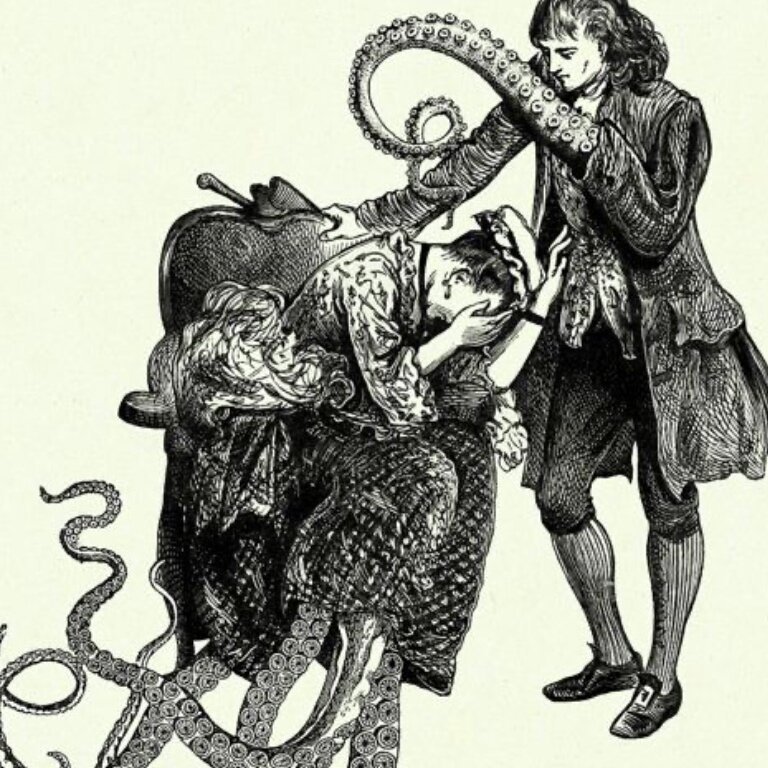
The year is 1903 and Jack just had a strange notion. He is sweet sometimes. They may even munch on some lettuce. They will leave out the back door, but their play is doomed to be interrupted by the very illogical Simone. And what of Archibald? Is it true he is performing his obeisance in a less than private place? Is Gundrun become unhinged? And what is it comes from the wound?
Diaries of a Garish Amateur: For Bradford, Saint of Me
John Wilmes
Success, that indomitable wall of my imagination. It’s a wall I so want to climb, however hard it may be, however long it may take, however much blood it spills from me to scale it. I so want to publish plentifully, to perform my thinking and craft for a living; I so want to be something like my own master—I want this more than anything. But I’d have to know where this wall even is, first. Because as things stand, I can’t be quite sure that I’m even running in its direction; I’m shrouded by the fog of not knowing, handed down to me by my working-class family, and extenuated by the lack of ambition that’s defined most of my young life.
Read MoreMoon Child's Dream Dictionary
Lesley Dixon
[Appendix: Recurring Nightmares]
Knife
(See also: Mack the Knife, teen dance craze, penetration.) Knives symbolize power. The knife is a phallus. If you are cut with a knife, you are afraid of a man in your life. If you are stabbed with a knife, you feel intimidated by a work situation. If you are chased down an alley into a dead-end and stabbed with a knife, you are afraid of the death of your parents. If you cut yourself with a knife, you are looking for release. If you cut yourself with a knife and you do not bleed, you are lacking in vitamins. Moon Child suggests drinking tart cherry juice, and calling your father on the phone. Note: in non-American cultures, the knife may symbolize entirely different vital organs, and this guide should be translated into other languages only at great risk to the Dreamer.
Read MoreInterview of Colin Winnette in The The
(Author Colin Winnette, whose novel, Revelation, was put out by Mutable last Fall, is interviewed below by The The’s Brian Chappell.)
Brian: What authors and styles have shaped you?
Colin: Influence is a tricky thing to talk about. I can say that Ben Marcus’s work was extremely important to me. It still is, but at one point it totally saved me. Or, reinvigorated me. I was finishing up undergrad and I was in love with writers like Beckett, Proust, Chekhov, Joyce, Kafka, these iconic figures who did what they were doing so masterfully that there seemed nowhere to go at all after that. That was also the result of my age at the time and what being in school can do to you. I didn’t realize it then, but I had a pretty narrow vision of what it meant to be a writer and what one could do with fiction. But then I picked up Age of Wire and String and Notable American Women and I was just totally blown away. It was an entirely different approach to working with and examining language than I had ever encountered before. Those books led me to Gertrude Stein and William Gaddis and all of these authors who were breaking language apart, yes, but also reclaiming it, making it do new and fascinating things. And, I mean, they had been doing this for a long time and in different ways, and here was Ben Marcus doing it still in his own way and just killing it. So I suddenly felt very free again. It’s interesting the difference between grad school and undergrad. In undergrad I was constantly being told what good writing looked like. It looks like Carver. It looks like Chekhov. It looks like Pynchon (and indeed it does!). It looks like Austen. Etc. Workshops were little help because they were often the same kind of thing: I think you should do this, or I think this should happen, etc. Initially I lacked the confidence to assert myself. Then, when I gained a little confidence, I asserted myself by just ignoring pretty much everybody and only listening to the 2% I thought made sense or seemed to come from a good place. I started to tune a lot out. So I left undergrad fed-up, but with a lot of energy. I wrote and worked and traveled and didn’t write and two years later I went to grad school with a much different attitude. I used that time to write as much as possible. I listened to people and read as much as I could, but took the whole thing less…personally, I guess…than before. I took it seriously, but I knew the conversations we were having in class were often selfish in that we were all interested in enhancing our work by discussing the work of others. Helping one another wasn’t exactly the point, although we certainly did help one another from time to time. And I should say I think all that’s great. The two most important things grad school gave me were time and a sense of purpose. I felt encouraged to work and I had the hours in the day to do it. Or if I didn’t have them, I made them because I knew my time was limited. I taught myself how to make time to write. I was writing a lot on the train and in bed my first year. I wouldn’t let myself sleep until I had done a certain amount of work. I’m not sure I would have had that kind of discipline at first if I weren’t in a program. Now, it comes much more naturally. I had to learn how to kick my own ass.
Read MoreThe End of the World: A Review of Colin Winnette's Revelation

Steve Himmer
Originally published in the Steve Himmer Blog
Revelation, a novel by Colin Winnette, is a story about the end of the world in which, somehow, the apocalypse isn’t the biggest thing going. The story follows a core of three friends (Marcus, Colin, and Tom) from youth to old age as they lead ordinary lives in the midst of exploding trees, vanished oceans, plagues of locusts, and the Four Horsemen. Mundane traumas like a lost teenage girlfriend are more devastating to these characters than a lost ocean, and the vast wasteland of dead, rotting fish left behind as it dries are taken as a wretched novelty but not much of a warning.
Read MoreEpisode 9
The thing dug into her flesh and she had to cut it out, but what happened to the other boys? And a dark cloud has consumed the school. Perhaps Archibald is at the bottom of this. When last we saw him he was covered in monkey guts and murmuring in a strange tongue. Headmistress Ursula will deal with this.
A new episode of Twilight at the Lady Jane Grey College for Little Ladies aired on a semi-weekly basis.
Video: Dr. Doowop
Below is a short film about Mutable author, William Levy (1939, Brooklyn, New York), and his notorious radio show, The Dr. Doowop show. Levy is an author, publisher and pioneer of independent erotic media, who currently lives in Amsterdam where he has the only doowop radio show in Europe. We have been honored to reprint his writing on Otto Muehl and Christian Loidl, and now we are honored to showcase the above documentary about the life and times of William Levy, and his radio persona Dr. Doowop. It’s a film about radical media, loneliness and eternal love, absurdity and close harmony music. ‘There’s nothing that makes you feel so alive as getting a death threat.’ Indeed.
In the Mutableye is a segment that sometimes showcases something interesting that is happening somewhere in the world at this moment, and sometimes showcases some fad or person from the past that we here at Mutable acknowledge is still cool s**t.
William Levy (d.2019) was more than an author we were privileged at one time to know. He also would on occasion give us well appreciated advice. He will be missed.
A Statement of Principles
Twelve Southerners
The authors contributing to this book are Southerners, well acquainted with one another and of similar tastes, though not necessarily living in the same physical community, and perhaps only at this moment aware of themselves as a single group of men. By conversation and exchange of letters over a number of years it had developed that they entertained many convictions in common, and it was decided to make a volume in which each one should furnish his views upon a chosen topic. This was the general background. But background and consultation as to the various topics were enough; there was to be no further collaboration. And so no single author is responsible for any view outside his own article. It was through the good fortune of some deeper agreement that the book was expected to achieve its unity. All the articles bear in the same sense upon the book’s title-subject: all tend to support a Southern way of life against what may be called the American or prevailing way; and all as much as agree that the best terms in which to represent the distinction are contained in the phrase, Agrarian versus Industrial.
Read MoreExcerpts from My Time: Using Men's Words Against Them
Dagmar Ottenham
Ingredients for this My Time: Barbeque chips (the diet CANCEROUS-BUT-WHO-CARES-YOU-CAN-EAT-MORE kind), vodka, listing, and humor that straighter men won’t find funny.
After something called a “Progressive Dinner Party” that people who eat delicious food LIKE IT DOESN’T HAVE CALORIES in it invited me to—a lovely affair of the most civil, dignified kind, where the women’s lipstick and shoes were above par from other social gatherings I’ve endured—then, a later look around the bar for a swarthy yet religious man that might be pillaged for his credit cards and body… (I do love the look of religious garb.)
Read MoreThe Other Way Around's Sado Okesa
Mutable Sound of the Month
The Other Way Around is a local Chicago underground musical phenomenon comprising Jason Allen, Patrick van Slee, Dan Katayama, and Piotrek Wereszczyński. Among their current repertoire, this song stands out as a truly weird and wonderful thing. It is a cover of a traditional Japanese song. Pat, who knows no Japanese, transcribed the lyrics as best he could, and Dan, who knows a little more Japanese, says it’s fairly accurate. But we here at Mutable are not interested in cultural accuracy, but in psychedelic ridiculosity, and regardless of its truthful rendering of a wonderful folk song, this thing certainly cuts my brainstem a new peephole if you know what I’m saying.
Episode 10
A “bear” nursery is a very solemn place. The narrator knows these fantastical creatures in disturbing detail. Beware!
A new episode of Twilight at the Lady Jane Grey College for Little Ladies aired on a semi-weekly basis.
How PKD is the New World Order?
Letter from the Editor
It’s Saturday night and I’m drinking alone while contemplating drones and metadata; complacent celebrity culture staring its own collapse in the face with remarkable calm and indifference and the various potential proofs for a multiverse I’ve been reading up on lately; wars over natural resources and increasingly more extreme weather all the time and the civil unrest that goes along with it and the NSA just trying to plan ahead with its massive domestic surveillance program we’ve all been hearing about recently thanks to Mr. Edward Snowden. And in the back of my mind, there’s always Philip K Dick, like a critic in the corner. Specifically, how PKD is the New World Order?
Read MoreDiaries of a Garish Amateur: Retail Therapy
John Wilmes
on above me, at all times, humming and gaudy through all of my hours on this MacBook. I’m searching desperately for the magical link, to get the least fuzzy, least choppy, and least commercial-addled illegal stream of a pro basketball game. My team the Bulls is in even worse sorts than I am. I’d tell you about it, if it didn’t completely debilitate my soul.
I smoke as much weed as I can find, but I can’t find much.
Read MoreOuspensky’s mentor, Georgy Gurdjieff
The Fourth Way
P. D. Ouspensky
BEFORE I BEGIN TO EXPLAIN TO YOU in a general way what this system is about, I want particularly to impress on your minds that the most important ideas and principles of the system do not belong to me. This is chiefly what makes them valuable, because if they belonged to me they would be like all other theories invented by ordinary minds—they would give only a subjective view of things.
When I began to write A New Model of the Universe in 1907, I formulated to myself, as many other people have done before and since, that behind the surface of the life which we know lies something much bigger and more important. And I said to myself then that until we know more about what lies behind, all our knowledge of life and of ourselves is really negligible. I remember one conversation at that time, when I said, ‘If it were possible to accept as proven that consciousness (or, as I should call it now, intelligence) can manifest itself apart from the physical body, many other things could be proved. Only it cannot be taken as proved.’ I realized that manifestations of supernormal psychology such as thought transference, clairvoyance, the possibility of knowing the future, of looking back into the past, and so on, have not been proved. So I tried to find a method of studying these things, and worked on that line for several years, but the results were very elusive; and though several experiments were successful, it was almost impossible to repeat them.
Read MoreTen Thousand Faces
E C Large
It is an eerie and a horrible experience to be in attendance on a stand at a Flower Show, day after day, and to watch the staring faces that come to rest before my exhibits and then move on. From right to left, from left to right they pass, these faces, propelled with hesitating pace and starkly turned towards me. I watch them, because I cannot help but do so, and in the day’s reckoning I have looked into perhaps five, perhaps ten thousand human faces.
Read MoreBuilding Innovative Teams: A Manifesto
Kaylea Hascall
Imagine: One fine morning, the boss walks into your office and says “I need your group to be more innovative.” Hmm. What does she mean by that statement? How are you supposed to go “be innovative”? What questions do you ask her about this new mandate? Can you do it? Can your staff?
Read MoreEpisode 11
Archibald the Professor of Arcane Knowledge and the Headmistress Ursula are currently facing off in the bowels of the school. The boy has returned to himself only to find he is trapped in a crib, his thoughts on a girl with a polka dot brassiere and how he will never see her again. But what of Jack? Does Simone know some secret to this seemingly innocuous handyman?
A new episode of Twilight at the Lady Jane Grey College for Little Ladies aired on a semi-weekly basis.
Imagining Privatised Parts
Richard Meros
Privatised parts would look something like this: an individual surveys her preferences and enters her desires as data into a machine that is apt at recording and memorising all intimate ideas. Her mind will be recorded in various qualitative sessions, her data stored as vast quantitative sweeps, and her energies directed towards a lover, or a group of lovers, who satisfy her present condition and who are likely to parallel the trajectory of her expected desires. A primitive system named Lex Sexualis will try the formula of ultimate availability for one citizen for any other citizen, but the project will derail other concerns of the state. Abandoning Lex Sexualis means abandoning all idea that the individual instinct should be able to choose their lovers. Lovers will still choose their lovers, and any other one human will be an option, but the choices will be made from the results of a vast survey of the human body and mind. Without intimate specialised knowledge this part of the love finding sounds difficult, but it is merely technique.
Read MoreHyperresolution
Clark Cooper
Technology has advanced again, and your father feels out of date having all his boxes of old photographic slides sitting around when you could scan them for him and keep them electronically. You are scanning the slides. If you scan them at very low resolution—say one pixel per image—the job will be very efficient and quick but you get more or less nothing; a plain block that averages the colors of the whole picture. As you increase the resolution you get images that look less and less chunky, then less and less blurry, then more and more like the picture, and pretty soon you have something that to any unaided eye pretty much is the picture.
Read MoreMy Asinine Life: What Spirit's Hidden in this Unraveling Brain
Gabriel Boyer
I’m sitting in an abandoned department store on a Thursday night and listening to the Bee Gees and Danny Elfman and feeling very confident of the future that keeps rolling around and around before my eyes like a perpetual motion slot machine. The future is a snake trying to walk backwards. And in the eye of this storm of second sight, I can see so clearly how I will be married and go back to school, and my wife and I will have children, but will I become a warlord in the Middle East at some point in my later years? This has yet to be determined.
Read More