
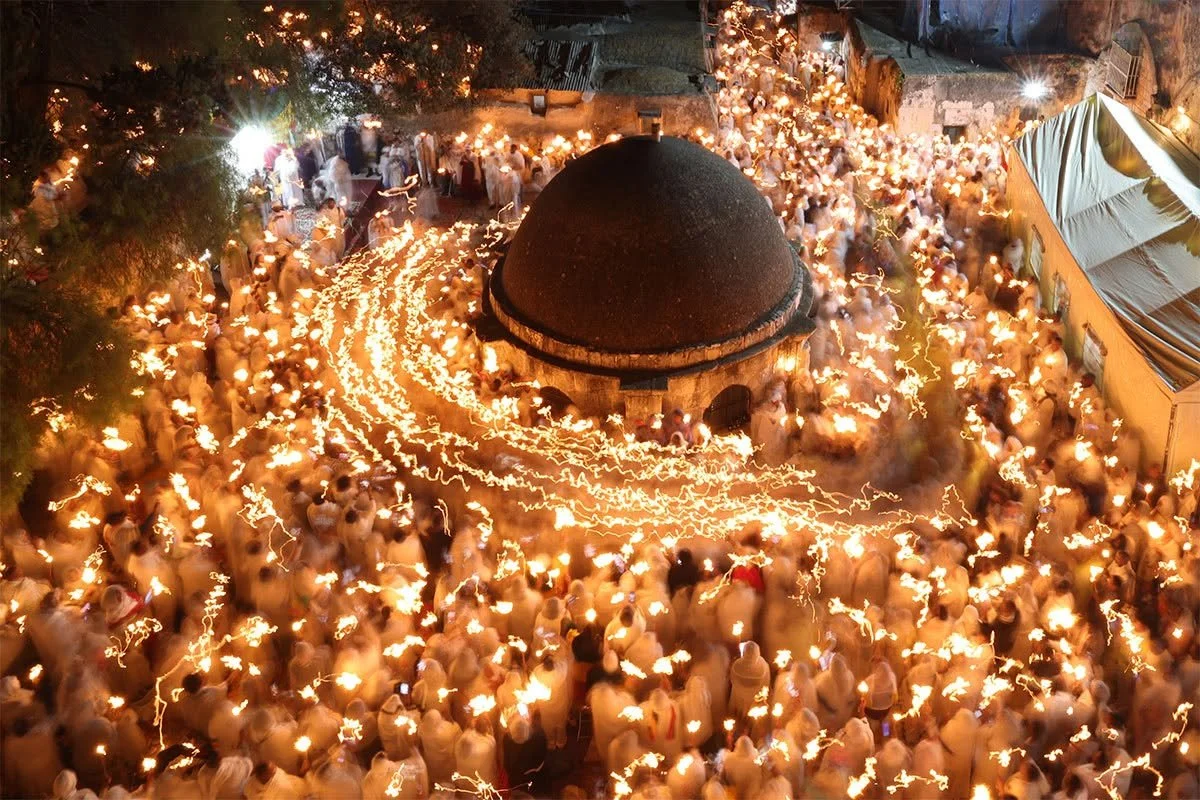
It’s the Apocalypse, Stupid
Size matters—the scale of the problem, the size of your audience, the level of coordination necessary to overcome an obstacle. Tackling the climate crisis has always been an immense and impossible task necessitating a global effort unlike anything preceding it, and with every year, the scale of the problem balloons and as the rational animals approach the heat of their burning future they increasingly lose faith in the institutions that have both created this crisis and failed to adequately address it for a half century. Civilization does not always end the moment the volcano erupts. Sometimes civilizations end because they know the eruption’s coming. Civilization is collapsing in its panic at its coming collapse.
In his speech at Davos, Canadian PM Mark Carney makes a simple claim, “La puissance des moins puissants commence par l’honnêteté.” The power of the less starts with honesty. He goes on to talk of Václav Havel and his essay, The Power of the Powerlessness. “And in it, he asked a simple question. How did the communist system sustain itself? And his answer began with the greengrocer. Every morning, the shopkeeper places a sign in his window. Workers of the world unite. He doesn’t believe it. No one does. But he places the sign anyway to avoid trouble, to signal compliance, to get along. And because every shopkeeper on every street does the same, the system persists not through violence alone, but through the participation of ordinary people in rituals they privately know to be false. Havel called this living within a lie. The system’s power comes not from its truth, but from everyone’s willingness to perform as if it were true. And its fragility comes from the same source. when the greengrocer removes his sign, the illusion begins to crack.” The illusion has begun to crack.
But what is this illusion? That there is a rule-based order? That the arc of progress has been stalled but it’ll right itself any moment now? That the world of the 20th Century still exists in the 21st? Or that the Enlightenment’s project is finished?
Power exists in different ways and different ecosystems, and in our current financial and specifically capitalist ecosystem, the Global South is being offered up to the flames because capitalism will always put profit first while every year is hotter and it’s inconceivable to us how it can get any hotter than it’s already got. There are powerful individuals and powerful entities and the so-called “middle powers” working to navigate these through a coalition of like-minded states. There is the power of media and the power to destroy. We can talk about Elon Musk’s power to influence an election and China’s power to revert a global oil crisis.
By the same token, there are also different types of powerlessness. Individuals are powerless on their own—they require a community to accomplish anything beyond the simple fact of living a life. But certain communities are also powerless because they are not recognized by the nation as full citizens: Uyghur, Tibetan, Palestinian, US immigrants (both illegal and increasingly legal immigrants). And island states powerless as they vanish beneath the waves. And regulating bodies that are powerless to mandate their members to limit carbon emissions. We were always going to expect more than the world is able to give.
But is the world as we know it really ending?
In his book, Prisoner’s Dilemma (1993), William Poundstone explains the prisoner’s dilemma like this:
Two members of a criminal gang are arrested and imprisoned. Each prisoner is in solitary confinement with no means of speaking to or exchanging messages with the other. The police admit they don't have enough evidence to convict the pair on the principal charge. They plan to sentence both to a year in prison on a lesser charge. Simultaneously, the police offer each prisoner a Faustian bargain. If he testifies against his partner, he will go free while the partner will get three years in prison on the main charge. Oh, yes, there is a catch ... If both prisoners testify against each other, both will be sentenced to two years in jail. The prisoners are given a little time to think this over, but in no case may either learn what the other has decided until he has irrevocably made his decision. Each is informed that the other prisoner is being offered the very same deal. Each prisoner is concerned only with his own welfare—with minimizing his own prison sentence.[1]
If the pair works together, they get a moderately acceptable outcome. If one follows the rules and the other breaks them, the one who breaks them gets a much better outcome. If neither follows the rules, they get the worst outcome.
The climate crisis functions in the same way, wherein the world wouldn’t be ending if we could all work together towards the goal of reducing emissions to net 0, but individual economic interests often trump this crisis, such that even when some global actors are genuinely working towards the goal (Europe) others are not (China). Each country is only interested in minimizing its own effects and they have different beliefs and levels of faith concerning how the climate crisis will play out, beliefs that are invariably indistinguishable from their own goals and interests.
It is the belief that climate apocalypse will lead to a collapse of the Western world order that emboldened Putin to invade Ukraine and various apocalyptic scenarios function as the unspoken context for MAGA and AfD and Netanyahu and the Hindutva movement—people will die but not our people—even as we follow our habits into the inferno—because it’s always someone else who will die and someone else who’s responsible. It’s true that industrial culpability vastly outweighs the acts of any individual and China’s continued coal use completely undermines any energy transition in Europe, but in the collective consciousness, this somehow translates to: it’s the immigrants who are destroying America. Point being, there are genuine others undermining any attempts to mitigate the climate crisis but at the individual level, we are interested only in the strangers among us, and cleansing our borders in preparation for the annihilating waves and the many fires tickling across our landscapes and into our living rooms. The others must be kept at bay.
Because despite what any particular hopeful pundit might espouse, the general consensus is that the world as we know it is indeed ending. The 21st century is the Apocalyptic Age because the world is functioning as if this is the apocalypse and are ensuring the apocalypse because of this assumption. It’s a prisoner’s dilemma at planetary scale and we’re all playing and no one wants to be that sucker who finds themselves with their pants down.
*
In Humankind, Rutger Bregman mentions a thought experiment performed by Tom Postmes, professor of social psychology at the University of Groningen, in which he posits the thought experiment: “Imagine an airplane makes an emergency landing and breaks into three parts. As the cabin fills with smoke, everybody inside realizes: We’ve got to get out of here. What happens? On Planet A, the passengers turn to their neighbors and ask if they’re okay. Those needing assistance are helped out of the plane first. People are willing to give their lives, even for perfect strangers. On Planet B, everyone’s left to fend for themselves. Panic breaks out. There’s lots of pushing and shoving. Children, the elderly, and people with disabilities get trampled underfoot. Now the question: Which planet to do we live on?” Postmes estimates that 97 percent of those asked believe we live on Planet B but in almost every actual case, we live on Planet A. We are kinder than we think.[2]
But then why are people behaving so badly to each other in the here and now?
Bregman’s argument is that it’s a kind of delusion, a “nocebo,” as in, instead of a placebo like you might find in the medical world, a nocebo is an empty notion that can affect a negative change despite being untrue—the assumption that we are cruel leads to actual cruelty. Although there might be some truth to his claim, it also very much reads like James’ “religion of healthy-mindedness” and sloughs of “as so much excrescence” any example of collective unkind actions, as in the Holocaust and the Rwandan genocide are just exceptions to the rule of kindness. People were misled. These are huge exceptions. All of human history is writ in exceptions such as these.
Eichmann was pathological in Bregman’s thinking. Never mind that when Hannah Arendt wrote about him, she was by implication writing about the entire German people, who were also banal and normal and just following orders or doing their jobs. Eichmann was a single instance of the larger “banality of evil” that allowed the Nazi state to function as it did. As are ICE agents an example of the banality of evil. As are the IDF and their machine-learning-driven genocide.
Elias Canetti on the other hand, in his Crowds and Power, argues that the crowd’s fundamental emotional dynamic is to survive together. In extreme situations a bond builds among those you consider as part of the “in” group. In the case of our plane crash on Planet A, everyone on the plane designates as the “in” group. They have all gone through a traumatic event together. But the problem is, a society in a state of crisis is not the same as a plane. The crisis is caused by everyone on the planet, and by some more than others, but these super-polluters are abstract—nations, industries—to whom we are powerless or feel powerless, and so instead our hatred turns to more tangible others. A crowd needs enemies because it needs the experience of collective survival over those who are not in the crowd. Our genocides and concentration camps are only another coping mechanism, but at what a scale and what a cost. This scapegoating will do nothing to save you and your neighbors but it will give the comforting feeling that something is being done.
But why can’t we all be inside the plane? The designated dying group—the Muslim, the immigrant, the climate refugee—these are a structurally necessary for the crowd to feel its own survival at it is continually being constituted and reconstituted into existence through escalating acts of sadism, rejection, and death of the out group. We can’t all be inside the plane—thinks the crowd—this plane’s too small and maybe it’s your fault that your part of the plane’s on fire, deal with your own part of the plane—as populist politicians rise from both a genuine fear and a disingenuous concern that masks other policy objectives—i.e. what Netanyahu is doing with Gaza, his motives were always going to be the eradication of the Palestinian people and the swallowing up of Gaza and the West Bank into Israel proper.
The politics of the world have turned to these deadly coping mechanisms because they cannot acknowledge their failure to address the actual problem of a warming planet, as the citizens in those countries also cannot face this failure—that the Paris Agreement was only ever going to work if it was binding, which it wasn’t—that the costs associated with the European Union’s real successes are unacceptable to the people who have to bear them—that the Inflation Reduction Act was repealed because it negatively affected the fossil fuel industry in the US—that despite Exxon’s climate models from the 1970s clearly showing accurate predictions of warming, company spent decades publicly denying climate change—its argument that if it stops, it will simply reduce its market share—that individuals were fed a BP advertising campaign to put the pressure on individual carbon footprint in a deliberate attempt to turn attention away from industry and international culpability solved only through regulation and onto the individual, an individual who sees the world warming regardless of whether they reduce flights and buy electric vehicles or not—but the ultimate prisoner’s dilemma is the fiction that these non-binding measures could work, that through some magic a continuation of business as usual could result in Net 0, in the leveling off of CO2, and the righting of the climatological scales. The failure to acknowledge the failure for what it is, this is why the people panic and stop listening to their pundits and their politicians.
*
There is a quote that’s been haunting me recently. In his documentary series, The Century of the Self, Adam Curtis paraphrases Paul Mazur of Lehman Brothers, drawing on arguments Mazur developed in his 1928 book American Prosperity. “We must shift America from a needs to a desires culture. People must be trained to desire, to want new things, even before the old have been entirely consumed. We must shape a new mentality in America. Man's desires must overshadow his needs.”[3] While Mazur outlined this shift, it was Edward Bernays, nephew of Sigmund Freud and inventor of public relations, who figured out how to implement it through the invention of subliminal advertising.
Herbert Hoover, addressing a roomful of PR-men around the same time declared, “You have taken over the job of creating desire and have transformed people into constantly moving happiness machines. Machines which have become the key to economic progress.”
The story of the end of the world begins in many places, perhaps going back as far as the original adoption of steam in the mid-nineteenth century as Andreas Malm suggests in Fossil Capital, or—closer to hand—the failures of the US government to react when originally presented with the dire warnings of the scientific community in 1989, but it was made possible here in the USA by this shift from informed citizen to citizen consumer, who is—rather than addressed rationally—developed into an irrational and malleable force capable of manipulation and thereby easier to exploit by bad actors.
As long as the wheels of progress were turning, society could continue to march across the page with a veneer of liberalism and Enlightenment ideals, but the cracks were showing long before the moment our narrative first shifted from one of progress to one of fear in the aftermath of 9/11, when the US government took an act of terror by a single extremist group and used it to turn the world against an entire category of people. Islamophobia is baked into our narrative of the end of the world, but only because—from late stage capitalism to consumer-based individualism—the true villains are both ephemeral and systemic. Sure they include the Koch Brothers and our elected officials, but these are villains you can’t throw out of the country.
Why Muslim and not some other group? As with anti-semitism in Germany in the 1930’s, a powerless minority and a vocabulary ready to hand, different for each, but with the same purpose, to “otherize” and to “demonize.” Muslims are truly global, making the scapegoating of them more practicable in our global times. As in, scapegoating Jews in China and India wouldn’t work because there are no Jews in China or India, but both these nations have a Muslim community ready at hand to conveniently act as sacrificial lambs in their efforts to both placate and unite their people around a common internal enemy.
It also helps that this particular brand of scapegoating fits into a narrative as presented by certain Muslim extremists who also see the world as Islam v the Secular West, but the moment this pogrom against Muslim communities moved East to India, Myanmar, and China it evolved beyond the traditional jihad narrative regardless of what language the ruling party may use. The language of jihad only works in conjunction with the language of crusade. Their history is intertwined. The Chinese government is not eradicating the Uyghur out of fear of jihad but because they’re “crazy” and “all Chinese should be one,” sentiments I heard often towards the end of my 4 years living in China, perhaps best summed up by George Yeo, former Minister of Foreign Affairs to Singapore. “Look at America,” he said. “When they look back, was it all worthwhile? Would they not have preferred to be homogeneous?”[4] A sentiment that as an American seems absolutely insane to me. What would a homogeneous USA even look like? But this idea that homogeneity is the “safer” path is very common at least in China, and I would argue the Hindutva movement in India owes as much to this sentiment as Western Islamophobia—even when the Mughal empire is as much India as the Maratha.
But what of the marginalized group? What calculus rules their actions and behaviors? As before, one exists in reaction to the other. The perceived powerlessness of the majority in face of a tsunami rushing at their doorsteps leads to policies whose purpose is to corral, oppress and ultimately annihilate the minority group, but the minority group themselves has no other option than simply to endure—because every violent reaction only legitimizes further repression and increasingly aggressive pushes to annihilate. The slaughter of seven people by knife in a train station is used as justification for the forced sterilization and imprisonment of thousands. The murder of 1,700 Israelis is used to justify the complete erasure of a people.
However, the truth is that increasingly the majority suffer a similar calculus. The sacrificial lambs being offered up by majority communities will not protect them from the famine, disease, and war that are coming in the wake of our exploding ecosystems and upended planet.
We are all asking ourselves yearly how much more can I give up. We see others being made to give up their lives at the hands of their more powerful neighbors and think, “At least I am not being made to give up as much as them.” It is in this way that the minority groups among us, and specifically Muslim communities around the world, are being treated as sacrificial lambs.
I’m willing to concede losing A and B as long as I retain C and D they tell themselves even when C and D are also very much on the table. It is a calculus every prisoner must perform to retain their sanity, a kind of play pretend power that holds them in a state of acquiescence because that’s the only option they have. It is how those in a lesser position maintain a sense of control in a situation they have no control over.
But in the West, Islamophobia also fits with the concept of the solidarity of the saved. People who are in no way Christian in their behavior—Pete Hegseth will never not come to mind in this context—can conveniently claim their salvation explicitly as the “in” group. Team Christianity won. Their God is the true God. The others will be sacrificed up to the coming fires of the climate apocalypse.
This is something that Astra Taylor and Naomi Klein talk about in their new book, End Times Fascism, a book which fully and wonderfully captures the current political reality in America and what needs to be done to fight that reality. They talk of selective survival—a term which fits Putin’s and Xi’s calculus as much as Trump’s MAGA world entourage. Netanyahu would never be so bold with his genocide of Palestinians if he did not believe the global world order is collapsing, and generally speaking, this belief of apocalypse is both a means to legitimize and/or a genuine motive for the expansion of lands and the eradication of inconvenient others within their borders, real or imagined.
I want to be clear here. The Islamophobia on display in places as diverse as India, Israel and China are owned by those societies. The horrors they are enacting are their own and belong to those societies exclusively. The War on Terror was the R&D stage for the contemporary surveillance state and established the template for civilizational solidarity against an internal-external enemy. It doesn’t help that the area most affected by the climate crisis—the Sahel, the Horn of Africa, Bangladesh, Pakistan, Yemen, Syria, Iraq—are overwhelmingly Muslim-majority.
And every time the minority group or individual can no longer endure the continued pressure and lashes out, the pressure only increases—on the Uyghur, in Gaza, on the streets of Minneapolis. These two entities, call them David and Goliath, the big and the small, are on a collision course and fueled by a climate crisis itself powered by capitalism. In short, fascism is the logical result of our panic and we are the logical prey of its state panic.
This is the human face of the prisoner’s dilemma at work. We are beating each other to death inside our cells rather than trying to break free.
*
In another Adam Curtis documentary, The Power of Nightmares, he argues that both the neocon movement as initially masterminded by Leo Strauss in the 40s and 50s and Sayyid Qutb’s Islamism, which directly spawned Osama Bin Laden, derived from the same diagnosis—that Western liberal individualism had produced a spiritual vacuum, a society of atomized, purposeless people who had gained freedom but lost meaning. Both movements concluded that the Enlightenment’s promise of rational progress leading to human flourishing was a lie, or at least a failure. Both proposed to replace it with a strong moral community bound by shared values—Strauss’s noble lie for the philosopher-rulers to tell the masses, Qutb's return to Quranic purity. Both defined themselves against liberal individualism as their primary enemy. This loss of faith in liberal progress precedes the events that are usually cited as causing it. The neocons and Islamists didn't lose faith in progress because of Vietnam or Watergate or stagflation or the Iranian revolution. They lost faith in it in the late 1940s, watching postwar American consumer society at its apparent apex, and finding it spiritually empty, only to then, a half century later, declare each other enemies in a civilizational conflict.
The story of the end of the world is not singular because the end of the world is not singular. There are many ways in which a world can end and many of them are not the absolute one hundred percent end of the world. The apocalypse is threefold: political, economic, and ecological.
Just as modernity is a mindset, apocalypse is a mindset, and at each stage, we see the increasing fraying and transition from one mindset (progress) to another mindset (apocalypse), from a paradigm of growth to a politics of fear, but the mindset precludes actual fact of the thing. The shift from the Modern and Postmodern modalities of the 20th century to the Apocalyptic ones of the 21st could be dated back to a reaction to liberalism that occurred both within the Islamist and Neocon movement, a reaction which led to Reagan and then the second Bush, to the War in Iraq and the Patriot Act. Donald Trump was not a break but a culmination. However, Donald Trump also represented a kind of political apocalypse that was only fully actualized in his second term. Donald Trump is the living embodiment of the end of the American led world order and this fracturing will also lead to the end of the global economy, the second phase of apocalypse.
Of course, we can’t blame the end of the world exclusively on one political party—Postmodern relativism has also been notoriously incriminated into the larger breakdown of meaning and collective identity—and just as reactionary forces utilize postmodern logic to attack postmodern politics, leftist political movements also purge from the “in” group in a similar panic of the other, albeit an ideological rather than a racial other—but we are all of us in a feedback loop with actual observable phenomena. As in, we all see the world coming unhinged and are coming unhinged as a result of the unhinging we see out in the world.
These three apocalypses cannot be unpacked from each other but they manifest at different times and each have their own distinct sets of interdependencies. The unraveling of political norms coincides with the unraveling of the global economy coincides with the unraveling of the weather systems we depend on for our survival, but how do we understand their initial conditions? Did political and economic inequality lead to ecological crisis? Did the ecological crisis lead to the unraveling of political norms which in turn is leading to the unraveling of the economic world order? It would take an entire paper of its own to disentangle causality here, but as to final outcomes, political norms go first (and it could be argued are already gone in the US) and this instability allows for the final collapse of economic interdependence (as may be happening now with the Iran War and Trump’s tariffs), whereas ecological apocalypse would be something like the AMOC collapse or some similar tipping point which overwhelms society’s mechanisms, a real likelihood and considering how the planet has outperformed scientific expectations re climate crisis, something could even happen in our lifetimes.
So—again—is the world as we know it really ending?
I bring this up too often because my style of argument necessitates you understand something that I take for granted. I spent three years living at Tibetan monastic college in Northern India running their ESL program and one of the things I took from that and has become a key way I see the world is Buddhist logic. In Aristotelian logic, a thing is either true or not true, but in Buddhist logic there are four corners or catuskoti: a thing is true, a thing is not true, a thing is both true and not true, and a thing is neither true or not true. The classic example for third-corner that I’ve heard is the Dalai Lama saying something like, “The flower obviously exists but it has no inherent existence,” it both is and is not, and the classic example of the fourth corner is the “child of a barren woman” i.e. something that is nonsense and therefore meaningless.
I bring this up because of course the world is really ending.
Why and how can I say this? We need hope. We need to believe we can beat this. Yadda, yadda, yadda. We can beat this but civilization as we know it will not survive. It’s ending and it’s not. The world is ending and a new world is being born. And so on and so forth.
International regulation of carbon emissions was never going to work but the fascist project was also always doomed to fail. It is already failing.
*
Ibn Khaldun (1332-1406), arguably the father of sociology, used a term, asabiyyah—from the root asab meaning sinew or the binding of sinew around bone—meaning something like social cohesion and tribal solidarity, although the standard English translation renders it as “group feeling.” Khaldun argued that this feeling of solidarity collapses before society does. Generated by hardship and interdependence, asabiyyah weakens over time (Khaldun spoke in 120-year cycles of renewal and collapse) as a result of luxury, concentration of power, over-extension, and corruption. Society’s sense of itself comes apart before it literally comes apart.
At its core the fascist project is a cynical effort to manipulate legitimate fears for the purposes of power and personal enrichment that come with it, but it is effective because there are portions of the larger crowd that want to put the genie back in the box, that want to magic us back to a time when our sense of asabiyyah was strong. That urge and impulse however is a mirage. Fascism only accelerates dissolution. Where the fascist project has taken control, it has only continued to exacerbate and exploit the dissolving social cohesion to its benefit domestically while internationally positing a transactional world of regional dominance—China in Asia, the US in the Americas, and Russia in Eastern Europe.
Khaldun was very fatalistic about these cycles of collapse. You couldn’t stop them. You couldn’t put them off. No stimulus check or efforts to improve your message or improve transportation or health care was going to have any effect, and he would be well satisfied that the collapse of asabiyyah was in full swing not just among our various types and kinds of autocrats but also among—returning to Carney’s speech at Davos—what we’d call the liberal democratic “middle powers” with their even-handed leaders and focus on cooperation. But he envisioned desert kingdoms overrun by outlanders, not a global community of nation states. Do his dynamics also exist at the larger end of the spectrum of power? How does the breakdown of social cohesion play out on the geopolitical level?
“A reed before the wind lives on, while mighty oaks fall.” This ancient proverb, not unlike the also famous passage from the Dao De Jing about the flexible grass and inflexible tree, signifies how best to survive turbulent times, and an argument could be made that the superpowers of the world, perhaps as a result specifically of their power, position, and the pride that goes with it, are all making the mistake of the oak by doubling down on their pre-apocalypse policies and isolating themselves from their neighbors while simultaneously attempting to exploit apocalypse to achieve military and other objectives. Again, this stance could date back to 9/11 and the US’s now infamous claims of “Weapons of Mass Destruction” but most notably characterizes US policy under Trump, Putin’s forays into Ukraine, and China’s positioning re the South China Sea, Taiwan and its Asian neighbors. These are all “mighty oaks” and they are all falling.
In practice the larger powers are more hastily accelerating their collapse due to their vision of themselves as dominant powers who can then leverage this to solidify their position in post-apocalyptic geopolitics. Why would China feel justified in its blatant ignorance of international law if not for the understanding that a new multi-polar reality was coming into being? Russia invades Ukraine again ostensibly to defend against NATO—a NATO he perceives as increasingly turning aggressive as the climate crisis worsens or collapsing into marauding states that will rise up against and harass his neo-tsarist Russia. The USA, traditional keystone to the Western world order, the birthplace of an Enlightenment era political system built on human rights and representation in a government built by and for the people becomes an inversion of that ideal—perhaps in part because some players believed those ideals were too strong to break no matter how much they were bent but also in part in direct and intentional opposition to those ideals as incompatible with apocalypse, and specifically as incompatible with an apocalypse where the rich and powerful continue to come out on top.
And you might say, “Well alright, I buy Russia and the US, but China? Isn’t China winning right now?” Let’s talk about Xi and the psychology that rules his decisions. Xi famously didn’t want to be Gorbachev, as in a liberalizing leader watching over the end of his party and the end of his empire. There is however, a crucial difference between the failures of Gorbachev and China at the moment Xi came to power. Russia under Gorbachev was losing, economically, whereas China under Xi had won the economic game of global dominance. It could be argued that Deng was the Gorbachev of China, but in Deng’s case he pulled off his miracle while retaining his stranglehold. Xi has consistently made decisions that put party over country. If he had been able to leave Hong Kong alone, it’s very possible that Taiwanese reunification could have happened peacefully, but he showed clearly and decisively that he would never accept one country two systems in practice in 2014 and more definitively in 2019. Closing off the country has only allowed the party to maintain the facade of its economic growth and strength. As a friend of mine in China said recently, “There’s no future in China.” You just can’t see it because of the total information blackout.
This leaves then the middle powers to nobly hold on through the traditional methods of cooperation and diplomacy and all the traditional tools of statecraft even when the monumental superpowers are not only fracturing alliances but willfully ending themselves with policies and campaigns entirely built around a science fiction future their leaders have taken as fact. Russia killing off an entire population of young men is going to end that nation as a functional state. America starving its own industry through pointless tariffs and starving the global market of its oxygen with the Iran War will also fundamentally end America, is ending America as its been, regardless of who sits in the White House after 2028.
In our proverb the middle and smaller powers are the grass. They can do nothing but bend. Middle powers can join together as Carney suggests and thus strengthen themselves but can these “middle powers” indeed save the world through cooperation? Can they at least save themselves? If the global economy were to collapse or if AMOC were to collapse, is NATO’s strategy a viable option? The answer to this multi-faceted and impossible question is as always yes and no. The answer is always yes and no.
Can middle powers mitigate threats through cooperation? Yes. Could middle powers survive something as catastrophic as AMOC collapse? No. Or, specifically not Europe because in this case it really is front and center of the danger and its northernmost territories would become completely inhospitable in the winter while summer temperatures would also continue to increase. Is cooperation the right decision? Yes. Is regional and small power cooperation really the only option many nation states have? Yes. Will middle powers continue to function as nation states if/when other entities (Russia, US, China) turn largely or completely dysfunctional? I don’t know.
And the “small powers,” places like Vanuatu and Nepal? Cooperation can also be the key to their at least temporary survival, but in practice for very small powers this often translates to diplomacy. Qatar is perhaps most emblematic of the diplomatic solution and as such serves as a warning case for the world. Qatar worked with everyone, playing itself off as a Switzerland of the middle east, was home to the Al-Jazeera news network that so infuriated its Arab neighbors but was also willing to host extreme terrorist groups alongside their enemies. It was an essential component to the taming of the Middle East image. But when the US invaded Iran, Qatar could not stop Iran from striking Ras Laffan. The strategies that work in normal times become fragile when larger powers no longer calculate long-term relationships.
The other, more extreme position for any small power is isolation. That’s to say, small powers tend to buddy up with larger ones where they can but in extreme cases evolve into hermit kingdoms. I always think of on the one hand, North Korea as a chaotic evil isolationist and Bhutan as the lawful good version. Isolation may at the very least immunize a nation state from the dangers of global financial collapse, and does offer a path forward through a larger climate crisis if that isolated community is self-sufficient, agrarian and blessed by a more favorable geography. My money’s on yes Bhutan, no North Korea, but Bhutan’s proximity to SE Asia (also on the frontlines, especially if AMOC collapses and the monsoon belt moves south) could also prove a death sentence.
Tuvalu is another case of small state impotence, although this is at the level of climate action. Tuvalu is set to be the first nation to vanish as a result of the climate crisis and by July of 2025 more than 80% of the island nation’s population (appr 8,750 people) had applied for an Australian climate refugee visa. That’s one strategy.
*
There’s an article by Joel Wainwright and Geoff Mann called Climate Leviathan in which they talk about four possible global responses to the climate crisis, Climate Leviathan, Climate Behemoth, Climate Mao, and Climate X. Climate Leviathan works to maintain a both/and of “planetary sovereign” and capitalism—planetary sovereign here represented as a supranational body that can regulate nations such that they limit or cease in their use of fossil fuels—think Paris Agreement—which was the model for most of the past forty years and has been a disastrous failure outside of Europe for the simple reasons that a) they are not in fact sovereign, as in have no actual power, and b.) if capitalism was going to give equal or greater importance to the climate crisis, the climate crisis was never going to be resolved. The second, Climate Behemoth is capitalism fighting back against planetary sovereignty and ignoring the climate crisis in favor of profit, which is exactly what the MAGA movement represents, whereas the third would be a world in which capitalism was rejected in favor of a planetary sovereign regulating the world under a socialist model, i.e. Climate Mao. Then there is Climate X.
“What constitutes climate X? Let us begin by defining it formulaically: climate X is a world which has defeated the emerging climate Leviathan and its compulsion for planetary sovereignty, while also transcending capitalism. In other words, we argue that only in a world that is no longer organized by the value form, and only where sovereignty has become so deformed that the political can no longer be organized by the sovereign exception, is it possible to imagine a just response to climate change.”
In short, Climate X is a case of neither/nor. It is not sovereign control or capitalist. It is the world defeating Climate Leviathan and any Behemoth or Mao offshoots to instead create some as-of-yet-unforeseen alternative. It is a failure of imagination. It is the behind-door-number-three option. It also is exactly what’s emerging at the grassroots level. It is communities rising up. It is what Naomi Klein and Astra Taylor would describe as Hereness.
Further down they quote Minqi Li: “Hopefully, people throughout the world will engage in a transparent, rational and democratic debate which is open not only to economic and political leaders and expert intellectuals, but also to the broad masses of workers and peasants. Through such a global collective debate, a democratic consensus could emerge that would decide on a path for global social transformation that would in turn lead to climate stabilization… This may sound too idealistic. But can we really count on the world’s existing elites to accomplish climate stabilization while meting the world population’s basic needs? Ultimately, climate stabilization can only be achieved if the great majority of the world’s population… understand the implications, relate these implications to their own lives, and actively…participate in the global effort of stabilization.”
It DOES sound too idealistic. Which is why the world is ending. Democracies barely work on the national level. How are we to expect them to work on a global scale? But something else is happening, which is, not debates—who has time for debates anymore—but action. To define Hereness Klein and Taylor turn to the reaction to ICE in Minneapolis, the Mamdani campaign in NYC. These were not debates but actions. Rational discourse won’t save the world, but people standing up for their neighbors just might.
The impulses that move us in our most extreme moments—whether it’s around a hospital bed or facing off against a tidal wave—are the same ones that inspire that fetal spark of the first prophet in some primordial grove—because in moments like these, it’s not just our institutions and our leaders who fail us but reason itself. Now is a time to believe, in your neighbors and in each other. Kindness may be naive but opening up your home to the stranger is brave and we need more brave souls. Can you save humanity while at the same time losing your humanity? Is there ever any choice but to care? If you aren’t sure how to answer these questions, that’s the problem.
Think of it like this: Belief in no object. At some point, simply having faith is enough. Whatever happens, it will be alright. Other people matter. I pledge myself to others. The basic. The essential. You can’t expect the whole world to feel this way, only you, but you matter.
Nations are not the answer to the climate crisis. We cannot fight the climate crisis alone but we also cannot fight the climate crisis at the scales we’ve been trying to. Protests don’t work when your representatives are literally drafting documents that were never going to work—because any binding agreement would never be signed. This has been the national and international response since the beginning—choose a path that will never work and hope it will work anyway because the path that would work is impossible.
In another smaller book, How to Blow Up a Pipeline, Andreas Malm discusses radical action as a means to change—most specifically, the Pacific Northwest cell of ELF, or Earth Liberation Front, responsible for graffiti, tire deflation, lock gluing, tree spiking, and property destruction of various kinds, during which not a single person was killed—but concludes their ecotage achieved little because it operated in a void, disconnected from any mass movement. It again suffered from a problem of size—a single localized effort that never expanded beyond that. Size matters.
Malm wants targeted sabotage of fossil fuel infrastructure, not the destruction of civilization; he wants a militant wing operating in dynamic relation to a mass movement, not small vanguard cells acting alone. But of course, ELF was not acting in a vacuum. Originally founded in Brighton, England in 1992, its most notorious Pacific Northwest cell emerged beginning in the mid-90s when a local protest movement evolved into a larger green anarchist movement under the tutelage of local legend, John Zerzan, an anarcho-primitivist focused on a return to a kind of pre-agrarian world. This was an intentionally extreme position presented as a kind of protest ideology, an ideology that seems far less far-fetched a quarter century later, and its goals much more pressing, not just for the animals among us, but for we ourselves—as technology creates an increasingly more dystopian state, and as the world burns around it—in the wake of first 2008 and finally Trump. Does the appearance of the Anthropocene coincide with the end of the age of Enlightenment and its paradigm of progress?
The climate crisis is happening everywhere. Regardless of whether your nation is submerged a la Tuvalu, nation states will cease to exist as a reality as the implosion we’re seeing in America and Russia currently spreads with the collapse of the global economy and explosion of extreme weather events. In such a climate, stateless actors are the future—as one Navajo manifesto has put it—the future is tribal.
*
Ibn Khaldun’s asabiyyah maps nicely onto the breakdown of cohesion we’re witnessing but in his story, a desert tribe comes in and conquers a supposedly powerful empire and the cycle begins again. In our story of things, there is no empire to conquer but a network of global nation states all collapsing around and upon and about each other. Size matters.
That having been said, however, the reason why the desert nomads conquer the supposedly powerful empire in Khaldun’s telling is because their asabiyyah is strong. I would argue that those are the same groups that will survive the coming shocks, the refugee groups and stateless actors, that are neither alone nor caught up in the complicated illusions of the nation state, the Tibetans, Navajo, Kurds, and Romani of the world. Not all of them, but they have the chemistry which makes survival an option. They are the out group in Khaldun’s equation. The crowd dies. The out group is the one that will live on.
Marie Von Franz in her classic book on the Puer Aeternus syndrome tells a story of three brothers. The first brother follows the path of desire and ends up chained in the basement of a brothel, the second brother takes the path of duty and ends on a white horse wielding a snake, the third brother takes the path of certain death, marries the witch and lives happily ever after. The way out was always through the path of certain death, and this is a reality that these out groups never stopped living in. This is why their asabiyyah remains strong. Death never stopped being a very real and daily reality for them.
For the rest of us, the problem is it’s all become a game. A game of power. A game of money. A game in which the lives of the future were already forfeit as collateral damage. We are witnessing several very real genocides but also an invisible genocide that is being played out over the course of our lifetime and into the next. It is a genocide of who-has-the-right-to-live. The Global South is being strangled and the Global North is doing everything in its power to look away. This article is called Size Matters for a reason. The problem has always been that we try to speak to nations like they’re communities when all we can hope is to reach out to our communities and adjacent communities and work to build our small communities. We are among the powerless, but that is our power. In the game as presented, we have no voice, which is why it’s time to step out of the game.
Another way to look at it is, “Love the one you’re with,” as Stephen Stills sang. I have talked about it elsewhere as radical non-participation and radical disillusionment. Boycott the economy. Rely on the physical people around as opposed to idealized leaders. Tend to the disasters at hand. You too can be a stateless actor. Of course, there are places and peoples that are more favored to survive, but we’ll talk about that in a later essay—along with culture wars, preppers and pariahs, and—yes—stateless actors. We’re just getting started figuring this all out.
Size matters. Tuvalu is going to be submerged. There is no version of this where Tuvalu continues to exist in its current form. Tevaogali Elisala nurses her four year-old-son and says, “I don’t want to leave,” even as the waters eat away at the white sands of a narrow shore. The former prime minister addresses the UN while standing in the ocean in his two-piece suit by the drowning coastline.
And if you happen to be near one of a great flame—a pillar of fire sprouting from some industrial park somewhere—work to put it out. Because the house is on fire, but we’re only hastening the fire by trying to find a way out for us and ours. Instead, stand in the house as it burns and lend a helping hand as you erupt into a blossom of heat.
_______________________________
Poundstone 1993, p. 118: "A typical contemporary version of the story goes like this: Two members of a criminal gang are arrested and imprisoned. Each prisoner is in solitary confinement with no means of speaking to or exchanging messages with the other. The police admit they don't have enough evidence to convict the pair on the principal charge. They plan to sentence both to a year in prison on a lesser charge. Simultaneously, the police offer each prisoner a Faustian bargain. If he testifies against his partner, he will go free while the partner will get three years in prison on the main charge. Oh, yes, there is a catch ... If both prisoners testify against each other, both will be sentenced to two years in jail. The prisoners are given a little time to think this over, but in no case may either learn what the other has decided until he has irrevocably made his decision. Each is informed that the other prisoner is being offered the very same deal. Each prisoner is concerned only with his own welfare—with minimizing his own prison sentence."
Humankind: A Hopeful History 2019, p. 18: “Imagine an airplane makes an emergency landing and breaks into three parts. As the cabin fills with smoke, everybody inside realises: We’ve got to get out of here. What happens? On Planet A, the passengers turn to their neighbours to ask if they’re okay. Those needing assistance are helped out of the plane first. People are willing to give their lives, even for perfect strangers. On Planet B, everyone’s left to fend for themselves. Panic breaks out. There’s lots of pushing and shoving. Children, the elderly, and people with disabilities get trampled underfoot. Now the question: Which planet do we live on? ‘I would estimate about 97 per cent of people think we live on Planet B,’ says Professor Postmes. ‘The truth is, in almost every case, we live on Planet A.’”
American Prosperity, 1928, pp 37-38: The actual quote that Curtis was most likely paraphrasing, “Any community that lives on staples has relatively few wants. The community that can be trained to desire change, to want new things even before the old have been entirely consumed, yields a market to be measured more by desires than by needs. And man’s desires can be developed so that they will greatly overshadow his needs.”
The above quote is hyperlinked to the original video, but if you’re curious: https://www.youtube.com/watch?v=AcGLrvwf52k. I would also like to point out that this interview, framed as a discussion of the “Asian century” not only completely ignores the genocide under way in China in its efforts to achieve “homogeneity” but also makes a bold claim about China’s self-sufficiency that I have literally heard nowhere else, in fact more often it’s China’s vulnerability that is a recurring theme in discussions of a post-apocalyptic or even post-globalization China.
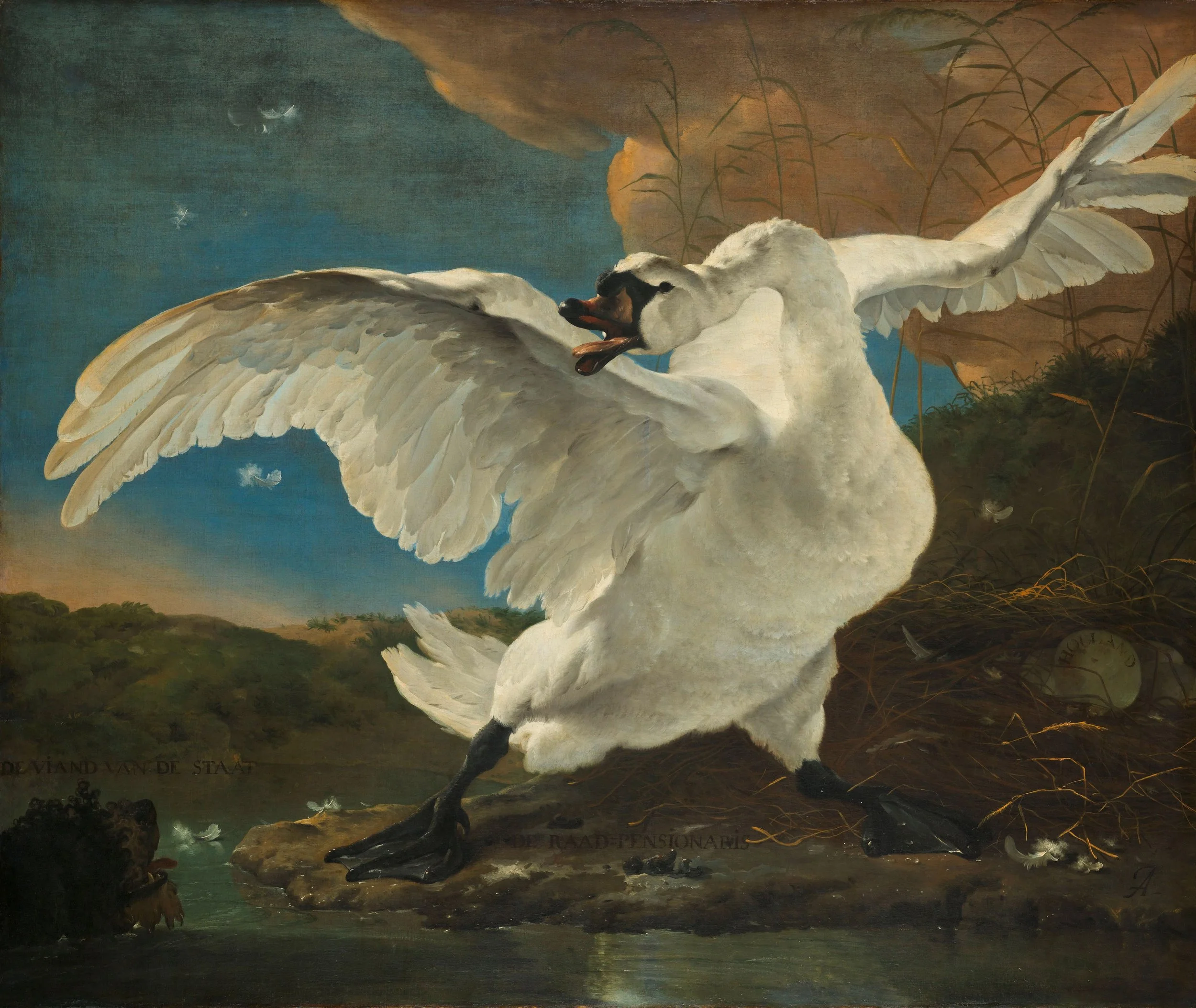
It’s the Apocalypse, Stupid, is a series of articles exploring the space where climate crisis, apocalyptic thinking, and politics intersect.

Gabriel Boyer has been making up stories about himself for as long as he can remember. There was never a time he was not fully seated in his various delusions. He continues to delude himself daily. Look out for new albums and books in 2027. You can read more about him here.